Civil War shipwreck remains in ‘fantastic’ shape on ocean floor
Popular Science...
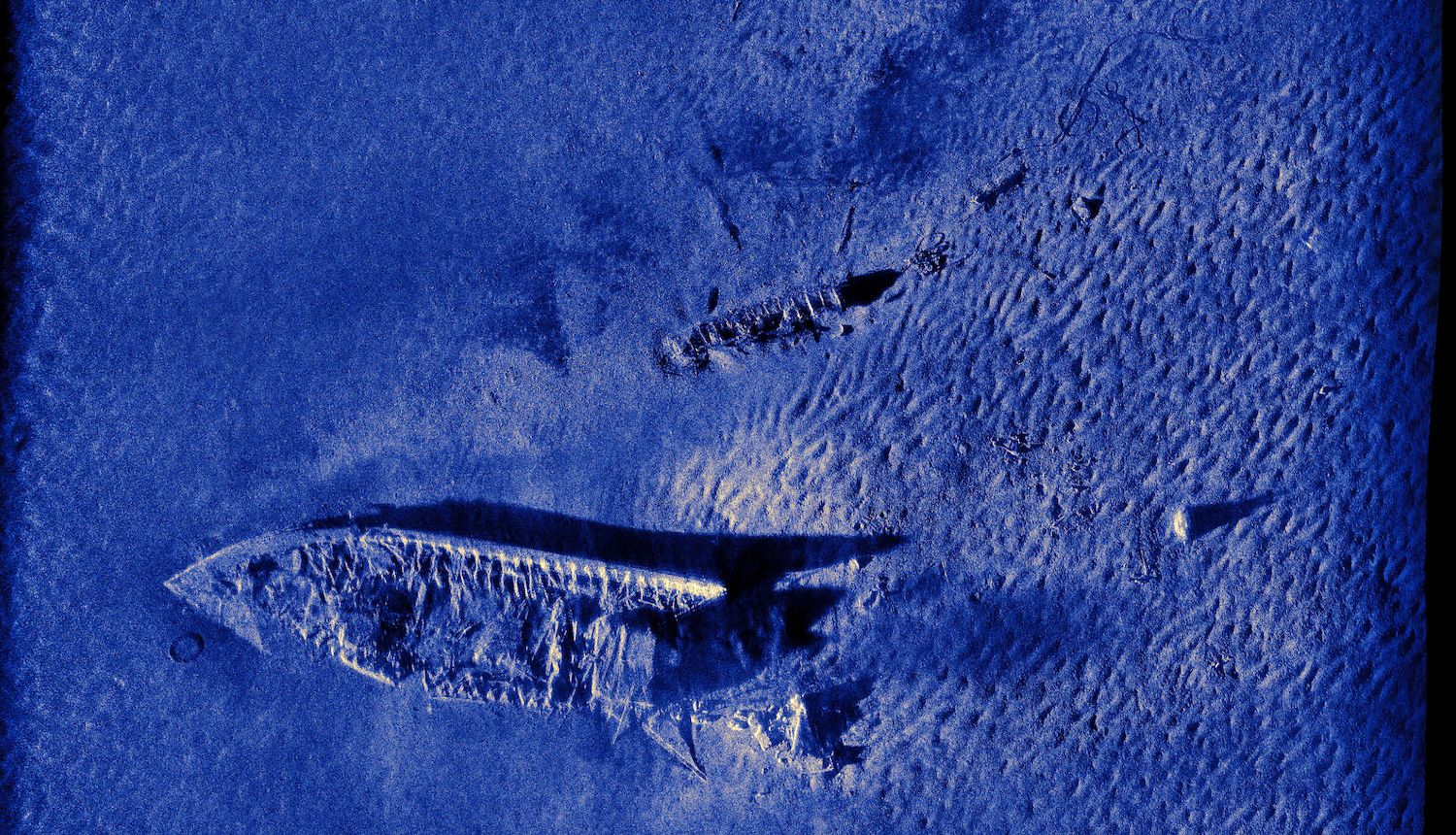
One of the most famous shipwrecks in United States history has received a glow-up, courtesy of stunningly detailed, underwater 3D scanning technology. The National Oceanic and Atmospheric Administration (NOAA) recently released highlights from its 2025 survey of the USS Monitor, the iconic prototype ironclad warship that sank during the Civil War.
Built in 102 days and launched in 1862, the Monitor was specifically engineered to handle the Confederacy’s own ironclad, the CSS Virginia. A pair of fire-tube boilers powered the nearly 170 feet-long vessel, which featured a prominent revolving turret armed with two, 280 mm Dahlman smoothbore guns weighing 16,000 pounds each. The overall design was so unusual for the era that many critics and journalists often referred to it as the “Yankee cheesebox.” Despite this, the Monitor represented a major technological leap forward for the U.S. Navy, and many of its features were replicated for decades in subsequent monitor-class ships.
The ironclad’s tenure at sea was short-lived, however. It only participated in two engagements in 1862—the Battle of Hampton Roads on March 9th and the Battle of Drewry’s Bluff on May 15th. Despite this, the Monitor’s encounter with the Confederacy’s Virginia during Hampton Roads ended in a stalemate. After extensive repairs and refitting, naval commanders directed the Monitor on December 24th to head towards Charleston, South Carolina, to assist a blockade against the port town. On December 31st, a major storm developed over North Carolina’s barrier islands where the Monitor was anchored. The damage ultimately forced the crew to abandon ship as it sank. While 47 sailors and officers were rescued by lifeboats, 16 others were lost at sea.
For over 100 years, the Monitor’s exact location remained a mystery. In 1973, wreckage was discovered by a team from Duke University, the National Geographic Society, and the National Science Foundation. NOAA designated the wreck as the nation’s first marine sanctuary in 1975. Today, its salvaged guns, turret, engine, and other artifacts are displayed in the Mariners’ Museum in Newport News, Virginia.

“This designation set the stage for an appreciation of America’s maritime heritage, a broad legacy that includes not only physical resources (such as historic shipwrecks and prehistoric archaeological sites) but also archival documents, oral histories, traditional seafaring and ecological knowledge of indigenous cultures,” NOAA said in a statement.
Although it now serves as a reef for marine life, researchers have always had trouble visiting the wreck to assess the environment and the ironclad itself. The majority of the Monitor rests about 240 feet below the surface of the Atlantic Ocean in murky conditions near Cape Hatteras.
“It’s difficult to visit. It’s very deep. There’s only so much we can do as scuba divers,” Monitor National Marine Sanctuary marine archaeologist Tane Casserley recently told WAVY-TV.
To obtain some of their most detailed looks yet at the vessel, Casserley’s team collaborated with Northrop Grumman last year for a new survey of the site. Using one of the company’s autonomous underwater vehicles, researchers conducted high-resolution scans of the Monitor using techniques including circular synthetic aperture sonar (CSAS). The technology provides a 360-degree image of a wreck, allowing archaeologists to examine portions of the ship that are typically shadowed in standard surveys.
“It’s a great baseline to see what the heck is happening at the shipwreck,” explained Casserley, adding that the Monitor remains in “fantastic shape,” all things told.
The post Civil War shipwreck remains in ‘fantastic’ shape on ocean floor appeared first on Popular Science.