New stamp honors Yellowstone’s iconic bison
Popular Science...
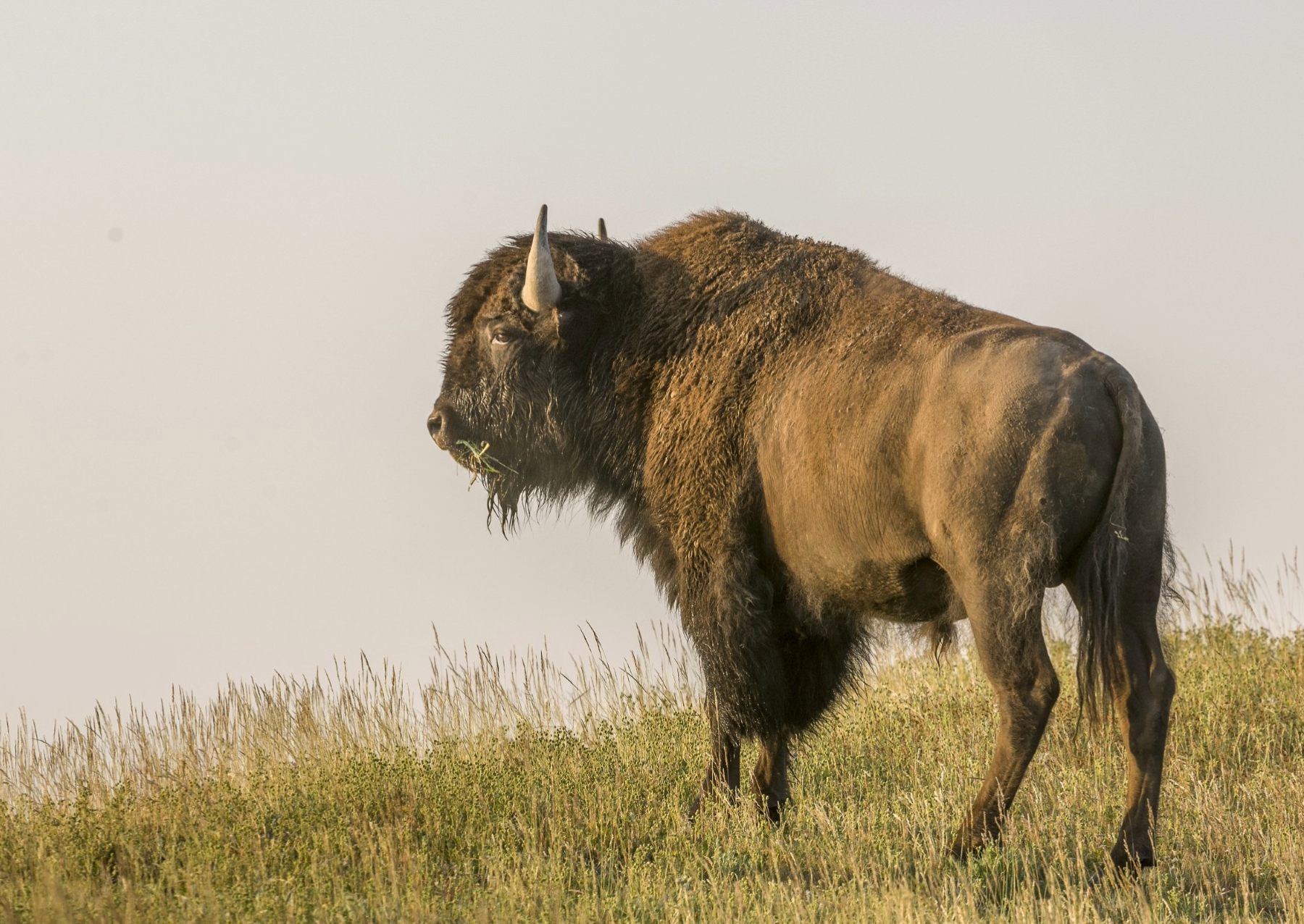
It’s a warm July day in Yellowstone National Park’s grassy Hayden Valley and wildlife photographer Tom Murphy is tracking herds of chocolate-colored bison gathered for the annual breeding season. He eventually spots a young male, not yet old enough to compete in the often-violent bison rut. Amid the racket of bison roars, Murphy snaps a photograph of the lone bull, peeking up over a hill at the clamor of male bison seeking their mates.
This nearly 20-year-old image of the young American bison (Bison bison) is just one photograph from Murphy’s career, which spans countless photographs across thousands of miles of Yellowstone. That young bull gazing up at the rest of his herd, and Murphy’s lifelong love of the park, will now be featured on a United States postage stamp as a symbol of the national mammal’s endurance.

Bison are among Earth’s last remaining Pleistocene megafauna, a group of large animals that faced mass extinction following the last ice age. Murphy tells Popular Science that bison are the ultimate survivors—not just of extinction, but also of the large-scale bison hunting that culled populations to only 300 animals by the turn of the 20th century. Thanks to conservation efforts over the last 150 years, bison populations have rebounded to nearly 500,000 across North America.
“There used to be other megafauna: mammoths, mastodons, short-faced bears, and dire wolves – and now, they’re all gone,” Murphy says. “Bison are one of the only ones left. They represent, for better or for worse, the American West. We almost hunted them down to extinction, but they made it.”
With his white mustache and his safari shirt, Murphy looks like a wildlife photographer, or maybe a Yellowstone cowboy. The walls in his office, just 50 miles north of Yellowstone in Livingston, Montana, are adorned with several framed photos: a pair of fluffy great-horned owls, a snapshot of a female bison captured in the blue light of winter dawn, and an aerial photo of the Grand Prismatic Spring, taken from a spinning National Park Service helicopter before Murphy vomited out its side.
Like the iconic American bison, Murphy’s life has been deeply shaped by the open landscape of the American West. Growing up on a 75,000 acre beef cattle ranch in western South Dakota, Murphy spent many of his days with cows, horses, chickens, and dogs for company, and staring up at the vast darkness stretching above the farm at night.
Two years into studying chemistry at a local college, Murphy dropped out to backpack through South Dakota’s wild Badlands, then through Yellowstone, eventually buying a camera to capture the wildlife he encountered. He got used to stillness and the feeling of smallness against the big sky.
“Some people are overwhelmed by silence and darkness,” Murphy says. “But I like it. The humility that you feel, out in nature, is actually useful to my work. Out there in the landscape, it’s not about me, ever. I don’t want these animals to interact with me.”
Over the last 50 years, Murphy has taken photographs of wildlife from Antarctica to Africa. He has always been drawn back to Yellowstone, skiing and hiking thousands of miles across the park—once crossing the landscape on an epic, 175-mile-long solo ski excursion over two weeks.
Murphy calls the new postage stamp featuring his work in Yellowstone an honor. However, he is concerned that it’s getting harder to foster and photograph wildlife in the rapidly changing national park. Human-caused climate change is driving wildfires that disrupt Yellowstone forests and sagebrush ecosystems. Rising temperatures impact snowfall, habitat availability, and animal migration among birds, elk, and pika—small rabbit relatives that are one of Murphy’s favorite subjects.
certain animals, and encountering them in different places than before. “To be honest, there’s probably creatures and landscapes I will never see again,” says Murphy.
Still, Murphy hopes his photographs, and the new postage stamp, inspire people to care more about their planet, for many years to come.
“The photographs I make, I want them to tell the story of these creatures and show that they’re beautiful, valuable, and important to our world,” he says.
The new stamp is set to be released later this year.
The post New stamp honors Yellowstone’s iconic bison appeared first on Popular Science.