NASA’s Hubble Revisits Crab Nebula to Track 25 Years of Expansion

NASA...
NASA’s Hubble Revisits Crab Nebula to Track 25 Years of Expansion
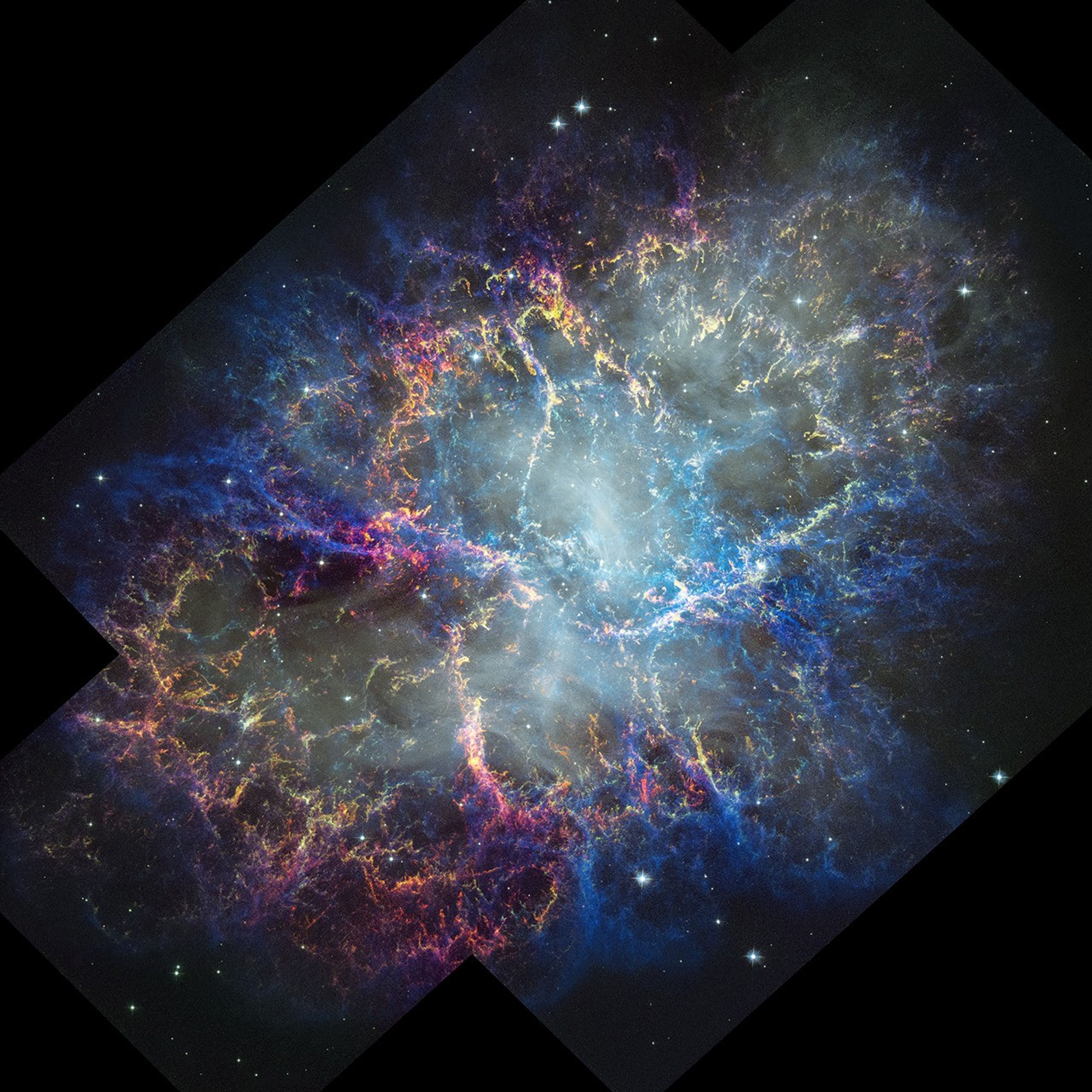
Image: NASA, ESA, STScI, William Blair (JHU); Image Processing: Joseph DePasquale (STScI)
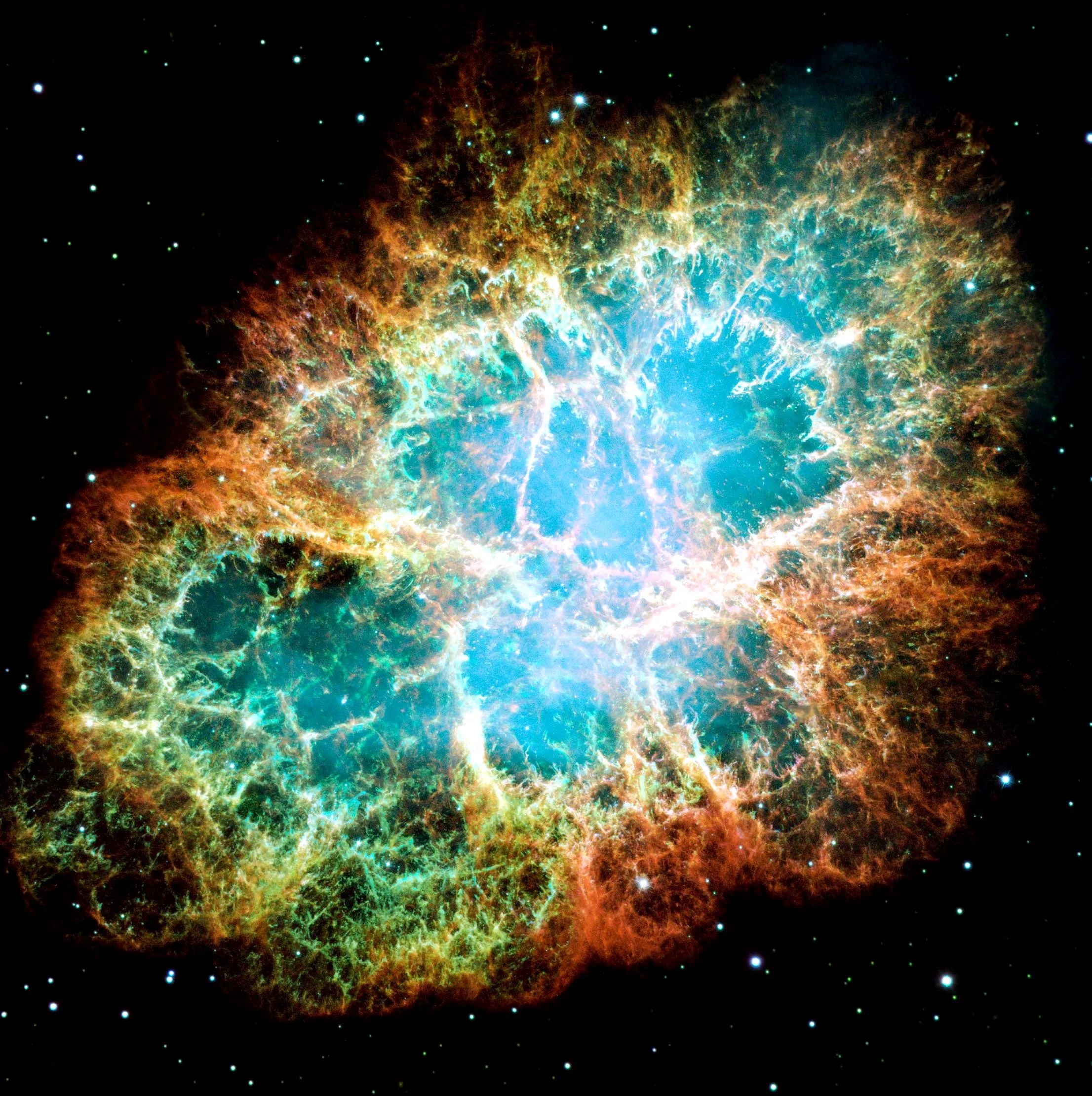
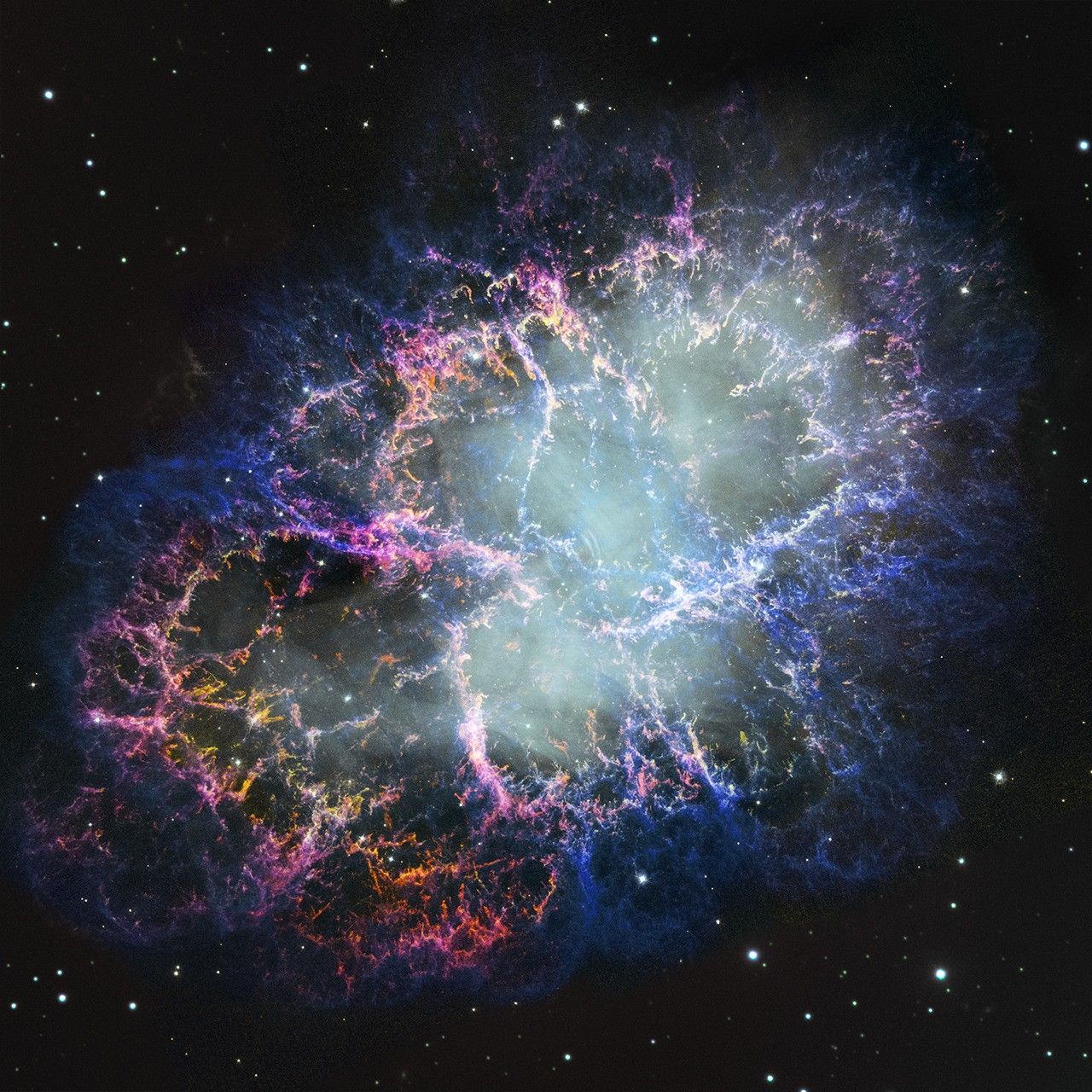
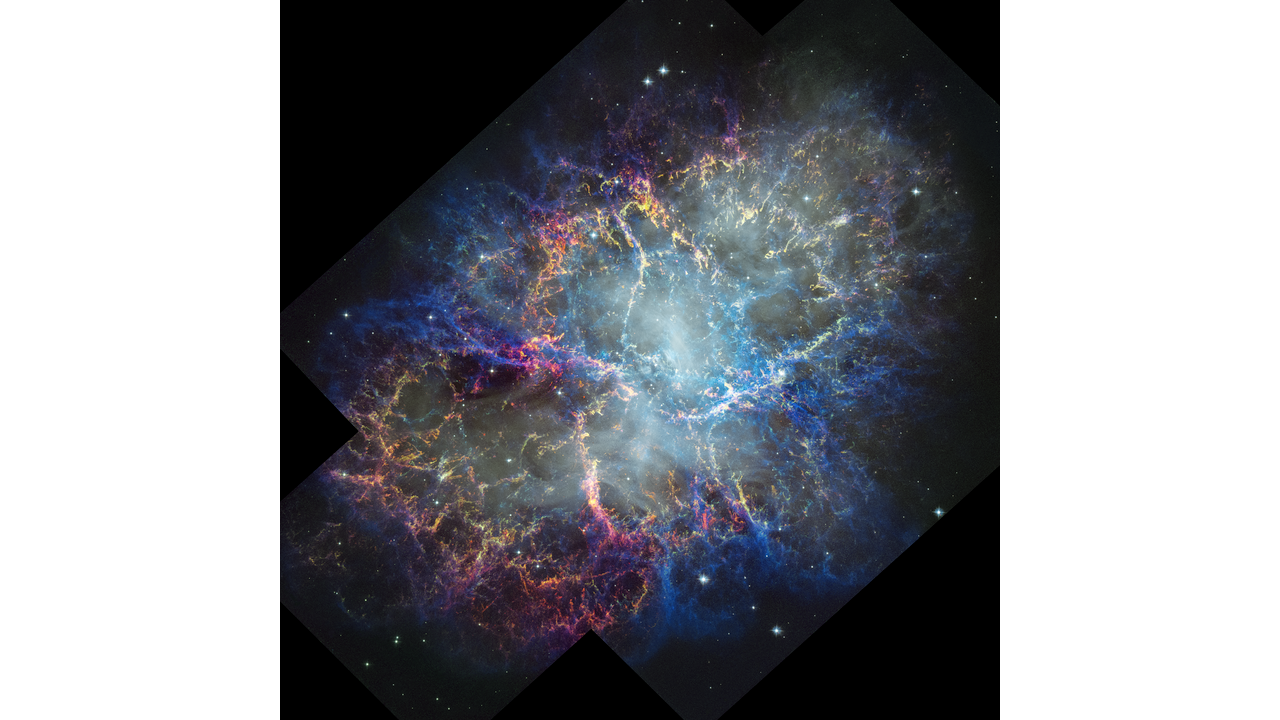
A quarter-century after its first observations of the full Crab Nebula, NASA’s Hubble Space Telescope has taken a fresh look at the supernova remnant. The result is an unparalleled, detailed look at the aftermath of a supernova and how it has evolved over Hubble’s long lifetime. A paper detailing the new Hubble observation is published in The Astrophysical Journal.
This new Hubble observation continues a legacy that stretches back nearly 1,000 years, when astronomers in 1054 recorded the supernova as an impressively bright new star that, for weeks, was visible even during the day. The Crab Nebula is the aftermath of SN 1054, located 6,500 light-years from Earth in the constellation Taurus.
“We tend to think of the sky as being unchanging, immutable,” said astronomer William Blair of Johns Hopkins University, who led the new observations. “However, with the longevity of the Hubble Space Telescope, even an object like the Crab Nebula is revealed to be in motion, still expanding from the explosion nearly a millennium ago.”
The supernova remnant was discovered in the mid-18th century, and in the 1950s Edwin Hubble was among several astronomers who noted the close correlation between Chinese astronomical records of a supernova and the position of the Crab Nebula. The discovery that the heart of the Crab contained a pulsar — a rapidly rotating neutron star — that was powering the nebula’s expansion finally aligned modern observations and ancient records.
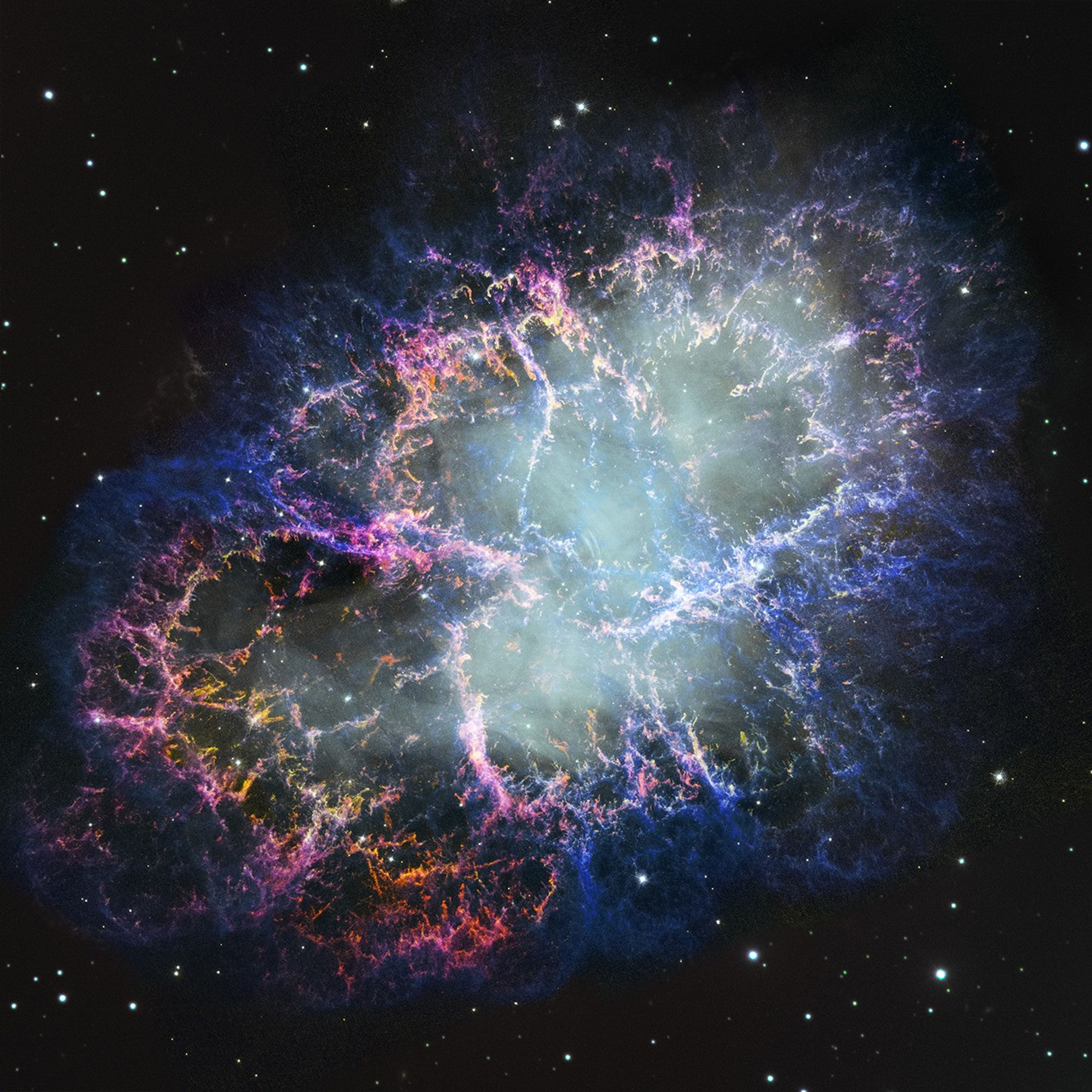
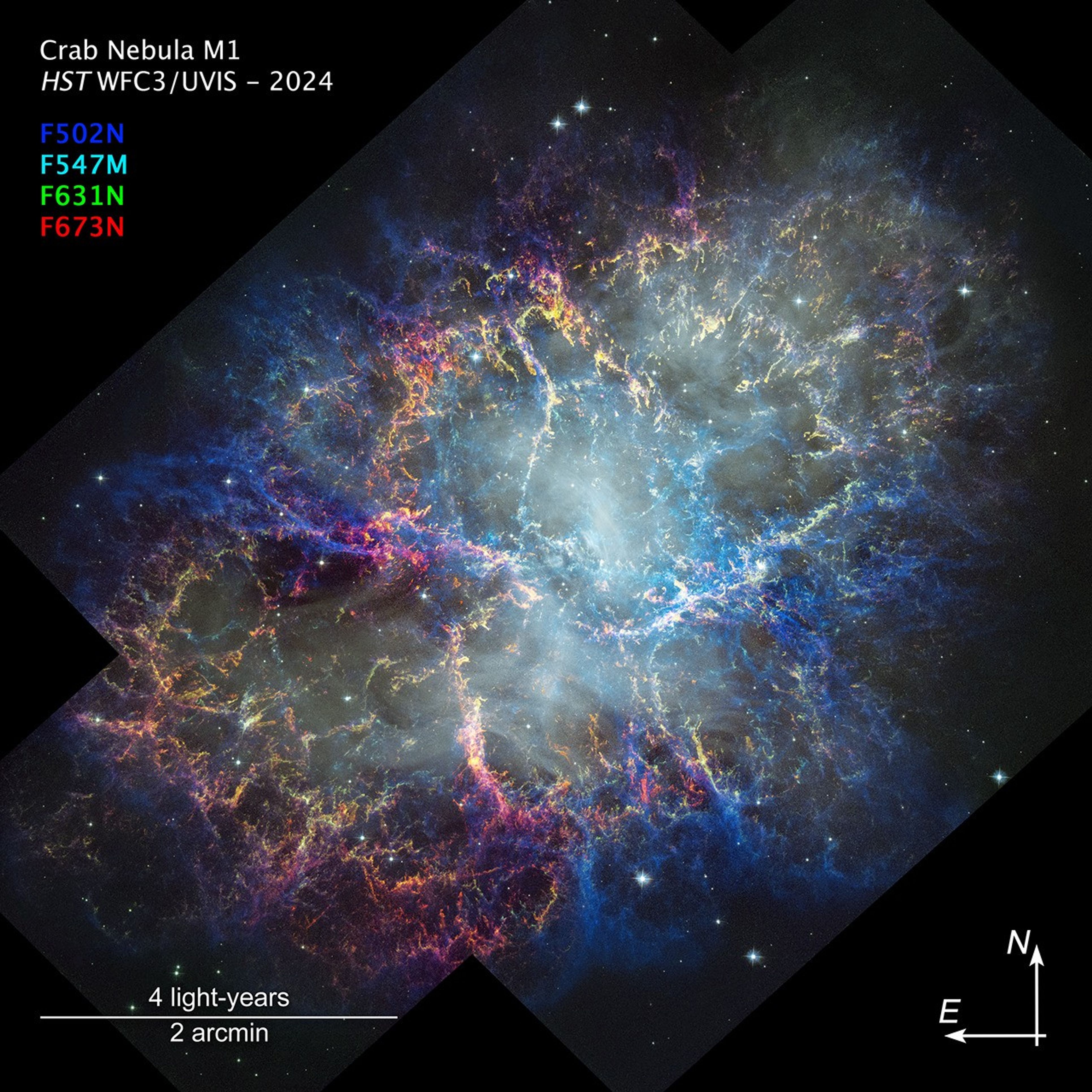
In its new image, Hubble captured the nebula’s intricate filamentary structure, as well as the considerable outward movement of those filaments over 25 years, at a pace of 3.4 million miles per hour. Hubble is the only telescope with the combination of longevity and resolution capable of capturing these detailed changes.
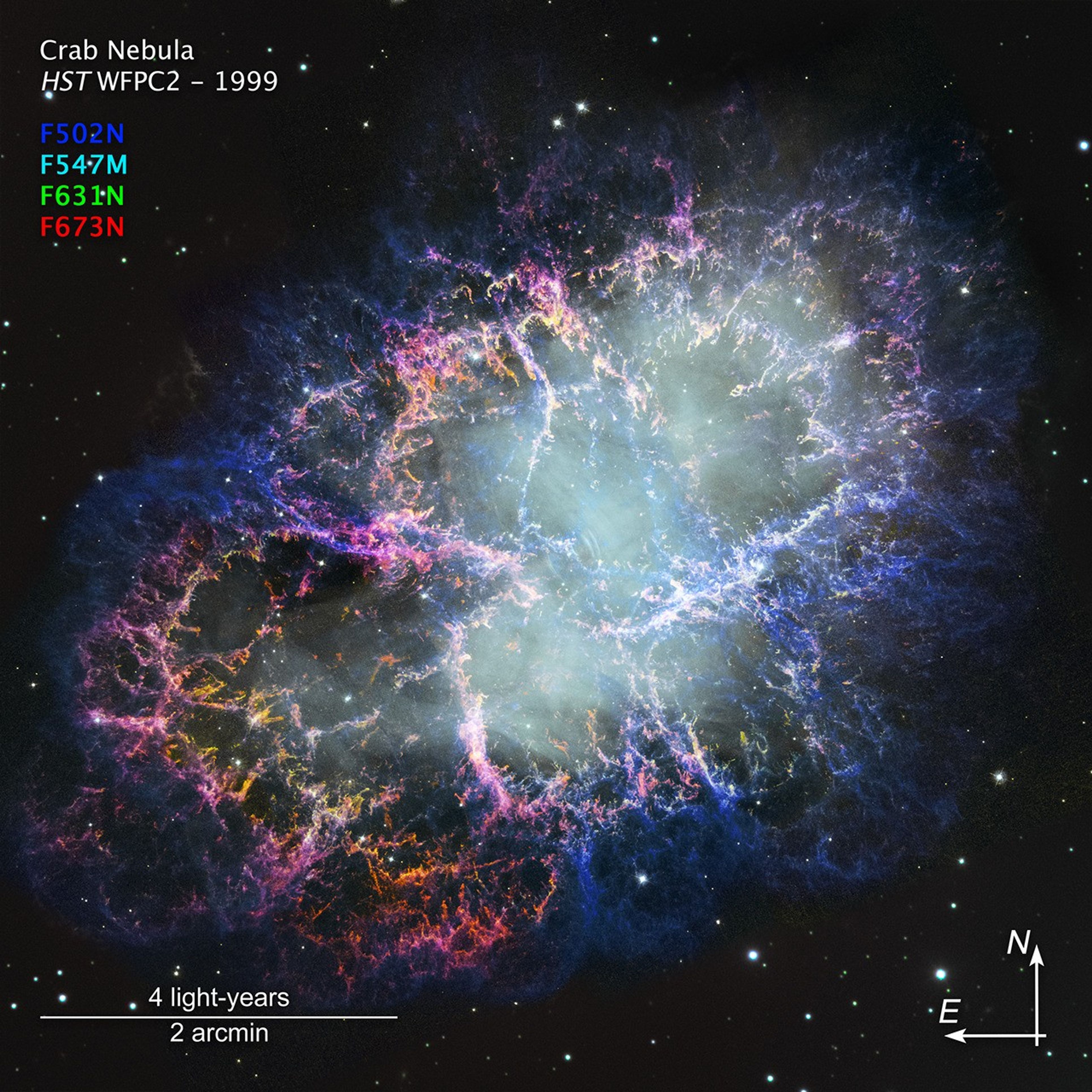
For better comparison with the new image, Hubble’s 1999 image of the Crab was re-processed. The variation of colors in both of the Hubble images shows a combination of changes in local temperature and density of the gas as well as its chemical composition.
“Even though I’ve worked with Hubble quite a bit, I was still struck by the amount of detailed structure we can see and the increased resolution with the Wide Field Camera 3, as compared to 25 years ago,” Blair said. Wide Field Camera 3 was installed in 2009, the last time Hubble instruments were updated by astronauts.
Blair noted that filaments around the periphery of the nebula appear to have moved more compared to those in the center, and that rather than stretching out over time, they appear to have simply moved outward. This is due to the nature of the Crab as a pulsar wind nebula powered by synchrotron radiation, which is created by the interaction between the pulsar’s magnetic field and the nebula’s material. In other well-known supernova remnants, the expansion is instead driven by shockwaves from the initial explosion, eroding surrounding shells of gas that the dying star previously cast off.
The new, higher-resolution Hubble observations are also providing additional insights into the 3D structure of the Crab Nebula, which can be difficult to determine from a 2D image, Blair said. Shadows of some of the filaments can be seen cast onto the haze of synchrotron radiation in the nebula’s interior. Counterintuitively, some of the brighter filaments in the latest Hubble images show no shadows, indicating they must be located on the far side of the nebula.
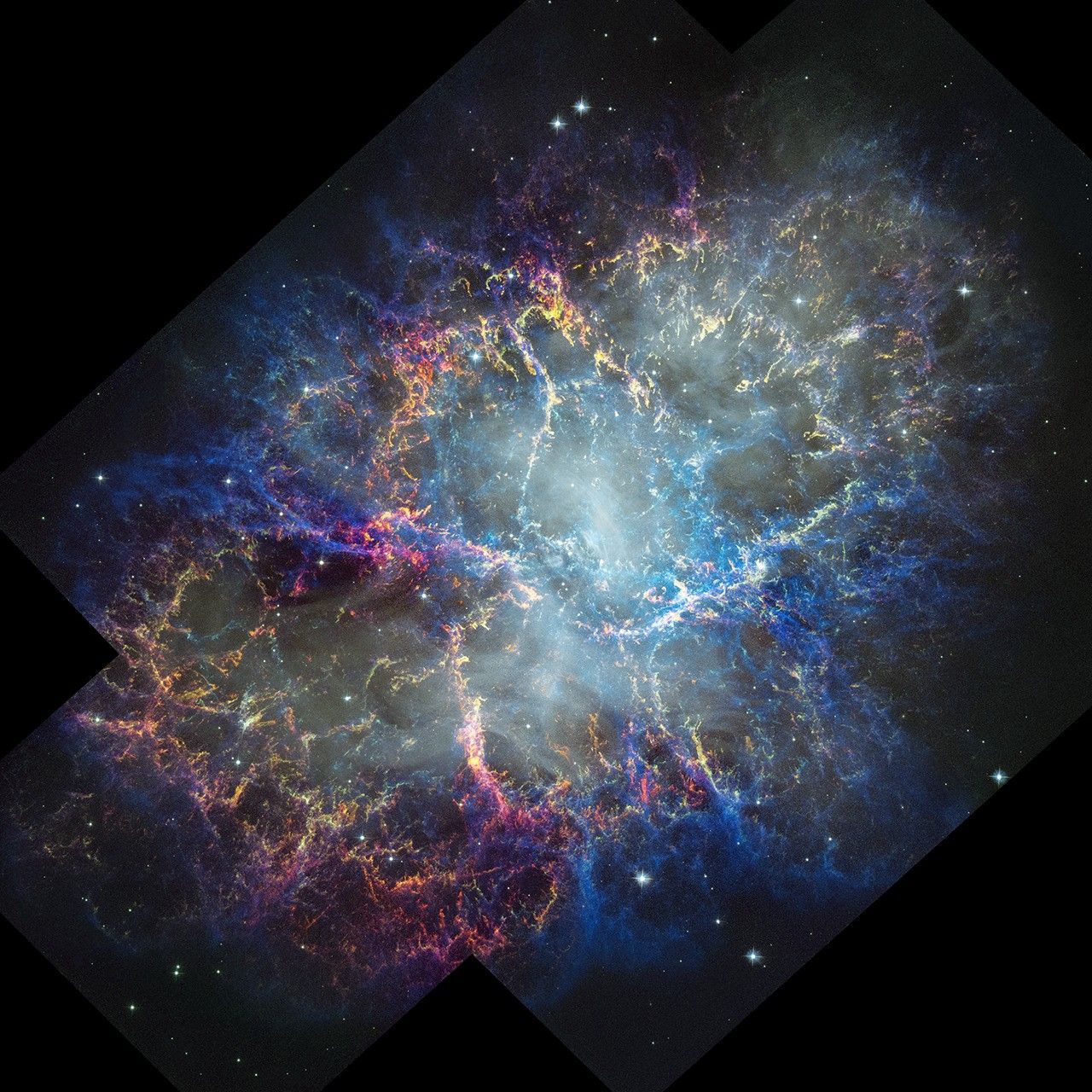
According to Blair, the real value of Hubble’s Crab Nebula observations is still to come. The Hubble data can be paired with recent data from other telescopes that are observing the Crab in different wavelengths of light. NASA’s James Webb Space Telescope released its infrared-light observations of the Crab Nebula in 2024. Comparison of the Hubble image with other contemporary multiwavelength observations will help scientists put together a more complete picture of the supernova’s continuing aftermath, centuries after astronomers first wondered at a new little star twinkling in the sky.
The Hubble Space Telescope has been operating for more than three decades and continues to make ground-breaking discoveries that shape our fundamental understanding of the universe. Hubble is a project of international cooperation between NASA and ESA (European Space Agency). NASA’s Goddard Space Flight Center in Greenbelt, Maryland, manages the telescope and mission operations. Lockheed Martin Space, based in Denver, also supports mission operations at NASA Goddard. The Space Telescope Science Institute in Baltimore, which is operated by the Association of Universities for Research in Astronomy, conducts Hubble science operations for NASA.

2024
1999
2024 and 1999
Tracking 25 Years of Expansion
2024 and 1999
Related Images & Videos
Crab Nebula Expansion over 25 Years
The Crab Nebula is a dynamic supernova remnant that has been expanding and evolving for nearly one thousand years. Often nebulas and other objects in space appear frozen in a single telescope snapshot, providing stunning detail but no sense of change over time. However, thanks to…
Share
Details
Claire Andreoli
NASA’s Goddard Space Flight Center
Greenbelt, Maryland
claire.andreoli@nasa.gov
Leah Ramsay, Christine Pulliam
Space Telescope Science Institute
Baltimore, Maryland