How Apple taught its flagship AirPods Max headphones new acoustic tricks
Popular Science...
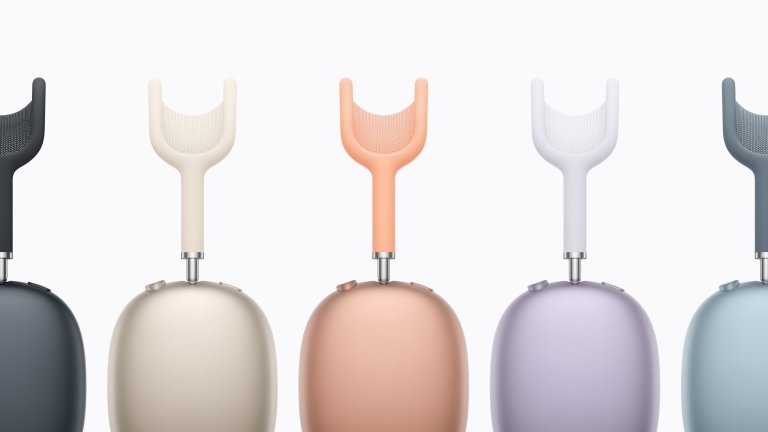
It’s a murky March evening, and I’m walking to a metronomic throb wrapped in neon fog. I’m also walking underneath a flight path. I’m heading north along Long Bridge Park, planes taking off from Ronald Regan Washington National Airport to my right, and the deliberate pulse of Depeche Mode’s “Enjoy the Silence” precisely outlined around me. Intimate but uncluttered, the kick-synth interplay is uninterrupted because I’m wearing an appropriately spring-colored pair of purple AirPods Max 2 headphones, though the jogger passing me by in a similarly colorful orange pair wouldn’t know these are an upgraded edition from the outside.
The AirPods Max 2’s ability to keep my synth-pop groove’s lateral focus amid ambient intrusions comes down to several invisible yet highly perceptible factors. While not physically redesigned, the AirPods Max 2 adopts new silicon in the form of its updated H2 chip, bringing with it experience upgrades. I recently got the chance to talk with Eric Treski, director of Apple’s Audio Product Marketing, and Tim Millet, Apple’s vice president of Platform Architecture, about using the bespoke H2 chip, a new high dynamic range [HDR] amplifier, and specifically coded computational-audio algorithms to reshape response in a signature silhouette.
“Enjoy The Silence,” beyond being the perfectly named track for active noise cancellation trials, is a strong test of the ability to maintain pace, layering, and upper-mid clarity. To succeed, headphones need to keep the programmed beat evenly gated while synths retain clean leading edges. And while it would seem like a sparse arrangement is easier to preserve, the separation between instrumental tracks and ambient reverb trails is much easier to flatten.
On the AirPods Max 2, the song’s taut, well-damped sequencing and luminous hook are preserved without edge, articulated in a way that distinguishes itself from the original Max. While it’s the same chassis, same memory foam ear cushions, same stainless steel headband and knit mesh canopy, same Digital Crown, even the same 40mm dynamic drivers, Apple’s whole-stack integration has unlocked higher performance, lower latency, and greater energy efficiency.
The H2 chip serves as the foundation for the AirPods Max 2’s sonic improvements and Apple Intelligence features. Not a secretly refreshed H2 Max. Originally debuted in 2022 with the second-generation AirPods Pro, the same transistor-dense 7nm chipset handles all the simultaneous stream processing needed as you pass through the world and browse through sources. Because, with cores built from the ground up based on the physics of sound and human hearing, these nodes were always intended to be scalable across form factors in need of audio performance.
“I work for a guy who hates dark silicon,” says Tim Millet. “Dark silicon, these are transistors you put in a chip and it turns out software didn’t need them. The product didn’t use them. If you’re working in a merchant silicon company, you don’t really know for sure how your chip is going to get used. At a place like Apple, we have the luxury of knowing in advance, and that makes all the difference for us. So, for H2, we were really able to lean in on making sure AirPods Max 2 really had all the capabilities it needs.”
It may not be new, but the H2 has been newly mapped to the beamforming mics and accelerometers, etc., that come along with a different acoustic architecture. It allows everything—ANC, Conversation Awareness, Adaptive Audio [as well as EQ + Volume], Personalized Spatial Audio, Live Translation—to isolate the sounds you want and the ones you don’t as they are picked up from different directions and distances than they would be with earbuds. At the same time, it compensates for a consistent listening experience across different head shapes and wearing conditions.


According to Millet, who has been in the chip-building sector for over 35 years, he greatly appreciates being on a team that starts working on the fundamentals of the problem, not just how to cobble together off-the-shelf components.
“One of the key things we did in developing H2 was to appreciate that we do have a plurality of targets,” says Millet. “We have a whole family [of AirPods Pro and AirPods Max], and we definitely keep those all in mind as potential targets.
“The secret really isn’t that we change the silicon, per se, but that we changed the embedded firmware and really adapted it.”
Using a developer sandbox makes it easier to move from one production platform to another, to determine how to take a baseline implementation of ANC reading intermittent environmental noise 48,000 times per second and then specifically tune it for the nine-mic array in the AirPods Max 2 [three more than in a pair of 2025’s AirPods Pro 3]. The end result is a stated 1.5x more powerful noise cancellation implementation, particularly with the phase challenges of long and powerful 20 Hz – 500 Hz environmental rumble, which my reflective walk along Long Bridge unscientifically backs up.
And with the available compute from the H2’s cores, ANC and Transparency can run concurrently, so the crossfade from isolation to letting in surrounding voices blends naturally if you do need situational awareness or to chat with passersby. All while reaching up to 20 hours of battery life with ANC on—levels of low energy you’d expect from fixed-function type processors, as power savings is a co-pillar of design, according to Millet.
Coupled to the H2 chip is an HDR amp, first implemented in the AirPods Pro 3, that gives the headphones more breathing room without the need for multiport revamps and redesigned airflow. That means the music stays cleaner when you turn them up, and ANC can push stronger anti-noise when you need it most.
Achieving this lower THD [Total Harmonic Distortion] was important to achieve consistent response with “higher clarity across more frequencies, all the way from the lower end to the higher end … without having to change the transducers at all in AirPods Max 2,” says Eric Treski.
Along with localizing snarky transients and lengthening resonant kicks, Treski adds that the H2 and HDR amp combination is also important for analyzing optical and position sensors and driving behavior of hardware more separated from the ear canal than an earbud, allowing the AirPods Max 2 to adapt to the widest range of anatomies. And, monitoring feedback, the AirPods Max 2 can more fluidly and fluently model in real-time the psychoacoustics “tricking the brain with only two speakers to make it sound like things are coming around you with Personalized Spatial Audio.”
Beyond more innovative content consumption and less battery consumption, the H2 chip’s optimized DSP aims to empower creators by enabling sub-15ms 24-bit/48kHz lossless playback via USB-C [beneficial for timing-reliant musicians, editors, and gamers]. While I appreciate the seamless Bluetooth 5.3 AAC connections between Apple AirPods products and an iPhone 17 Pro when I’m on a walk, I’m still a fan of whatever brings the most responsive ribbons of melody with quiet menace underneath. And that’s typically going to require a wire. Still a premium $549 product, the AirPods Max 2 headphones demonstrate that meaningful engineering allows for new tuning without new tooling.

The post How Apple taught its flagship AirPods Max headphones new acoustic tricks appeared first on Popular Science.