Someone dies in a national park. Now what?
Popular Science...
Randi Minetor has written nine books about people dying in national parks. Needless to say, she has a lot of thoughts about it.
“A lot of people go to national parks to challenge themselves, to try things they have never tried before,” she tells Popular Science. “They’ll take a course in canyoneering or hire a guide to go up a mountain; they’ll push themselves in ways they haven’t before. Not everyone can do those things,” she warns. “Just because you want to do it doesn’t mean you can.”
It’s excellent advice that doesn’t always get followed. Yet the number of people who die in national parks each year is smaller than you might expect. Across all national parks, the National Park Service reports an average of 358 deaths per year.
“The parks work very, very hard to prevent people from getting killed,” she says, with robust search and rescue teams.
When a visitor does die, the work for rangers is far from over.
The hasty search
The moment a visitor goes missing or needs help, rangers move fast, says Minetor.
“When somebody reports that someone’s in trouble, that immediately puts a process into action in the park,” she says. “You’ve got to tell people where you’re going, so that if anything happens, they know where to look.” Although rules vary by park, visitors are strongly encouraged to share their itineraries before heading into remote or backcountry trails.
Some people resist even that basic step, Minetor says. “Some people are ‘too cool’ to talk to a ranger or to sign a registry,” she says. “They’re the people who are never going to be found.”
One of the first steps the park will take when someone is reported missing is to conduct what is called a “hasty search,” although Minetor emphasizes that this step is neither rushed nor perfunctory.
“It’s called this because they do it right away. Two or three rangers will go out and walk the trail and see if they find anything on the ground that tells them where this person is—a footprint, candy wrapper, anything that will give them an idea,” she says. “Very often, that person is then found through the hasty search.”
The search continues
If a more extensive search is needed, the park will enlist community volunteers to conduct a grid search, spreading out across the terrain in a coordinated pattern, covering every inch until they find something—or accept that they’re not going to.
Many of the same features that draw adventurous visitors to national parks in the first place—mountains, glaciers, canyon gorges, swift rivers—are the very ones that make recovery operations extraordinarily difficult.
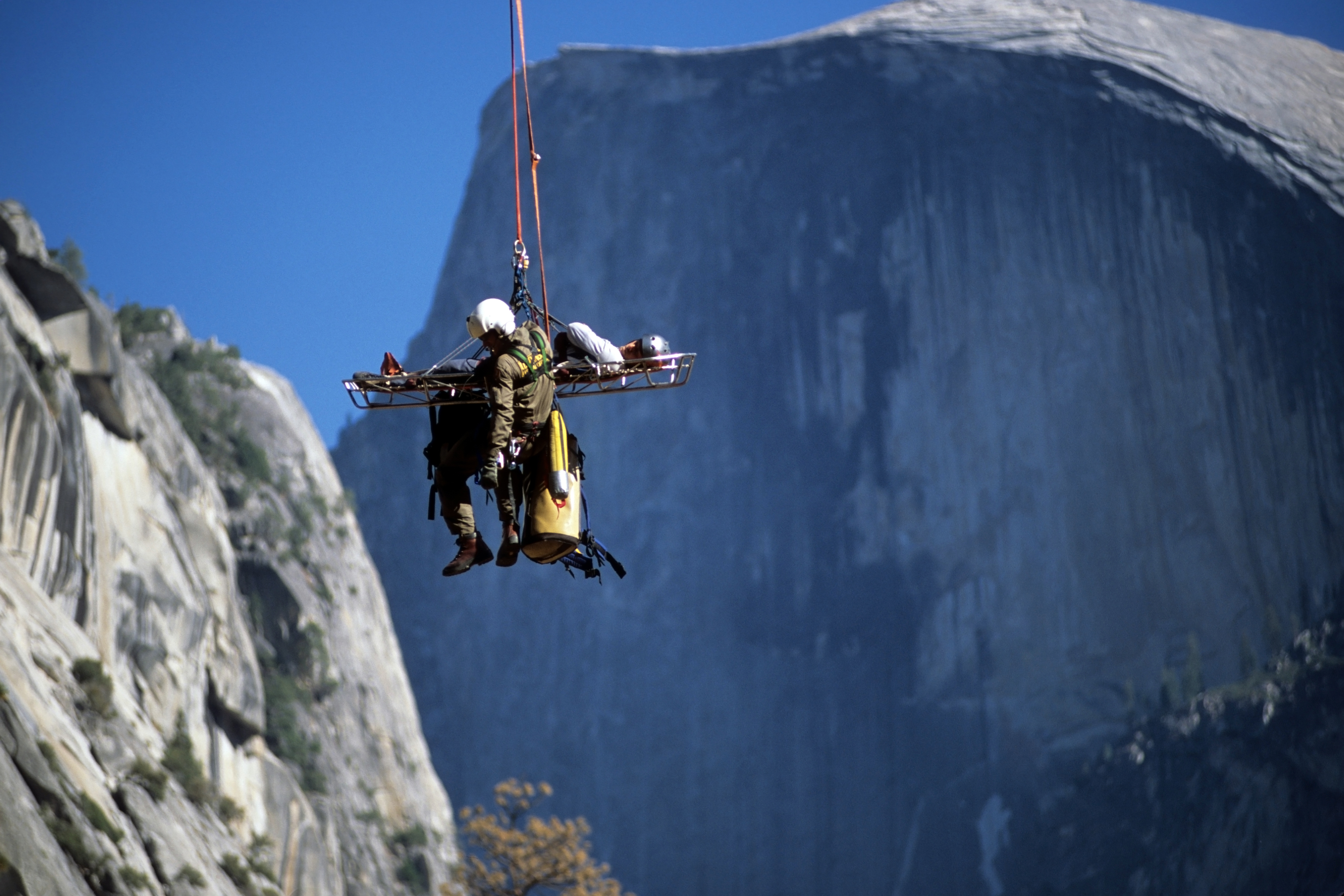
For people in truly remote or inaccessible locations, the park deploys rangers trained specifically in climbing rescue, who make the harrowing ascent themselves to assess what it will take to get the person—or body—out.
In terrain too steep or rugged for a helicopter to land, they may use a technique called short hauling, in which the person is suspended beneath the aircraft on a rope and harness and flown to the nearest point where the chopper can touch down.

Many of the same techniques are used whether rangers are hoping to find someone alive or recover remains. Regardless, rangers “use aerial reconnaissance and on-the-ground search teams,” says Minetor. “Once the search is deemed a recovery rather than a rescue, fewer teams will be involved in ongoing searches, and the frequency may subside.”
It’s work that demands extraordinary commitment from the rangers involved.
“These are people who dedicate their lives to saving other lives,” Minetor says. “It’s amazing.”
Sometimes, however, even these rescuers reach their limits. In severe winter conditions, a recovery may have to wait—the body is secured in place on the mountain until weather improves enough for rangers to safely return.
“For people who think climbing a mountain in the dead of winter is a great idea,” notes Minetor, “Let me just say: It isn’t.”
The aftermath
Once remains are recovered, a medical examiner determines the cause of death before they are released to the family.
However, it’s important to note that not every park death requires a wilderness search. When someone dies in a more straightforward way, like a heart attack on a trail or a fatal crash on a park road, the response typically looks more like a conventional emergency, with local first responders arriving on scene rather than deploying a search and rescue team.
The issue of jurisdiction is more complicated than one might expect for deaths in national parks, with up to three agencies potentially claiming a person’s remains.
“Response to a fatality in a national park may involve up to three jurisdiction types—federal, state, or county,” says NPS spokesperson Elizabeth Peace. “Oftentimes, it is the local or state law enforcement that is the primary or lead [agency], with the National Park Service having concurrent jurisdiction.”
In practice, this means that families seeking information after a death in the park should know which agency is leading the response, since it might be the local sheriff’s office or state police, not the park itself, who will be their primary point of contact.
It is the lead law enforcement agency that generally handles notifying next of kin, says Peace. However, other law enforcement entities may also take action to share information as quickly as possible. The inter-agency coordination helps ensure the family is informed before they hear of a loved one’s death on the news.
“Time is of the essence with next-of-kin notifications. The National Park Service works as quickly as possible to make contact before personally identifiable information is shared in the media,” says Peace.
Related 'Ask Us Anything' Stories
For the family left behind, there is, at least, no bill. Minetor says in all her research, she has never come across a family that has had to pay for the cost of a rescue. Only a few parties who got into trouble because of their own “extreme negligence” have received a bill, she says.
“The park just wants to bring people out alive,” Minetor says.
National parks have even become the setting for what some are calling “alpine divorce”—a term you may have seen lately for when one romantic partner abandons the other in dangerous terrain, sometimes with fatal consequences.
For anyone thinking a national park is a great place to end your marriage and collect on life insurance, Minetor has a warning. “Nobody ever collects a cent; the insurance companies know what this is,” she says. “Almost every park that has cliffs has one of these stories, and all of the homicidal spouses are in prison.”
After years documenting almost every conceivable way a person can die in a national park, with titles including Death in Glacier National Park and Death in Rocky Mountain National Park, Minetor has one final surprise in store.
The leading cause of death isn’t mountain falls or flash floods. “Auto accidents and drowning are the two biggest causes of death in national parks,” she says. “Most of them, honestly, are car crashes.”
In Ask Us Anything, Popular Science answers your most outlandish, mind-burning questions, from the everyday things you’ve always wondered to the bizarre things you never thought to ask. Have something you’ve always wanted to know? Ask us.
The post Someone dies in a national park. Now what? appeared first on Popular Science.