NASA Outlines Preliminary Artemis III Mission Plans
NASA...
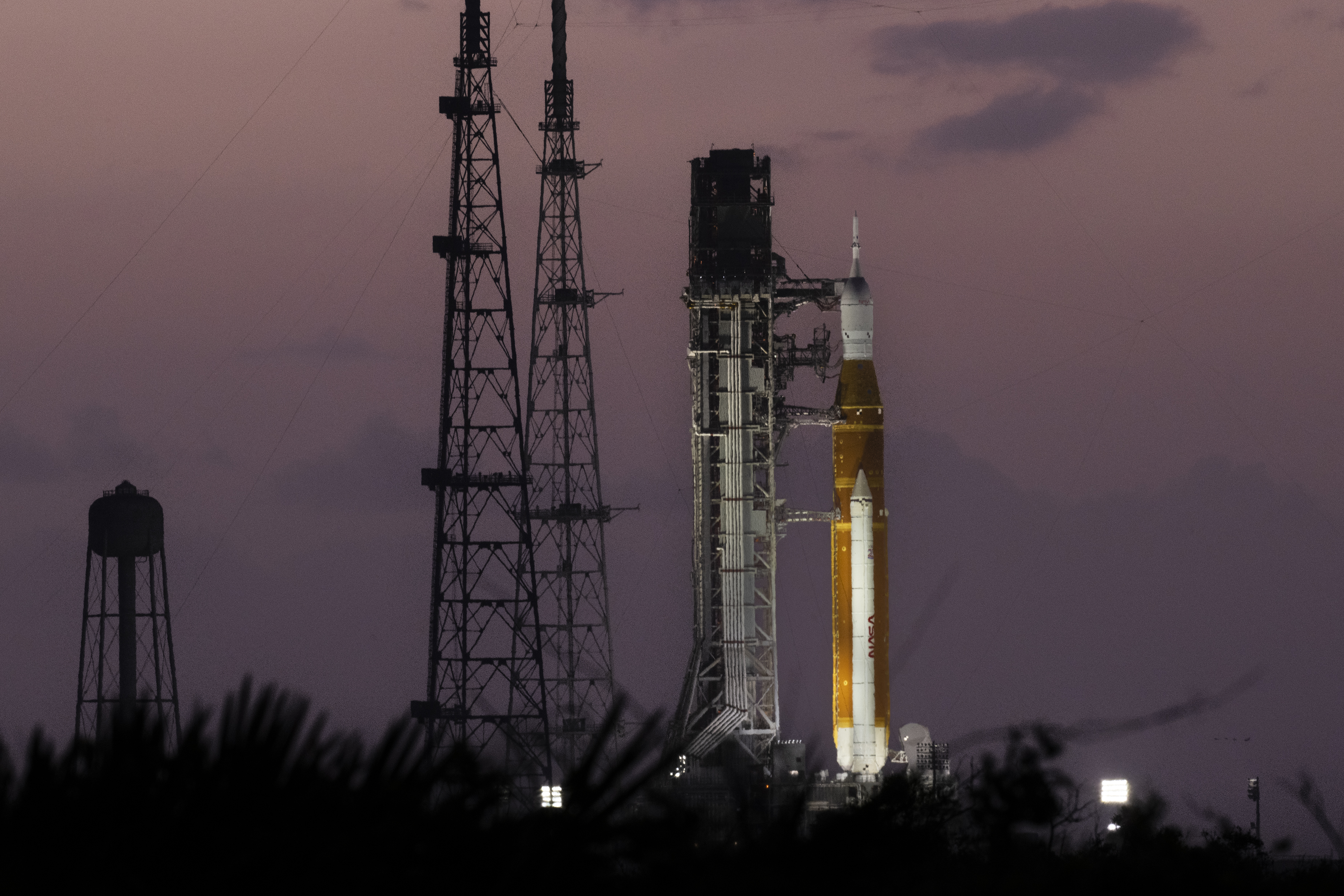
NASA is moving quickly to define next year’s Artemis III mission in Earth orbit, a crewed flight that will test rendezvous and docking capabilities between the agency’s Orion spacecraft and commercial landers from Blue Origin and SpaceX. Since a February announcement adding an Artemis mission ahead of crewed landing missions to the Moon’s South Pole region, engineers have been evaluating mission profile options and operational considerations for Artemis III to ensure the test flight helps the agency and its partners reduce risk ahead of the next Americans landing on the Moon during Artemis IV.
“While this is a mission to Earth orbit, it is an important stepping stone to successfully landing on the Moon with Artemis IV. Artemis III is one of the most highly complex missions NASA has undertaken,” said Jeremy Parsons, Moon to Mars acting assistant deputy administrator, NASA’s Exploration Systems Development Mission Directorate in Washington. “For the first time, NASA will coordinate a launch campaign involving multiple spacecraft integrating new capabilities into Artemis operations. We’re integrating more partners and interrelated operations into this mission by design, which will help us learn how Orion, the crew, and ground teams all interact together with hardware and teams from both providers before we send astronauts to the Moon’s surface and build a Moon Base there.”
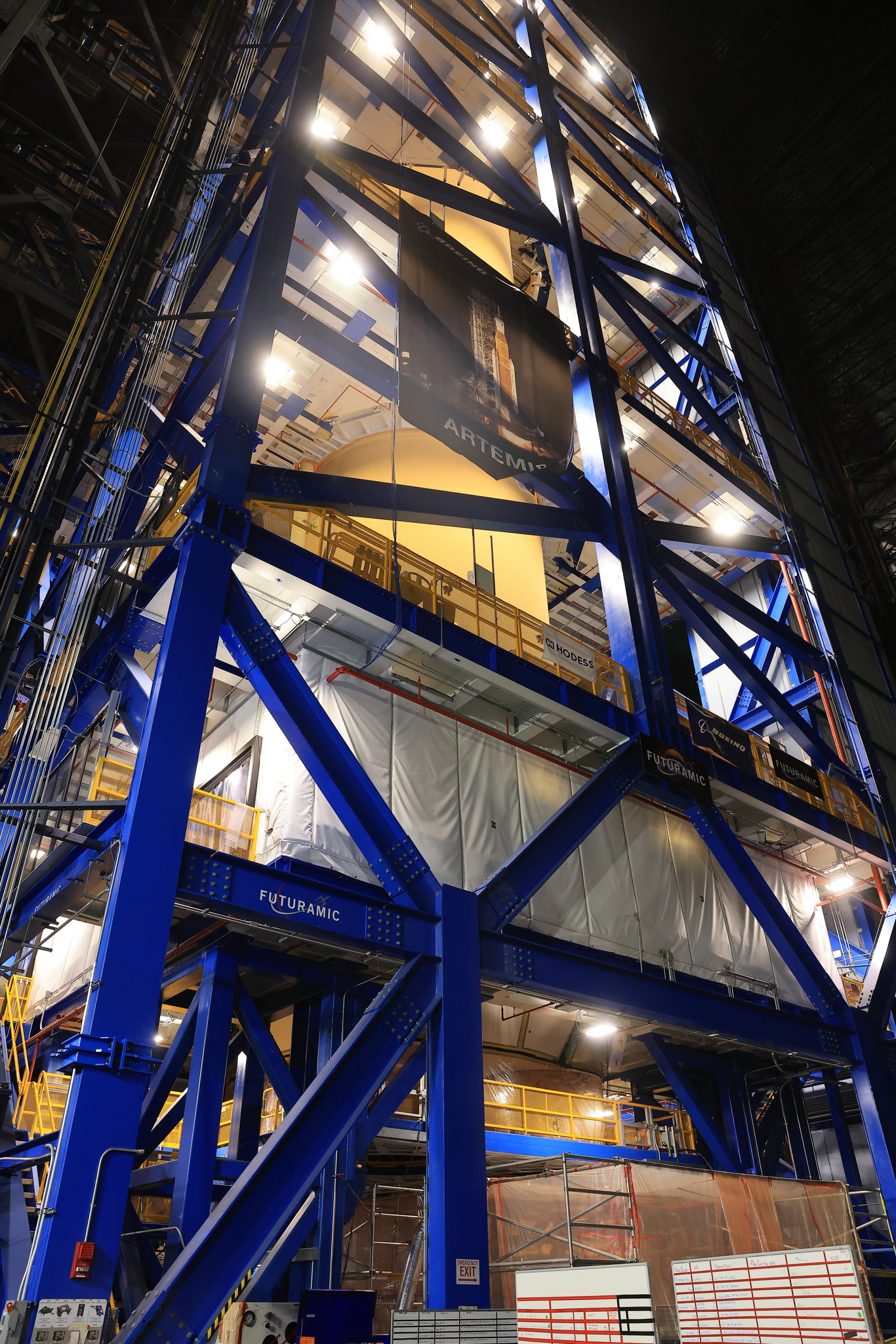
The mission is planned to carry out a series of objectives designed to demonstrate critical systems needed for a future lunar landing. During the Artemis III mission, the SLS (Space Launch System) rocket will launch the Orion spacecraft from NASA’s Kennedy Space Center in Florida with four crew members. Instead of using the interim cryogenic propulsion stage as the upper stage of the rocket, NASA will use a “spacer,” a representation of the mass and overall dimensions of an upper stage but without propulsive capabilities. The spacer will maintain the same overall dimensions and interface connection points as the upper stage between the Orion stage adapter and launch vehicle stage adapter.
Design and fabrication activities for the spacer are progressing rapidly at NASA’s Marshall Space Flight Center in Huntsville, Alabama. Material for the barrel section and the upper and lower rings is currently being machined at Marshall in preparation for upcoming welding operations.
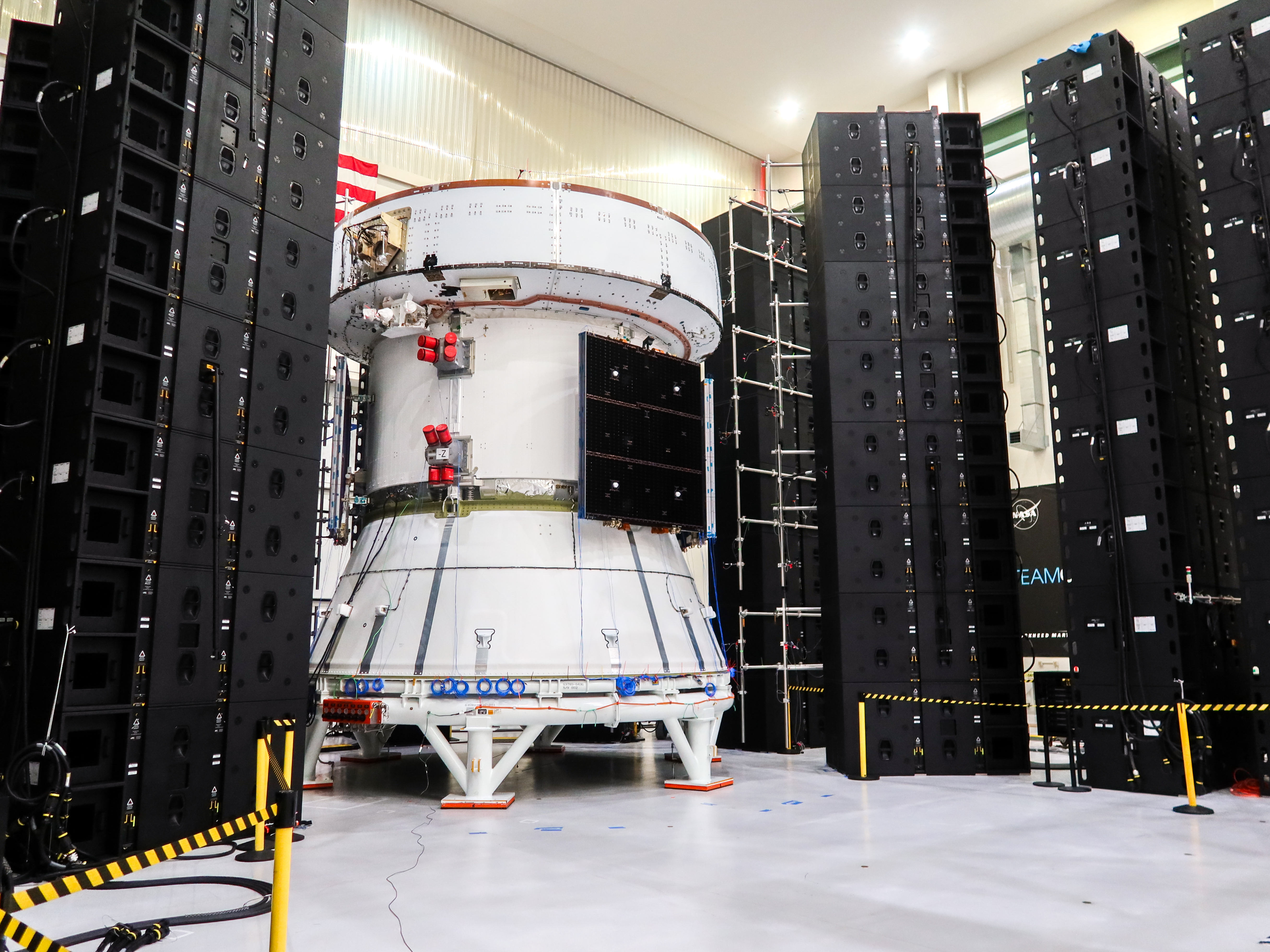
After the rocket delivers Orion to orbit, the spacecraft’s European-built service module will provide propulsion to circularize Orion’s orbit around the planet in low Earth orbit. This orbit increases overall mission success by allowing more launch opportunities for each element as compared to a lunar mission — SLS carrying Orion and its crew, SpaceX’s Starship human landing system pathfinder, and Blue Origin’s Blue Moon Mark 2 human landing system pathfinder.
Informed by Blue Origin and SpaceX capabilities, NASA also is defining the concept of operations for the mission. While some decisions are yet to be determined, astronauts could potentially enter at least one lander test article.
The crew will spend more time aboard Orion than during Artemis II, further advancing the evaluation of life support systems, and for the first time will demonstrate the docking system performance. The mission will inform lander rendezvous and habitation concepts and mission operations in preparation for future surface missions. The agency also plans to test an upgraded heat shield during Orion’s return to Earth to enable more flexible and robust reentry profiles for future missions.
Over the coming weeks, NASA will continue to refine specific plans for the flight, including a timeline for identifying astronauts to train for mission operations, options to evaluate Axiom’s AxEMU spacesuit lander interfaces ahead of lunar surface missions, mission duration, and potential science operations for the flight. NASA has asked for industry input on potential solutions to improve the communications with the ground during the mission since the Deep Space Network will not be used. The agency also is seeking both international and domestic interest in potentially flying CubeSats to deploy in Earth orbit, and may share other opportunities as the concept of operations for the mission is further defined.
As part of the Golden Age of innovation and exploration, NASA will send Artemis astronauts on increasingly difficult missions to explore more of the Moon for scientific discovery, economic benefits, establish an enduring human presence on the lunar surface, and to build on our foundation for the first crewed missions to Mars.
Learn more about NASA’s Artemis program: