2026 Sargassum bloom on track to be the largest, smelliest season yet
Popular Science...
It’s back and bigger than ever—but that’s not a good thing. Thanks to warming global temperatures and shifting oceanic conditions, marine biologists already expect that this year’s seasonal Sargassum blooms will grow to record-breaking proportions as they drift across the Atlantic Ocean. The island-sized biomasses aren’t only getting larger, either. tThey are also forming earlier than ever before.
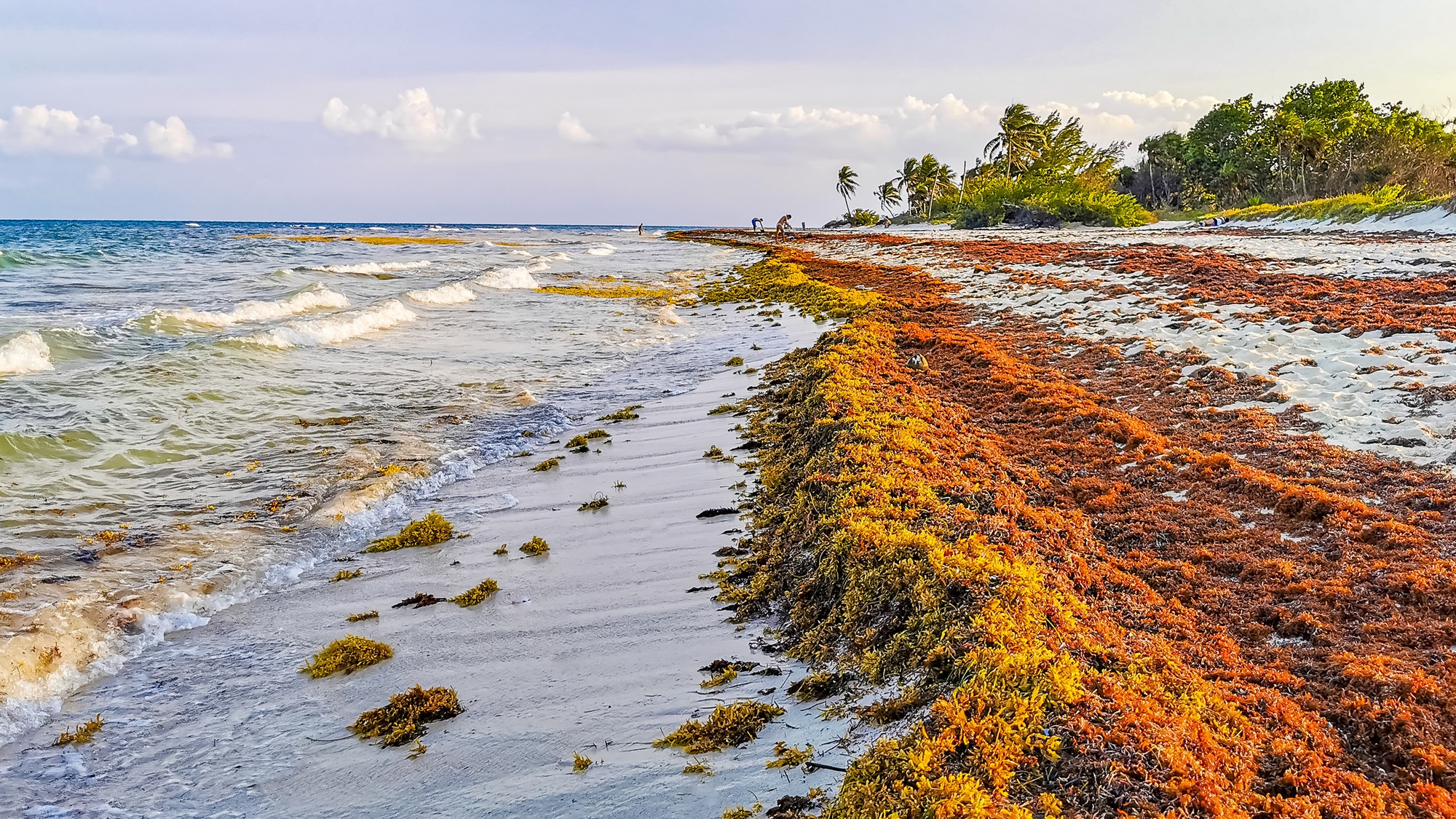
Sargassum is a genus of leafy brown seaweed characterized by its gas-filled sacs called pneumatocysts. These allow the algae to float and grow on the water’s surface, where it provides shelter and food for several marine organisms like fish, crabs, and eels. However, thanks to its chemical composition, Sargassum loses much of its usefulness once it washes up along shore. As it starts to decay, the biomass releases large amounts of hydrogen sulfide gas infamous for its “rotten egg” smell. Exposure to large amounts of the stinky plant life often causes throat, nose, and eye irritation, but the problems are much more severe for other nearby creatures. Too much Sargassum on a beach can prevent sea turtles from nesting, and make it difficult for those that do hatch to make it back out to the ocean. Especially dense piles of the stuff also blocks sunlight and prevents native plants from germinating.
Sargassum is named for its original home in the Sargasso Sea off the United States’ eastern coast, but the seaweed is on the move. Warmer ocean temperatures combined with nutrients from agricultural waste runoff have supercharged the algae, allowing it to grow at an exponential rate. In 2011, marine biologists first identified what is now known as the Great Atlantic Sargassum Belt, which spans the West African coast to the Gulf of Mexico. Except for 2013, the bloom has not only returned to the U.S., but grown larger every year. The Belt set a new biomass record of 37.5 million tons in 2025, and experts believe it will be even larger this season.
Researchers estimate over 9.3 million tons of Sargassum is already en route to Florida and the Caribbean. This is much earlier than in past years, thanks in large part to especially strong eastern trade winds. Once it arrives on beaches, cleanup crews will start disposing of the decaying plant life as quickly as possible. This comes at a steep cost, however. Florida’s Miami-Dade county has previously estimated that it costs around $35 million to remove Sargassum from its beaches every year.
If there’s any good news, it’s that organizations, researchers, and even beachgoers aren’t going into Sargassum season unprepared. Multiple groups are tracking the algae blooms, including the University of South Florida’s Optical Oceanography Laboratory, as well as the National Oceanic and Atmospheric Agency’s weekly Sargassum forecast.
The post 2026 Sargassum bloom on track to be the largest, smelliest season yet appeared first on Popular Science.