3,500-year-old loom tells a revolutionary tale
Popular Science...
Clothes make the man, and have helped keep humans from freezing for thousands of years. But how exactly did Bronze Age people make their clothes? Using the remains of a warp-weighted loom uncovered at the Cabezo Redondo archeological site in Spain, a team of archeologists is learning more. The loom dating back to 3500 BCE is detailed in the journal Antiquity and indicates that the region may have been a potential player in the Bronze Age’s textile revolution.
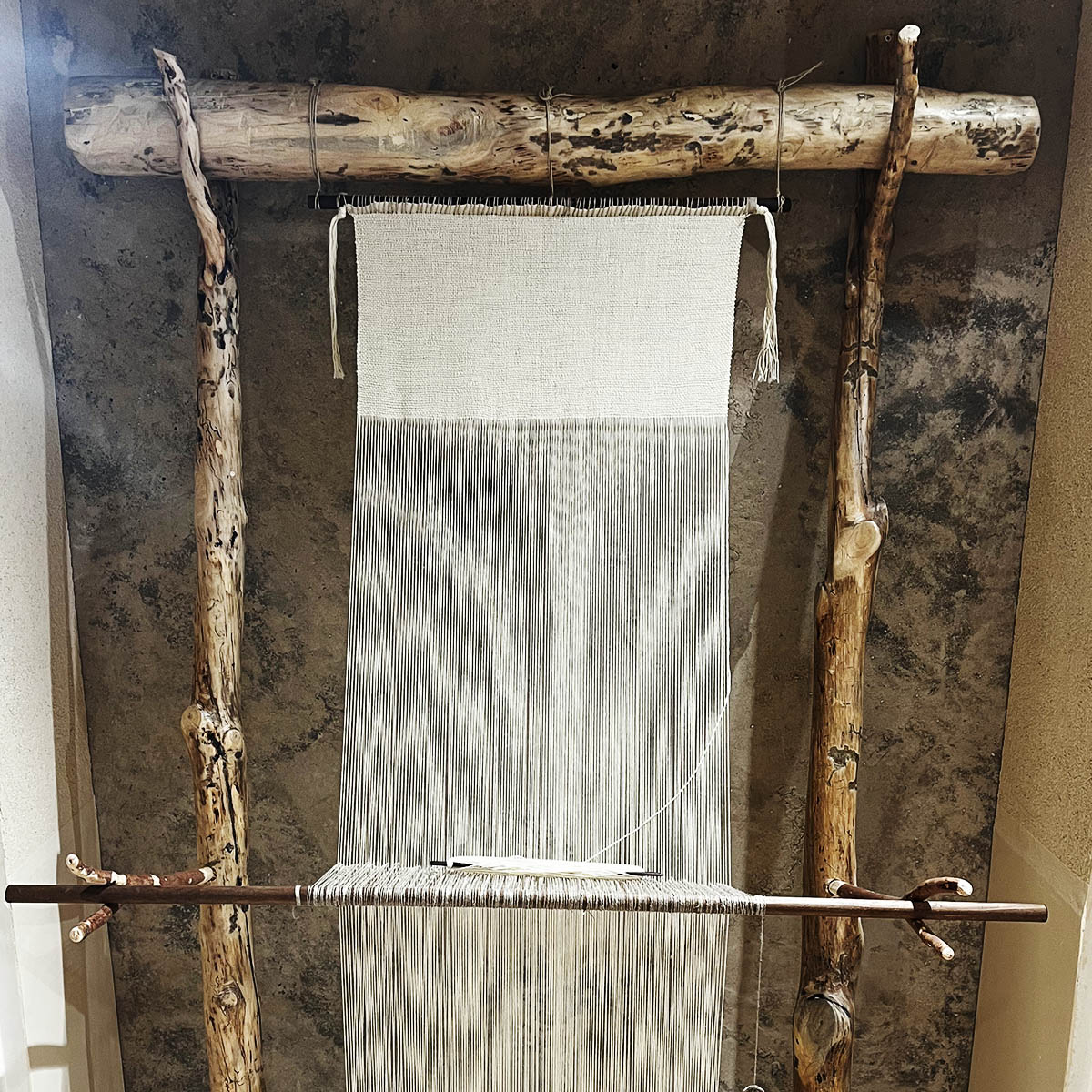
Warp-weighted looms are weaving devices used throughout prehistoric Europe and the Mediterranean to make textiles for clothing and blankets. Stone or clay loom weights attach to the bottoms of free-hanging threads to keep them taut. . Since they are made from wood and organic fibers, warp-weighted looms rarely survive the ravages of time. Archaeologists typically rely on the stone or clay weights to better understand how prehistoric peoples manufactured textiles using the looms.

“The existence of textile production in Bronze Age south-eastern Iberia was well established, particularly through the study of loom weights and spindle whorls,” Ricardo E. Basso Rial, a study co-author and archaeologist at the University of Granada in Spain, explained in a statement. “However, the wooden components of looms themselves are rarely preserved, which has severely limited our ability to reconstruct loom morphology, spatial organisation, and weaving practices in detail.”
The team found charred timbers and plant fiber ropes near clay loom weights at the Bronze Age settlement of Cabezo Redondo in southern Spain. They believe that this is the remains of one of the oldest wooden looms ever found. As one of the best-preserved examples of this Bronze Age warp-technology in the western Mediterranean, it offers a rare opportunity to learn about textile production.
After analyzing the preserved wooden remains and clay weights, the team partially re-constructed the loom. The wood was Aleppo pine, a tree native to the region, but the weights are more distinctive. The team believes that the use of these weights may be related to the manufacturing of finer or more varied fabrics.
“The characteristics of the loom weights suggest that this loom was capable not only of producing open tabby fabrics, but also potentially denser and more technically complex textiles, probably including early twill weaves,” Basso Rial said. “This represents a notable advance in our understanding of Bronze Age textile technology in Iberia.”
Weaves from the Neolithic up to the Bronze Age most often use tabby weaves made from plant fibers like flax. In contrast, twill weaves didn’t become widespread until the beginning of the about 1,000 BCE. Importantly, twill weaves were also typically made from wool. This means that Cabezo Redondo may have been an important site during the textile revolution, when wool use exploded and textiles diversified.
“This discovery allows us to see not just the partial tools that are usually preserved, but the loom itself—frozen at the moment it was in use nearly 3,500 years ago—offering a rare glimpse into the everyday craft of Bronze Age weaving,” concluded Dr Basso Rial.
The post 3,500-year-old loom tells a revolutionary tale appeared first on Popular Science.