5 cool innovations in sports and outdoors in 2025
Popular Science...
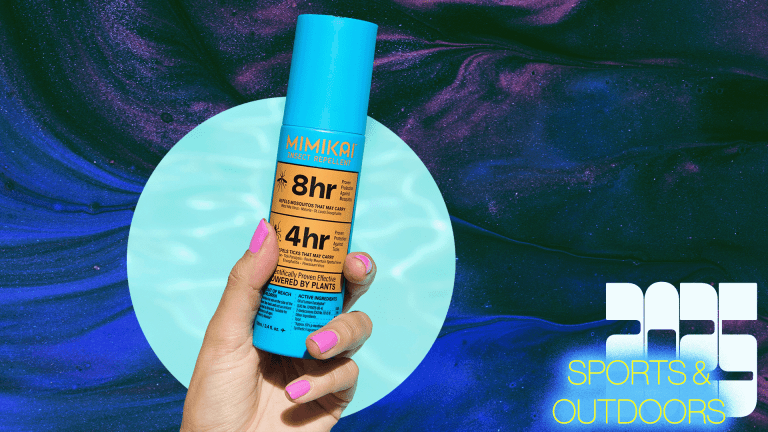
It’s no big secret that spending time in the great outdoors is good for our bodies and minds. For 2025, our Sports & Outdoors innovations make getting outside more accessible and safer. Our top prize winner Mimikai insect repellant is a safe and effective way to keep dangerous insects like ticks and mosquitoes from biting you while on that hike, without the harmful chemicals. Other exciting developments this year include a compostable sneaker, a screen that makes working on a computer outside during the day much easier, a highly versatile kit for mountain climbing, and a new bike helmet that can help prevent dangerous concussions.
(Editor’s Note: This is a section from Popular Science’s 38th annual Best of What’s New awards. Be sure to read the full list of the 50 greatest innovations of 2025.)
Grand Award Winner, Sports & Outdoors
Mimikai Insect Repellent by Mimikai: The first biomimicry insect repellent

Most spray-on bug repellents are a sticky cocktail of nasty chemicals. Mimikai is different. The first new EPA-registered insect repellent in 25 years, the biomimicry-based Mimikai mosquito and tick-repelling spray and mist is free of harsh chemicals. But it’s as effective as DEET. After seven years of testing, not only does it meet the highest safety standards, but it’s effective for hours, and it doesn’t feel sticky on your skin. Mimikai blends methyl nonyl ketone, aka 2-undecanone, a naturally occurring compound found in wild tomatoes, bananas, cloves, ginger, and guava, with oil of lemon eucalyptus, soybean oil, and other skin-friendly ingredients. We’ve been testing it against biting bugs and insects in Vermont all summer, and we’re impressed with this non-toxic, effective alternative to traditional pesticides.
Fade 101 by Solk: A sneaker that’s beautiful, holds up, and won’t poison the planet
Footwear is notoriously toxic, both when it’s made and when its useful life is over. Foams and leathers don’t break down once shoes and boots are discarded. Eco-friendly alternatives lack structure and durability, and most don’t look stylish or feel comfortable. Veteran footwear designers David Solk and Irmi Kreuzer started Solk to make shoes that wouldn’t cause harm to the environment. Designed and built with a combo of traditional crafting and AI, every fiber, stitch, material choice, and end-of-life consideration has one goal: to be harmless to our environment. There is no rigorous zero-impact certification, so Solk created its own stringent standard that tests for 200 toxins. Materials include a 100% compostable foam midsole—other shoes use EVA, which won’t decompose for millennia—and leathers tanned without toxic forever chemicals that can decompose in a landfill. The shoes are beautiful, durable, and compostable.
Advanced Mountain Kit by The North Face: The most versatile high alpine clothing
High-altitude mountaineers have historically dressed in cumbersome, Gumby-like down suits for summiting 8000-meter peaks. They were sweaty on the approach, expensive, and task-specific. The North Face’s new 24-piece Advanced Mountain Apparel Collection, which is part of a 31-piece Advanced Mountain Kit–provides elite athletes with the same extreme weather protection for climbing the world’s highest peaks, in a kit that can be used comfortably for mountain missions, including 8000-meter peaks, in a variety of weather in a range of altitudes. The kit is comprised of layers purpose-built for technical alpine climbing and mountaineering in all weather, including high-altitude environments. It’s a modular system. Each layer enhances the performance of others to help elite athletes succeed, whatever their objective. Lightweight, compressible to take up minimal packed space, and tough, the kit is built with cutting-edge fabrics, construction, and design, including Spectra yarns that are stronger than steel yet lightweight, and continuous baffle Cloud Down that eliminates cold spots and optimizes packability. DotKnit fabric marries the thermal and odor benefits of wool with active moisture transfer. The shell jacket and pants use an electrospun breathable membrane, and the down layers are infused with titanium and aluminum that reflects body heat.
Daylight DC-1 by Daylight Computer: The first computer designed to be used outdoors
Staring into our phones, tablets, and computers produces a lot of stress on our eyes and brains, whereas e-readers like the Kindle offer a gentler option for screentime. However, these e-readers generally don’t have the processing power necessary to make them as useful as a regular tablet or computer. The Daylight Computer splits the difference. Its monochrome tablet uses transflective LCDs in a patented fastest e-paper display ever that unlocks full computer functionality with the glare-free reflective display, which makes it ideal for working outdoors. The tablet is low-stimulation because there are no bright and saturated colors, fast-paced flashing, or brain-agitating blue light, so it’s not addictive like other phones, tablets, and computers. It won’t disrupt your sleep or put you in a negative feedback dopamine desensitization loop. The display stack feels paper-like, and it’s fast enough to be used for anything on the internet. That makes this a great tablet for kids, who are especially susceptible to the addictive properties of other devices.
Deflectr RLS Bike Helmet by Canyon: The most effective brain-protective helmet system is on the outside
Most bike helmets use expanded polystyrene (EPS) foam to absorb blunt impacts, but EPS is bad at dispersing the rotational forces that cause traumatic brain injury in a crash. RLS is a pioneering safety breakthrough that diffuses the rotational forces that can cause traumatic brain injury through exterior panels that slide on ball bearings, then release in a crash, taking stress off a cyclist’s brain. The outer shell panels rotate on 1500 tiny polycarbonate bearings on a vinyl sticker shell base. In a crash, mechanical fasteners release, allowing the bearings to roll freely and the outer shell to slide away, dissipating energy with concussion-level force applied to the shell. Then the bearings can roll freely, and the outer shell can slide away. That allows the brain time to decelerate inside the skull, minimizing internal damage when the helmet contacts the ground. Eventually, the RLS technology will be available for motorcycle, industrial, equestrian, snow, American football, and other sports and activities in entry-level to advanced helmets. According to Virginia Tech testing, the gold standard for cycling helmets, the tech works. This helmet is currently rated #1 safest cycling helmet you can buy.
The post 5 cool innovations in sports and outdoors in 2025 appeared first on Popular Science.