Hawaiian forest birds are stealing each other’s twigs
Popular Science...
Birds in Hawaii are stealing from each other, and this bird-on-bird crime even extends to members of the same species. It’s an example of kleptoparasitism, or when an animal steals things from another. Specifically, these colorful, winged kleptoparasites are pilferring nest-material, sometimes causing the demise of the depleted nest.
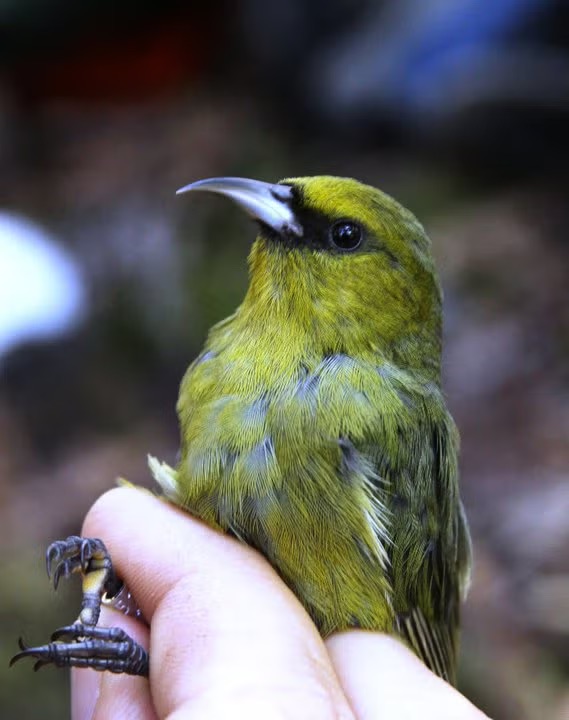
Researchers documented this behavior while observing over 200 native canopy-nesting birds nests on the island of Hawaii—aka the Big Island. The birds included the apapane (Himatione sanguinea), the i‘iwi (Drepanis coccinea), and the Hawai‘i amakihi (Chlorodrepanis virens).
Though there has been anecdotal evidence of such theft, a study recently published in The American Naturalist represents the first instance of it being tracked and quantified in nature.
“People working in the field have seen this behavior for years, but it’s never been documented at this level,” Erin Wilson Rankin, lead-author of the study and an entomologist at University of California, Riverside (UCR), said in a statement. “Now we can say who’s doing it, who they’re stealing from, and what happens to the nests afterward.” Wilson Rankin’s husband, UCR biologist David Rankin, is also a co-author.

Most of these birdy crimes took place between nests sitting at similar heights from the ground, aligning with the so-called “height overlap hypothesis”—that birds might be stealing from nests they come upon as they forage. Both the thieves and the victims were most commonly the apapane, and this is probably because of its significant numbers in the forest.
“What’s fascinating is that this behavior is happening within species as well,” Wilson Rankin said. “Apapane were stealing from other Apapane.”
This kleptoparasitism is risky behavior. While snagging nesting material might make it faster and easier to construct a nest, the material could also bring disease or parasites along with it. Stealing could also lead to violent confrontations with the wronged bird, though Hawaiian birds are usually non aggressive.
While most of the thievery was carried out on abandoned nests, around 10 percent of cases involved nests that were either being built, or already carrying eggs or chicks. Around five percent of the nests in the study“failed” in the wake of a theft because the bird parents left or damage was done to the nest structure.
These outcomes are new warning bells for species already suffering from disease, habitat loss, and climate change. Sprinkle in risks like avian malaria, and understated threats of this kind could accelerate population decline. The birds in the study aren’t endangered, but they are members of a diminishing group of native birds retreating to higher elevations because of human-introduced mosquito-borne diseases. These kinds of forests might be becoming more and more packed and competitive for birds.
“This kind of behavior could be more common if nesting materials or safe nesting sites become scarce,” Wilson Rankin explained. “It’s something we should measure.”
Identifying the most at-risk birds and figuring out when kleptoparasitism is most likely might contribute to better conservation strategies as habitat continuously breaks up.
“If we can predict when and where this behavior happens, we might not be able to stop it, but we can intervene in other ways to support at-risk species,” she added. “That’s a benefit of this work.”
The post Hawaiian forest birds are stealing each other’s twigs appeared first on Popular Science.