A 3D-printed wheelchair is helping this turtle walk again
Popular Science...
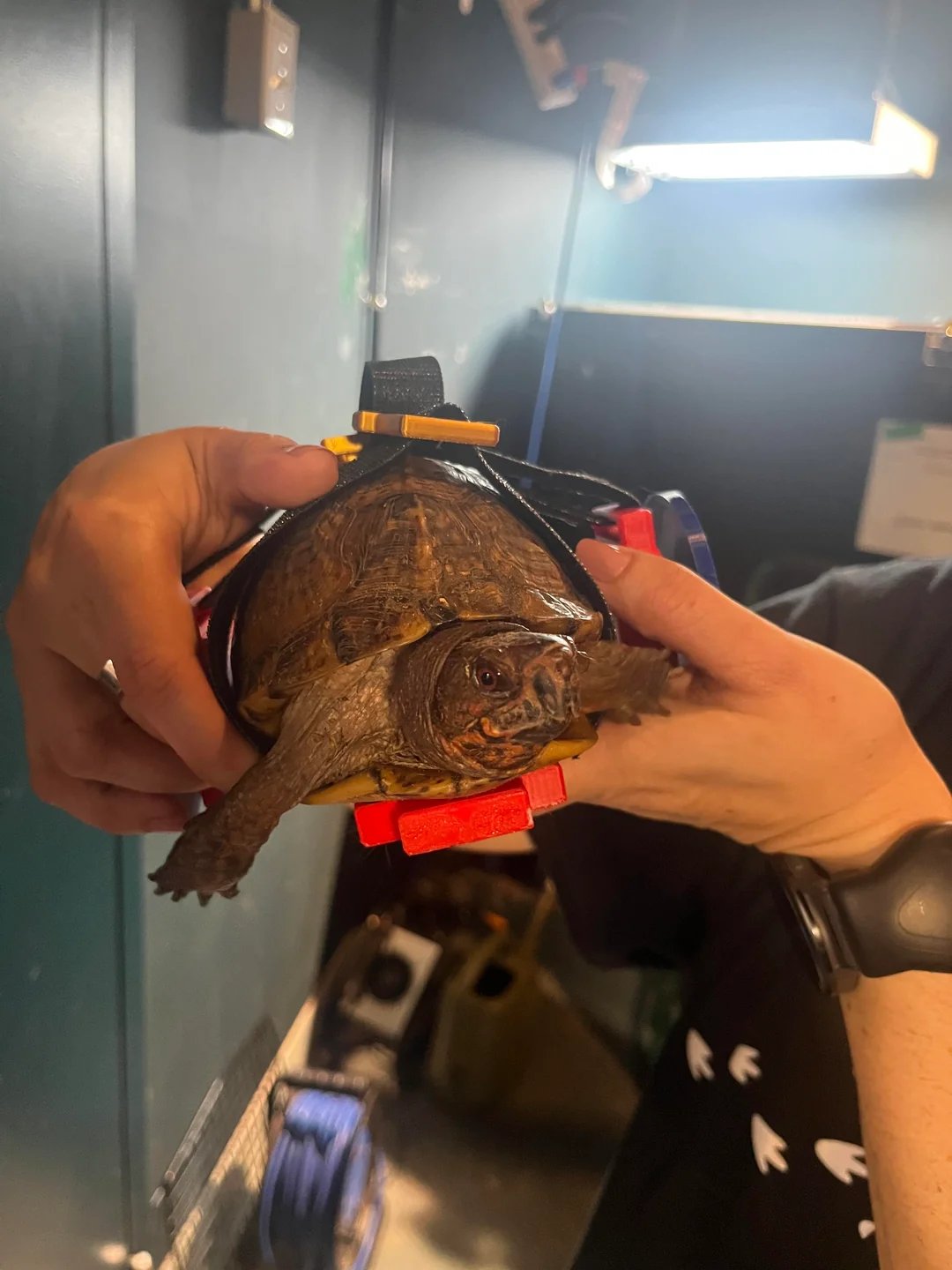
A Gulf Coast box turtle named Moses, missing both of its back legs, is getting a second chance at mobility thanks to a caring human and a 3D printer. Using the printer, an aquarist going by the Instagram handle jawscritters designed a custom-made wheelchair that supplements Moses’s movement. After fielding feedback from a community of makers on Reddit, jawscritters made several adjustments to the original design. Now, with the help of that online community, Moses is moving around better than before thanks to his pair of new wheels. Jawscritters has since shared the files for the design online, so anyone with a 3D printer can potentially help other turtles in need.
“One of my coworkers asked if I could make something to help one of our ambassador box turtles with mobility,” Jawscritters notes in one of his posts. “Within 24 hours I had a plan to make a 3D printed wheelchair.”
Building a turtle wheelchair, one iteration at a time
Jawscritters says he was approached by a colleague at the Mississippi Aquarium in Gulfport to see if he could help improve Moses’s mobility. Though it’s not immediately clear exactly what caused the issue, Moses’s lack of back legs prevented the soccer-ball-sized reptile from moving around on its own. Jawscritters got to work on the design and said he had several working prototypes within one week. Images of the first design show what resembles the rear axle and wheels of an orange toy truck strapped across the turtle and secured to Moses by a harness over the top of its shell.

To improve on those first efforts, jawscritters made a series of structural adjustments. First, he made the wheels thinner and the axles shorter, which he says should help Moses make tighter turns. He also slightly reduced each wheel’s diameter and added grooves to the base of the newer wheelchair.
Not all of the attempted changes panned out, though. Jawscritters says he tried adding a front bumper to the chair in hopes of keeping it level and making it easier for Moses to move. In reality, the addition actually seemed to make it more difficult for Moses to move the wheelchair, so the bumper idea was ultimately scrapped.
Though Jawscritters notes there is likely still some room for improvement in the design, the aquarium caretaker seems pleased with Moses’s newfound mobility. With the files now shared online, they could potentially help other turtles down the line.
“This has been a fun and challenging project and I’m very happy to see this little guy zooming around,” Jawscritters wrote in one of his posts.
Turning turtles into wheeled racers
This isn’t the first time a helpful human has tried to cobble together a turtle wheelchair. In 2018, veterinarians at the Maryland Zoo came across an injured Eastern box turtle with multiple fractures on the underside of its shell. To help heal him back to health, they needed to find a way to keep his shell lifted off the ground without impeding its ability to move around. The solution: a LEGO wheelchair. Veterinarians sketched some initial designs and then sent those to a LEGO enthusiast. Together they created a multi-colored LEGO frame surrounding the turtle shell that sat atop a pair of LEGO wheels. Plumber’s putty was used to safely attach the device to the turtle’s shell. Luckily, the injured turtle took to its new set of wheels right away.
“He never even hesitated,” said Fraess. “He took off and has been doing great,” Maryland Zoo veterinary extern Garrett Fraess said in a blog post.
That turtle has since made a full recovery and has been released back to its native habitat.
Further south, a veterinarian at the LSU School of Veterinary Medicine in 2019 came across a pet turtle named Pedro that had lost its back legs after escaping from its enclosure. In this case, the vets decided to ditch the wheelchair approach and instead used a LEGO car kit to place a removable axle and wheels directly under Pedro’s shell. The result is a kind of rudimentary, cyborg turtle hot rod.
Elsewhere, 3D printing technology is making it easier to create niche, custom mobility aids for animals that might not otherwise be available in consumer markets. In 2024, a team of volunteers and engineers banded together to 3D print a harness to help a nearly three-decade-old turtle named Charlotte living with the funnily named, but medically serious, bubble butt syndrome. That harness helped weigh down the turtle’s back end in a way that didn’t cause damage to its shell. Thanks to that intervention, Charlotte’s swimming improved and he no longer has to sleep with its butt in the air.
The proliferation of 3D printer availability and decreases in price means that more and more people potentially have the resources needed to make one off devices for specific situations. Still, even with all that readily-available tech, it still takes the initiative and care of animal caretakers like Jawscritters to actually turn that into something tangible.
The post A 3D-printed wheelchair is helping this turtle walk again appeared first on Popular Science.