A historic Black community in Maryland is fighting to protect its last wetlands from development
TheGrio...

Founded by formerly enslaved people, East Towson residents say a new housing project threatens not just land, but generations of history, environmental stability, and community preservation.
In East Towson, Maryland, the fight over land is about more than zoning or development. It’s about protecting one of the region’s oldest historically Black communities, and the fragile ecosystem that has sustained it for generations. According to AFRO News, construction on the site has already been halted due to state permit violations.
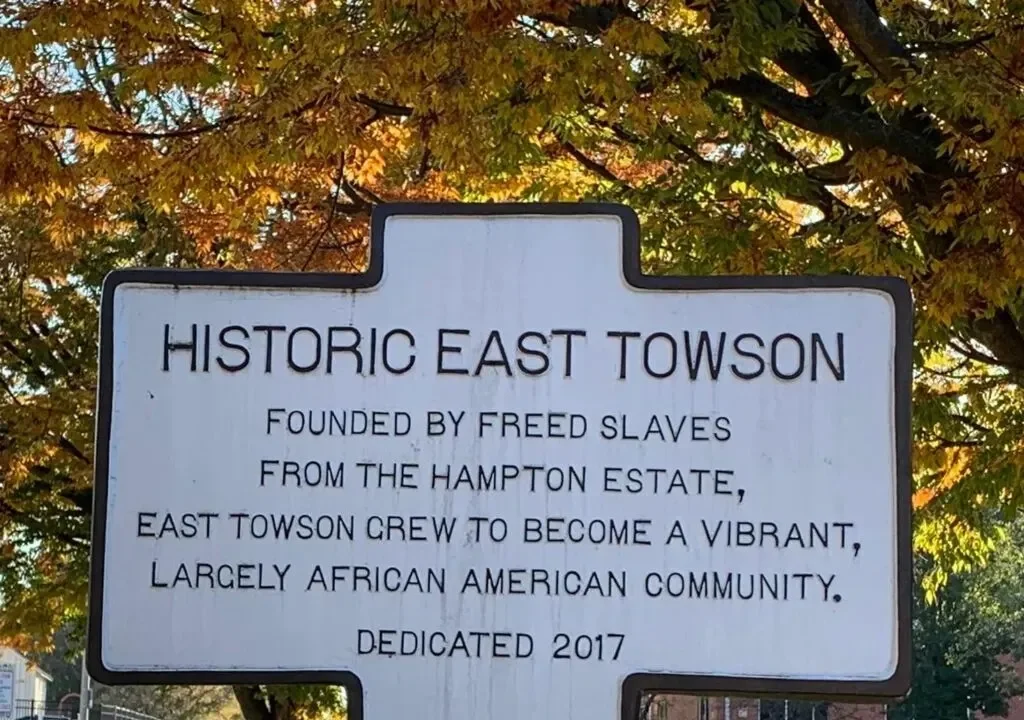
Founded in the 1850s by formerly enslaved people from the Ridgely Estate, East Towson has long stood as a testament to Black resilience and self-determination. Now, residents say that legacy is once again under threat as development pressures close in on the neighborhood’s last remaining forest and wetlands.
Construction on a proposed 56-unit affordable housing project known as Red Maple Place has been temporarily halted after the Maryland Department of the Environment found the site in violation of state permits. But for many residents, the pause is only a small victory in a much longer battle.
“This is the last of what we have,” one resident shared, echoing a sentiment that has been building for nearly a decade as neighbors have pushed back against what they describe as unchecked development.
The project, planned for 407 E. Joppa Road, would sit on just 2.5 acres, but its impact, residents argue, could be far-reaching. Community advocates say the development would significantly reduce the required forest buffer, from 100 feet to just 25 feet, increasing the risk of flooding and environmental degradation in an area already vulnerable to stormwater runoff.
And some say those impacts are already being felt.
“Since the clearing began, it rained a lot, and the drainage, standing water, or sediment runoff is still visible,” said resident Martha Levene, describing the aftermath of early site work that began in mid-February.
For others, the concern is structural. Michele Yendall, who lives nearby, worries about the long-term stability of her community’s infrastructure.
“I’m particularly concerned about the support wall of our West Parking lot,” she said, noting that decades of use had never caused issues until construction began. “Now we’re seeing changes.”
Residents also say they were left out of the process entirely.
“There were no public notices as required by law prior to construction,” Yendall added.
A report from the Maryland Department of the Environment appears to support some of those concerns, documenting multiple violations, including the lack of proper stormwater permits, missing environmental plans, and failure to post required public notices.
For State Sen. Mary L. Washington, who represents the district, the situation reflects a much longer pattern.
“East Towson, a historically African-American community, has consistently borne a disproportionate burden from development,” Washington said.
She pointed to decades of infrastructure and housing projects in the neighborhood since the 1960s. Projects that have reshaped the community over time.
Single-family homes have been demolished. Green spaces have disappeared. Even a Negro League baseball field was replaced by a utility substation.
“All these changes have primarily benefited expanding housing and commercial developments, often at the expense of East Towson’s residents,” Washington said.
Now, residents fear history is repeating itself—this time with environmental consequences that could extend beyond their neighborhood.
Washington emphasized that protecting the wetlands and forested areas in East Towson is critical not only locally but also regionally. The land plays a role in managing stormwater runoff and protecting waterways that feed into the Chesapeake Bay.
Still, questions remain about how the project moved forward in the first place.
Washington said she has received responses from state agencies, but was surprised by what she described as a lack of accountability from Baltimore County officials, particularly around development approvals and environmental protections.
On the other side, the project’s developer, Homes for America, maintains that the development followed proper channels.
“The development was approved by every County department and proceeded upon receipt of our MDE stormwater permit,” said CEO Dana Johnson. “As soon as we were advised that there was an additional permit required, we immediately complied.”
Johnson also pushed back against criticism of the project itself.
“We believe that affordable housing builds community,” she said, noting the need for housing options for essential workers, seniors and people with disabilities.
But for many residents, the issue isn’t whether affordable housing is needed. It’s where—and at what cost.
In a community built by formerly enslaved people, where land has long served as both refuge and resource, the stakes feel especially high.
“This isn’t just about trees,” one advocate said. “It’s about preserving a community that has already lost so much.”
As the fight continues, Washington is urging broader public attention, calling on residents across Maryland to demand environmental accountability and greater oversight.
For East Towson, the outcome could determine whether one of the state’s oldest Black communities continues to stand—or continues to be chipped away, piece by piece.