Ancient Roman bone penis discovered in forgotten museum box
Popular Science...
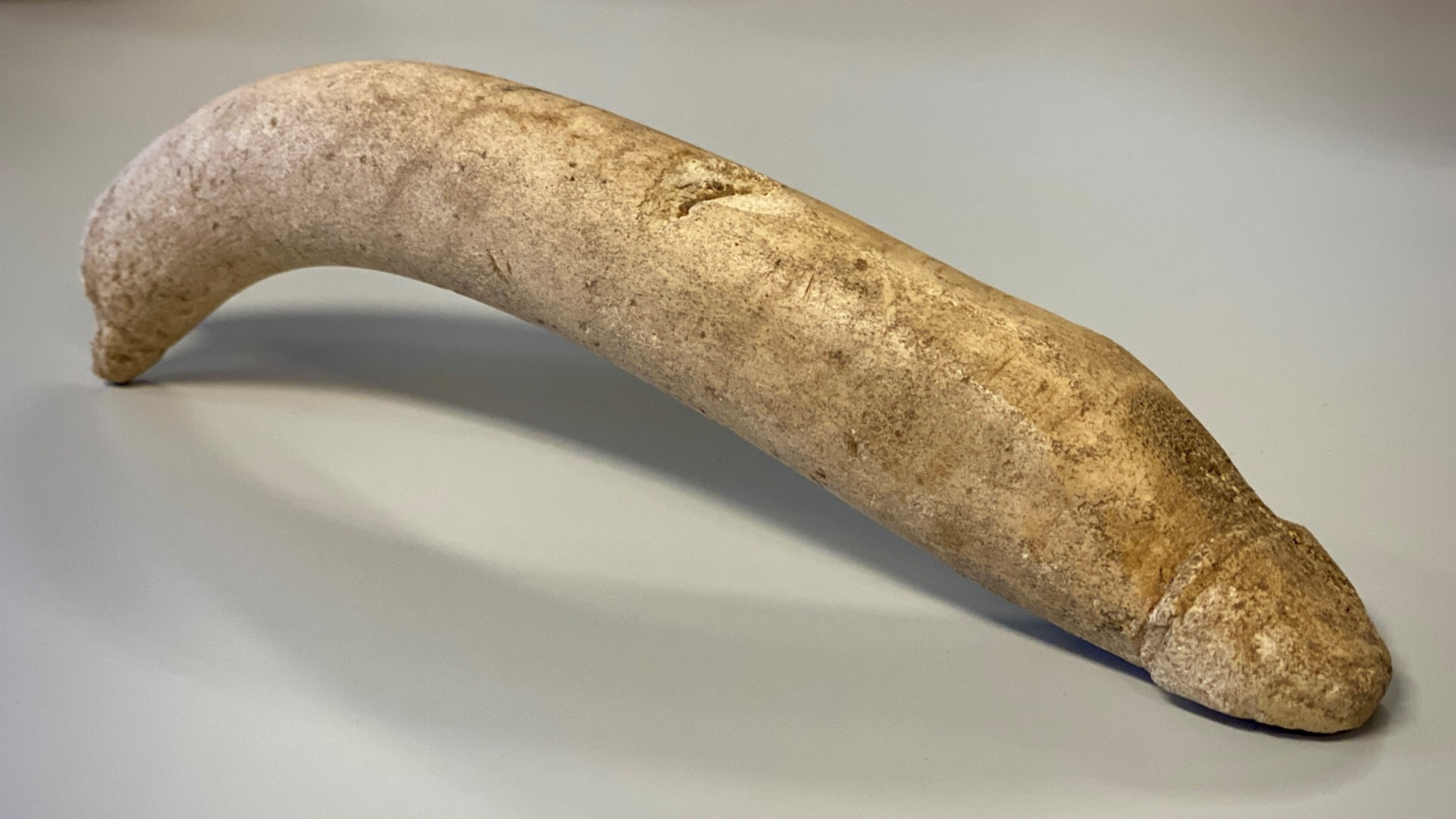
Archaeologists in the Netherlands recently discovered a sizable conversation starter tucked away in a forgotten storage box. Amid a long overdue archive cataloguing project at Valkhof Museum in Nijmegen southeast of Amsterdam, researchers identified a roughly 7.8-inch-long penis carved from bone dating back 1,800–2,000 years to ancient Rome.
Romans typically weren’t too scandalized by nudity in artwork, including depictions of male genitalia. What’s more, they often saw penises as symbolically protective. Phallus sculptures frequently decorated homes, usually above entrances to guard against the “Evil Eye.” In some instances, they even adorned jewelry.

Despite this, the recent discovery in the historic Dutch city may be the first of its kind. While archaeologists know of phalluses crafted from stone and wood, the archived item is the only documented example carved from bone. While unclear what kind of bone the sculpture is made from, it almost certainly came from an animal like a cow or goat.
The sculpture has spent decades inside one of around 16,000 unopened storage containers alongside other rare, uncatalogued relics. Collected across multiple excavation projects, the items are offering historians an unprecedented look at life in the province of Gelderland–named after the legendary death rattle of a dragon–during Roman occupation.
Archaeologists have so far only unpacked about 300 boxes. Among these exciting findings is a well-preserved example of a drinking vessel known as a “face beaker” for the decorative visage on its side. Other items include mold-based cups and bowls featuring detailed decorative flourishes like woodland landscapes.
The scope of this archive is unsurprising. Nijmegen’s history dates back nearly 2,000 years, when it was originally known as the urban center of Noviomagus. As one of the oldest cities in the Netherlands, Noviomagus functioned as a strategic administrative and military hub positioned near the Roman empire’s northernmost border. The recent discoveries show that the local populace wasn’t simply occupied by Rome’s forces—they came to adopt and engage with their traditions, artwork, and symbolism.
With only a fraction of the boxes catalogued, there will undoubtedly be more surprises in store for archaeologists at the Valkhof Museum. Given Roman cultural norms, there’s a good chance more phalluses are waiting for them.
“Romans had no shame around genitals,” provincial archaeologist Ilse Schuuring said in a statement translated from Dutch.
The post Ancient Roman bone penis discovered in forgotten museum box appeared first on Popular Science.