Barry Jenkins says he still worked at Banana Republic while signed to Focus Features and CAA
TheGrio...

The “Moonlight” director got real about what it took for him to bring films to fruition, even after he had the backing of a major studio.
According to Barry Jenkins, all filmmakers are facing a steep uphill battle in today’s industry, despite what may look like success from the outside.
“Right now, it is difficult for any person to make a film,” he said.
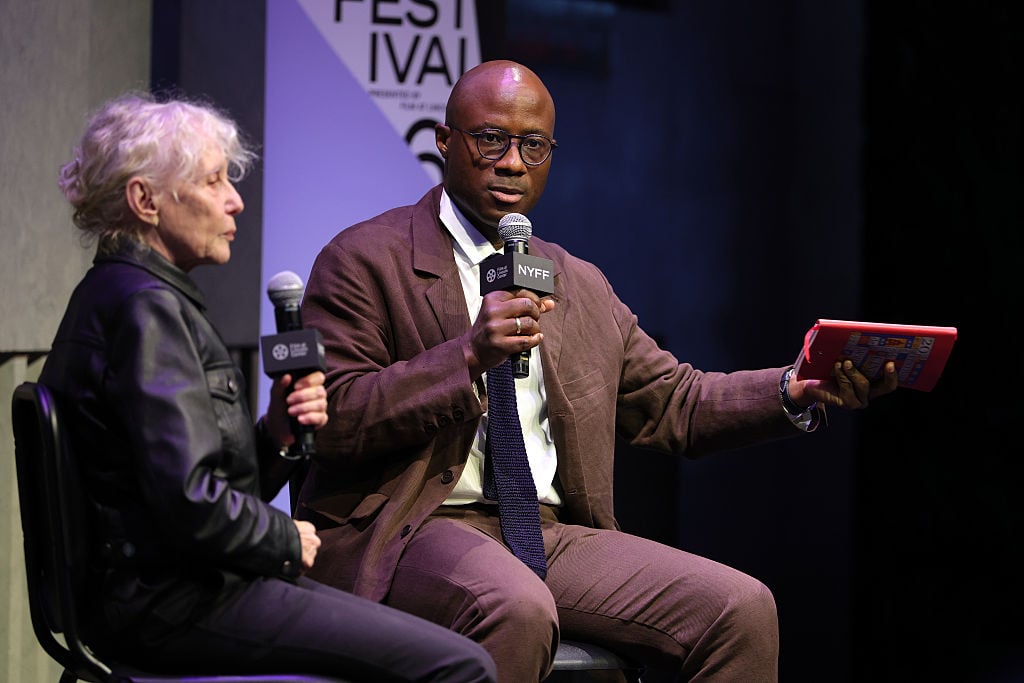
The director responsible for films like the Oscar-winning “Moonlight,” “If Beale Street Could Talk,” and the newly released feature, “The Drama,” starring Zendaya and Robert Pattinson, told the audience at the Directors Guild of America Theater in New York that even after he received a Focus Features deal and representation from CAA, he still had to have a side hustle working retail at Banana Republic for three years.
“Because having a film on the year-end list at the New York Times doesn’t pay the rent,” Jenkins said.
Still, he said there were times when he worked non-directing jobs just to be a part of the film industry in any capacity he could.
“I was working at the Telluride Film Festival. I had been there in 2002 as a student, and I went back every year. I literally had a movie screening at the Toronto International Film Festival and I was the concession stand manager at the Telluride Film Festival.”
He continued, “I just wanted to be where cinema was, and I thought at some point being where cinema is is going to give me a better appreciation for what cinema is and how I can apply the things I’m seeing here to my own cinema. That didn’t guarantee that I was going to end up sitting on this stage right now, but just having faith in my own passion was enough. It kind of had to be enough.”
Calling himself “ruthlessly practical and pragmatic,” Jenkins also recalled looking at a disheartening social media comment where someone wrote, “Does worry anyone that not all of us gonna be successful?” The director said the comment broke his heart, but then he saw the reply, which said, “No, because success is subjective.” This led to his next anecdote, about one of his old film school classmates who did not go on to be a feature film director, but took a career with the DGA, and became “one of the gears that’s providing for everyone that has a DGA card,” showing that there are alternative ways to find a path in the industry.
Going back to the question of whether he was worried about everyone becoming successful, Jenkins said, “If we all continue to work, enough of us will be. And hopefully those of us that are will be the kind of success that wants to see the rest of us be successful as well and wants to do whatever we can to inspire success in the rest of us.”