Beacon of Light
NASA...
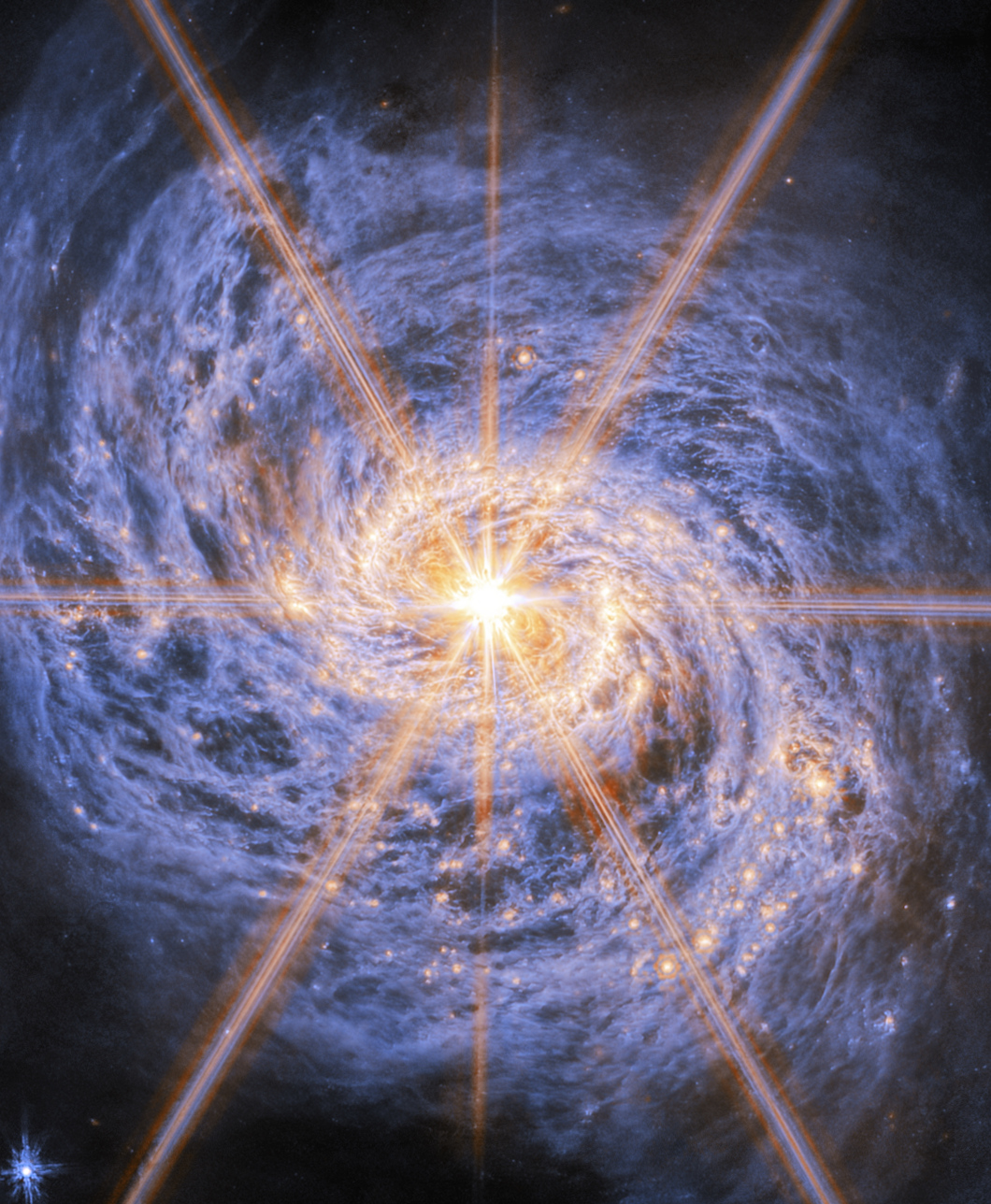
This latest Picture of the Month from the NASA/ESA/CSA James Webb Space Telescope features Messier 77 (M77), a barred spiral galaxy famous and appreciated among astronomers for its combination of relative proximity and spectacular features to study. It is located 45 million light-years away in the constellation Cetus (The Whale).
ESA/Webb, NASA & CSA, A. Leroy
The heart of galaxy M77 shines brightly in this May 7, 2026, image from NASA’s James Webb Space Telescope. The intense glow is due to gas being pulled by the strong gravity of the central black hole into a tight and rapid orbit around it. The motion of the gas causes it to heat up, releasing tremendous amounts of radiation.
The bright lines radiating out of the center are diffraction spikes. The spikes are not a physical feature of the galaxy, but an optical effect caused by the telescope itself.
Image credit: ESA/Webb, NASA & CSA, A. Leroy