College Football Playoff committee sending message to Notre Dame by leaving Irish out of 12-team field
NCAAF College Football News, Photos, Stats, Scores, Schedule & Videos...
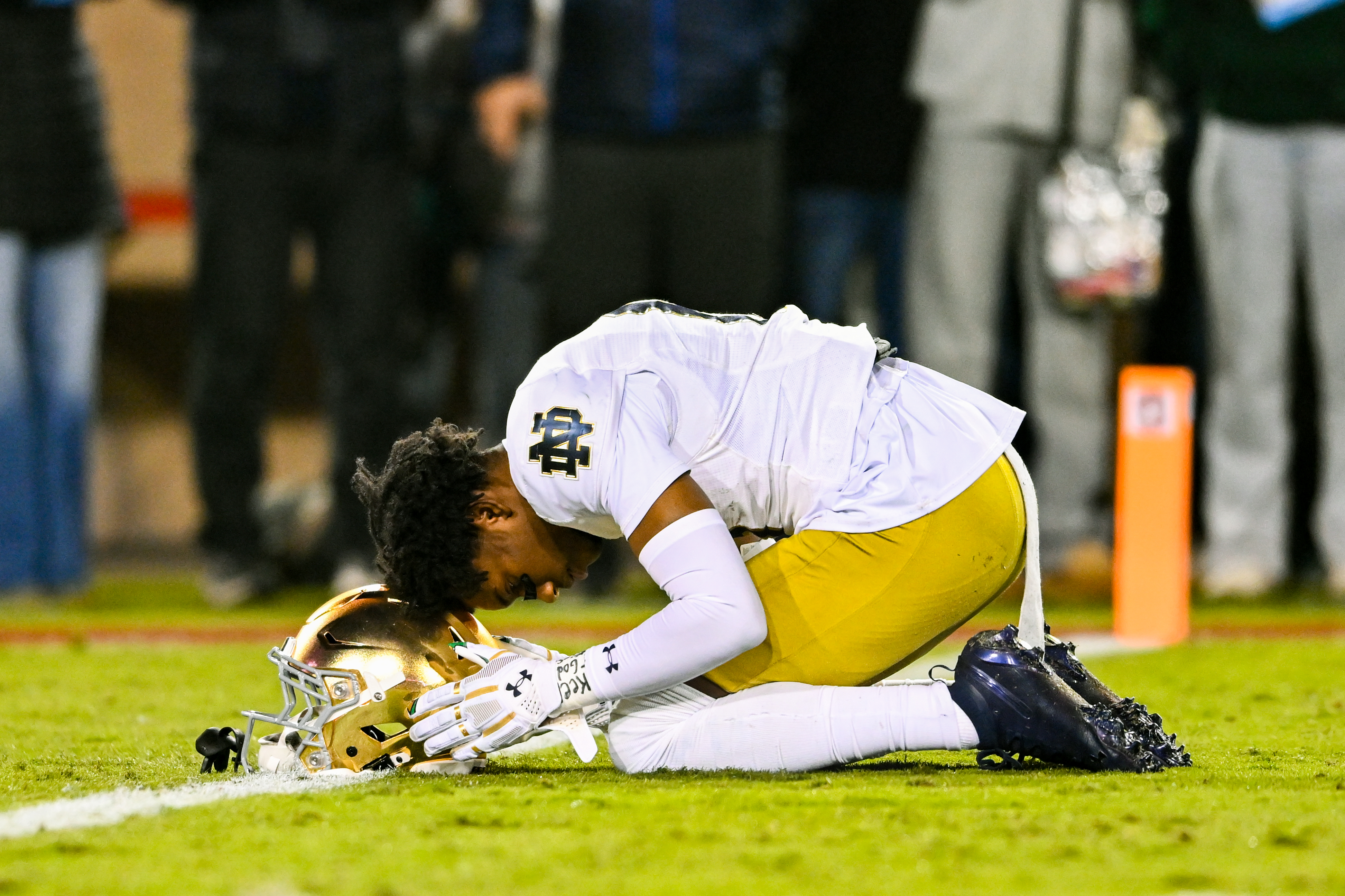
The work is finally done for the worst selection committee in the College Football Playoff’s dozen-year history, and there are only two ways to explain the grotesque, odious bracket that it belched out Sunday.
By jumping Miami over Notre Dame for the last playoff spot when neither team played on conference championship weekend, either the committee didn’t know what it was doing all along or it looked at its bad options Saturday night and chose the one with the most potential upside to the members.
Make no mistake, excluding Notre Dame was a message from the CFP, launched in the direction of South Bend, Indiana, and tinged with politics that have festered within the ranks of administrators across the country:
Don’t want to join a conference? Fine, but if it’s a close call for a playoff spot, you get what you get.
And this year, the Irish get nothing. Too bad.
Was it fair? Maybe not. Was it premeditated? No chance. It would be hard to believe anyone went into that committee determined to screw over Notre Dame.
But when all the data was complete late Saturday night, the committee was faced with a choice: There was only room for two among Alabama, Miami and Notre Dame. And despite the committee ranking Notre Dame either No. 9 or No. 10 every single week since the start of November — just inside the cut line — the Irish suddenly dropped to No. 11 and out of the field despite no results that would directly impact where they were in the pecking order.
Notre Dame players, fans and administrators will rightly demand answers. Everyone knew their 10-2 résumé was thin on notable victories, but having the rug pulled like this was cruel and unnecessary. If you were in their shoes, you’d be furious.
So what happened?
At the very end of the process, the committee had to choose who to tick off.
If it was Alabama getting docked for its 28-7 loss to Georgia in Saturday’s SEC championship game, the committee would have felt the entire weight of SEC fury for the next nine months. It would have made last year’s freakout over excluding 9-3 Alabama look like a polite request to speak to the manager.
If Miami had been left out, the ACC would have been eliminated entirely from the playoff thanks to 8-5 Duke upsetting Virginia in the championship game. That would have been an embarrassment not only for the conference but for a system that was set up for power conference champions to get into the field barring an extreme anomaly like Duke.
So that left Notre Dame. And if you make Notre Dame mad, it’s only one school, not an entire conference.
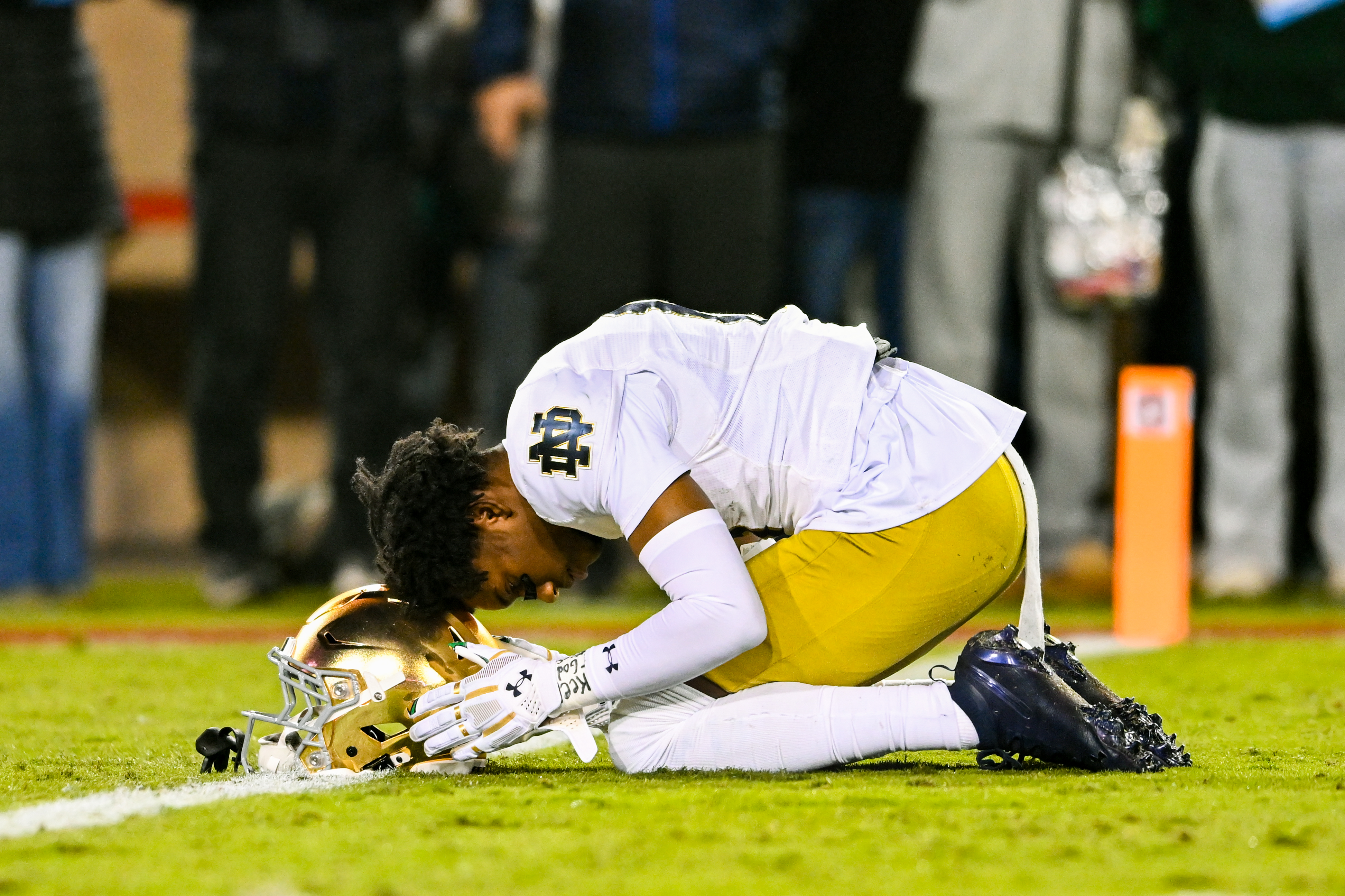
The playoff can exist and rake in billions of dollars without Notre Dame. But Notre Dame cannot exist as an independent, in this era, without the CFP.
That’s why former Notre Dame athletics director Jack Swarbrick played such a hands-on role in creating the 12-team playoff. By guaranteeing at-large access for Notre Dame if they were ranked in the top 10, there was a thought the Irish could host a lucrative home playoff game in South Bend — and keep all that money rather than redistribute to fellow conference members — if they simply managed their scheduled properly and won the games they’re supposed to win.
The power leagues accepted that. But did they like it? No, not universally.
Within the college football ecosystem, Notre Dame does get special treatment. Yes, the Irish are one of the few schools with enough juice to sign their own TV deal, so good for them.
But when they’re able to have one foot in the ACC (except, of course, during the 2020 COVID season when it wasn’t convenient) while also having an outsized legislative role on the CFP management committee, it creates an undeniable backlash. As a reporter covering college sports, you never have to go very far into your contacts to find someone willing to grumble about the way Notre Dame wired this system to its advantage.
Ohio State doesn’t get that kind of treatment. Neither does Alabama, Clemson, LSU or anyone else that has actually won a championship in the past decade. Each FBS conference has one representative on that committee via their commissioner to speak for the conference. Notre Dame’s athletic director has a seat at the table to speak for Notre Dame.
That’s a power imbalance, and a particularly notable one when the Big Ten, SEC and ACC would all love nothing more than to put such a hard squeeze on Notre Dame that it eventually gives up independence and joins a conference.
Did Notre Dame pay the price for that Sunday? Was a message sent about Notre Dame being unable to coast into the playoff on the back of wins against the likes of Boston College, Syracuse, Stanford and Purdue without ever facing the risk of a conference championship game?
Interpret as you wish. We’ll never know for sure. But here are the facts:
– On Aug. 31, Miami beat Notre Dame, 27-24, in Hard Rock Stadium. This was known to the committee since Week 1 and a result that was, in some way, always set up to provide some clarity with both teams expected to be in playoff contention.
– On Nov. 4, during the first of the weekly ranking shows on ESPN, the committee slotted Notre Dame at No. 10 and Miami at No. 18 despite both teams having 6-2 records. At that point in the season, it seemed confusing to have those two teams so far apart in the rankings given their identical records and the closeness of their metrics.
– On Nov. 25, the gap narrowed. Notre Dame was No. 9; Miami was No. 12. Again, to anyone who had been paying attention, this seemed like a potential iceberg for the committee. It didn’t take a genius to see they were both likely to finish 10-2 and were probably headed for a direct comparison that Miami might very well win based on the head-to-head victory.
– On Dec. 2, the committee made the curious decision to move Alabama up to No. 9 and Notre Dame down to No. 10, even though the Crimson Tide had not been particularly impressive in a seven-point win at Auburn. But once again, the gap with Miami narrowed by a spot. Asked repeatedly about the head-to-head situation, committee chairman Hunter Yurachek admitted it would be easier for that to come into play if the two teams were side-by-side in the rankings.
– And then finally, on Sunday, that happened. BYU lost the Big 12 championship game and moved down from No. 11 to No. 12. Other championship game losers also moved down: Ohio State from No. 1 to No. 2, Virginia from No. 17 to No. 19, North Texas from No. 24 to No. 25.
You know which championship game loser didn’t get penalized? Alabama, which stayed at No. 9 despite a terrible performance against Georgia in which it lost by three touchdowns and had a total of minus-three rushing yards.
So instead of doing the most logically consistent thing by moving Alabama out of the field, or just keeping everything the way it was, the committee took its final opportunity to act on the obvious head-to-head issue that everyone knew for weeks was likely going to be a problem.
Is that a heinous crime? Of course not. Because the weekly rankings are merely projections based on incomplete information, the committee had every right to do what it did. There was no clear right or wrong answer at the end, and someone had to be the odd man out.
But doing it this way is going to be an optics nightmare for the committee and the entire CFP system. And by handling it the way they did, the committee gave us first-round rematches of regular season games in Alabama-Oklahoma and Tulane-Ole Miss, neither of which were all that good the first time around.
So to sum it up, the committee torched its credibility by reordering teams that didn’t play and created a series of unattractive first-round matchups in the process. That’s a failure. This committee did not do a very good job.
But if the purpose was to make clear to Notre Dame that it needs to either join a conference or beef up its schedule so that it brings more quality wins to the at-large discussion next year, they probably accomplished that mission.
More at NCAAF College Football News, Photos, Stats, Scores, Schedule & Videos