Does deleting social media make you happier or lonelier? Short answer: It depends.
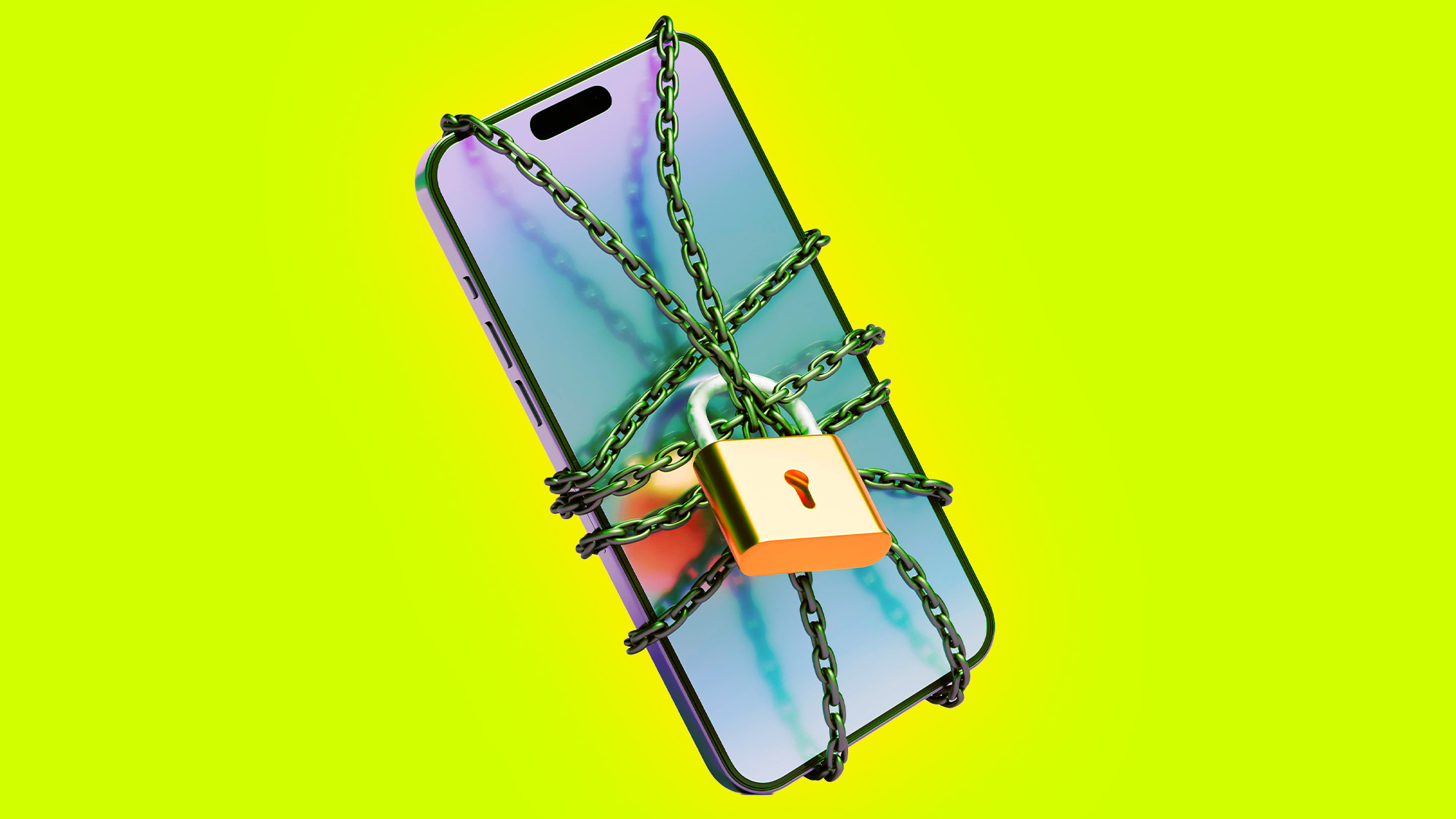
Popular Science...
Logging on was once a conscious—even perilous—act; a series of button pushes and clicks that, in the old dial-up days, could trigger a scream: “I’M ON THE PHONE.” Now, being online is implicit; it’s humanity’s M.O., and depending on your job and support networks, participation can feel compulsory. For young people in particular, constant connection is pretty much a fact of life, something baked into existence, and yet it’s totally at odds with the rising discourse around the benefits of logging off and being “chronically offline.”
The concept of logging off is everywhere: It’s a Gen Z and Millennial aspiration to disconnect from hostile tech, linkable to the ceaselessness of ’90s nostalgia and revived interest in physical media. It’s a response to the increasingly antisocial era of the Internet, algorithmic burnout, and doomscrolling hangovers. And given the obligatory nature of screens in our daily lives, it also sounds kind of punk to chuck your phone into a ravine, right?
The point is, for a lot of people, it really does feel like it’s time to log off, whether that’s setting aside a few days to “touch grass” and check in with yourself, or obliterating a social media account altogether. Researchers tell Popular Science that what happens next, and whether you’ll actually feel happier—or lonelier—offline, is mostly up to you.
Will logging off make you happier?
In 2020, researchers gave 35,000 people $25 to $150 to take a break from Facebook or Instagram in the weeks before the 2020 presidential election. The Stanford study, funded by Meta and published by The Proceedings of the National Academy of Sciences in 2024, remains the largest of its kind. They investigated political polarization and the effect that up to six weeks of social-media abstinence had on happiness, depression, and anxiety.
They discovered that deactivating Facebook or Instagram around the election, a high-stress moment in American politics, modestly “improved people’s emotional state.” But the researchers said the effect of staying off Instagram was only significant for young women under 25, who experienced somewhat greater improvement to their emotional state than others in the study.
Abstaining from Instagram didn’t decrease the participants’ total time spent online, but abstaining from Facebook did, says co-lead author and Stanford professor Matthew Gentzkow—who studies how media and tech shape society and democracy—in an email to Popular Science.
Unfortunately, 2020 was roughly 1 million years ago. What about a more recent study on logging off?
In 2024, researchers at Baruch College (CUNY) and the University of Melbourne asked several hundred U.S. college students to try spending a week away from a social network (for instance, Facebook, Twitter/X, Instagram, Snapchat) in exchange for a one point course credit.
“The effect of staying off Instagram was only significant for young women under 25.”
According to their paper in the international journal Transactions on Human-Computer Interaction, most participants (74 percent) reported positive mood states while abstaining.
Yet a subset—students who “compulsively use social media at a high level,” but believe strongly in the upsides of abstaining—tended to feel worse than other participants. These students also struggled the most to sustain abstinence for a week, study co-author and University of Melbourne professor Ofir Turel tells Popular Science.
Inversely, the students who had the easiest time logging off were those who exhibited low levels of compulsive use and showed little interest in abstaining. In other words, there’s some indication that people have a harder time quitting social media if they use it excessively but aspire to log off, as if the heightened stakes work against them.
This isn’t to say that people who use social media compulsively can’t benefit from being offline. While they may feel worse initially, Turel found in an earlier study that compulsive users of social media also “have the most to benefit” from quitting social media, in terms of reduced stress.
While more moderate users in Turel’s study also reported reduced stress, theirs was far less pronounced. Such users may have less to gain but still plenty to lose by going offline for an extended period of time.
Will logging off make you lonelier?
Jeffery Hall directs the Relationships and Technology Lab at the University of Kansas. The communication professor tells Popular Science that his and others’ research show that people who abstain from or quit social media “either feel that they are not as connected as they used to be” or they experience what he calls “a wash.”
Hall says the distinguishing factor is whether you’re losing access to “certain individuals or communities” that you cannot access otherwise. When people leave a digital space, they tend to “channel communication through other means. They use texting more. They set up group chats,” according to Hall. And if they don’t (or can’t) find other means to connect with those people, that’s when they tend to feel lonelier offline.
People who quit social apps may also communicate less overall, since they’re prompted less often by companies such as Meta to engage; Hall offers the example of no longer seeing birthday reminders on Facebook, or other major life events.
But if the people you care about are reachable by other means, you can still check in. It’s just less automatic. If you want deeper offline connections, Hall says you’ll still have to create those opportunities for yourself.
“Does time that you spend on social media displace face-to-face interaction? The general conclusion to that is, no, it doesn’t,” says Hall. “Especially with older forms of social media, which are more community-based, people tend to have a lot of overlap between their online communication and their in-person communication.”
But social media isn’t as social as it used to be. The shift towards TikTok-style brand and influencer videos and the rise of generative AI slop makes it tricky to apply even recent research to the experience of connecting online today.
Does logging off make you happier? Will it make you lonelier? The absence of universal verdicts leaves room for something potentially more important: Your say in the matter, if you have any.
When disconnecting isn’t up to you
However appealing it may sound, a life lived totally offline—or even with extended breaks from screens—is out of touch with reality for the people with few other ways to stay connected, or who rely on social apps or other digital spaces to make a living.
The tension between the allure and impracticality of logging off is shaping the stories we tell about doing so. The “offline boyfriend” TikTok meme, for example, idealizes experiencing digital disconnection vicariously through a significant other. It shows that disconnectedness is desirable, but it sets the idea off on a pedestal—an endearing trait someone else (such as an aloof-looking man) can embody.
And that’s if you want to log off. Bans, and social-media policies that target certain groups, are something else entirely. In these cases, the point for affected users isn’t to stay logged off or to glorify it, but to find other ways to connect—such as migrating to alternative platforms like Discord and Bluesky, or bypassing social-media age and name checks.
“People who are forced to leave social media may find other outlets online,” explains Turel, citing Australia’s attempt to kick teens off of apps, such as Facebook, Instagram, TikTok, and YouTube.
While the ban for under-16s is easy to get around and excludes Discord groups and social games, limiting its scope, it seems poised to spread across Europe. It comes alongside a push to enact online age-verification laws that undermine privacy and free speech, experts say.
Despite the bans, there’s no definitive evidence that says social media is inherently bad for kids or adults overall. Most studies offer more nuance than that, and some challenge the ban’s logic altogether: An Australian study published in January in the journal JAMA Pediatrics indicated that spending a “moderate” amount of time on social media might be better for kids than absolutely zero.
But the same study, and many others, show that excessively using social media is harmful. And we already know that some time away from digital spaces can be beneficial. Again, a key question resurfaces: Do you want to log off?
Wanting to log off is a great reason to log off
With so many studies, memes, and op-eds to sift through, it’s important to find the right lens for your habits, whether they involve social media, chat apps, videos, gaming, or whatever might have you feeling too online.
For example: If something you do causes distress, or if you want to stop but find it hard to do so, you don’t have to adopt a mindset around the virtues of moderation. Sure, Instagram is enticing and readily available, but should you use it? And if you find yourself compulsively on it for upwards of three hours per day, and dislike how it makes you feel, why not quit?
The right choice for you might mean a stint off social media or deleting accounts altogether; leaving your smartphone at home sometimes or replacing it with something dumb. Ideally, you decide how you go offline, what that means for you, and most crucially—what you do instead.
“If I quit Instagram and then sit all day and watch Netflix, neglect my schoolwork, social life, or so on, I don’t know if it’s going to be beneficial in terms of mood,” says Turel.
But if you want to spend more time offline, he adds, setting additional goals and adjusting your lifestyle—such as getting enough sleep, doing activities that improve your mood, and looking for ways to stay motivated—can boost your self-control abilities.
How to spend less time online
So, if you do want to log off, how do you go about doing it? The abundance of companies attempting to monetize quitting apps reflects how tricky it can be to change your digital habits, and there’s probably not a singular tool that will do all the work for you. Usually these apps and gadgets try to prevent doomscrolling by introducing friction.
While some efforts are rewards-based, others are more plainly punitive, such as apps that charge you money to unlock other apps.
Related 'Ask Us Anything' Stories
Chess or video games—which actually makes you smarter? The answer may surprise you.
Tired? You may have social jetlag.
Not everyone has an internal monologue
Why did childhood summers feel endless?
Why are languages spoken at different speeds?
White noise vs brown noise: What’s the best sound for sleeping?
While Stanford’s Gentzkow says he’s not aware of any papers on why people fail to stay offline despite wanting to, his research validates the people who struggle to do so. “Our work on digital addiction suggests that social media is a ‘temptation good’ that people have a hard time staying away from even though they would like to use [it] less,” Gentzkow says. These apps are, after all, designed to keep us plugged in—and earn their operators billions.
The omnipresence of digital spaces and their deliberate stickiness warrants some charitability and nuance on everyone’s part. If you aspire to log off altogether—delete the accounts, buy a dumb phone, the works—then great! And if you achieve your goals and love how you feel, that’s even better.
But if you do find yourself sucked back in, one way or another, all is not lost. If your goal is to improve your mental health, the Stanford researchers’ prior work and others show that even a short break from a digital space can have a positive impact.
The bottom line
Hall believes what’s most important is to find and build the habits that best serve you. Logging off, he says, will be most rewarding if you’re moving away from something you don’t want to do—and moving towards something you do.
“What we know about interventions that are detox-based is it’s not sufficient to just quit social media, if that’s the thing you’re quitting,” says Hall. “It’s important that you also have a goal of what you’re going to do instead.”
If, for example, the only media you want in your life is books, and you succeed in only reading books, Hall says, you’d likely “be happier for it, but that’s because it was your choice and your habit, not because reading books inherently is just that much better for you.”
Hall argues the best use of your time is entirely up to you—on or offline. So if you derive joy or connection by lurking on your old high-school friends’ Instagram Stories at odd hours every so often, then by all means, lurk away.
In Ask Us Anything, Popular Science answers your most outlandish, mind-burning questions, from the everyday things you’ve always wondered to the bizarre things you never thought to ask. Have something you’ve always wanted to know? Ask us.
The post Does deleting social media make you happier or lonelier? Short answer: It depends. appeared first on Popular Science.