Earth’s largest otters have chocolate bar-sized babies
Popular Science...
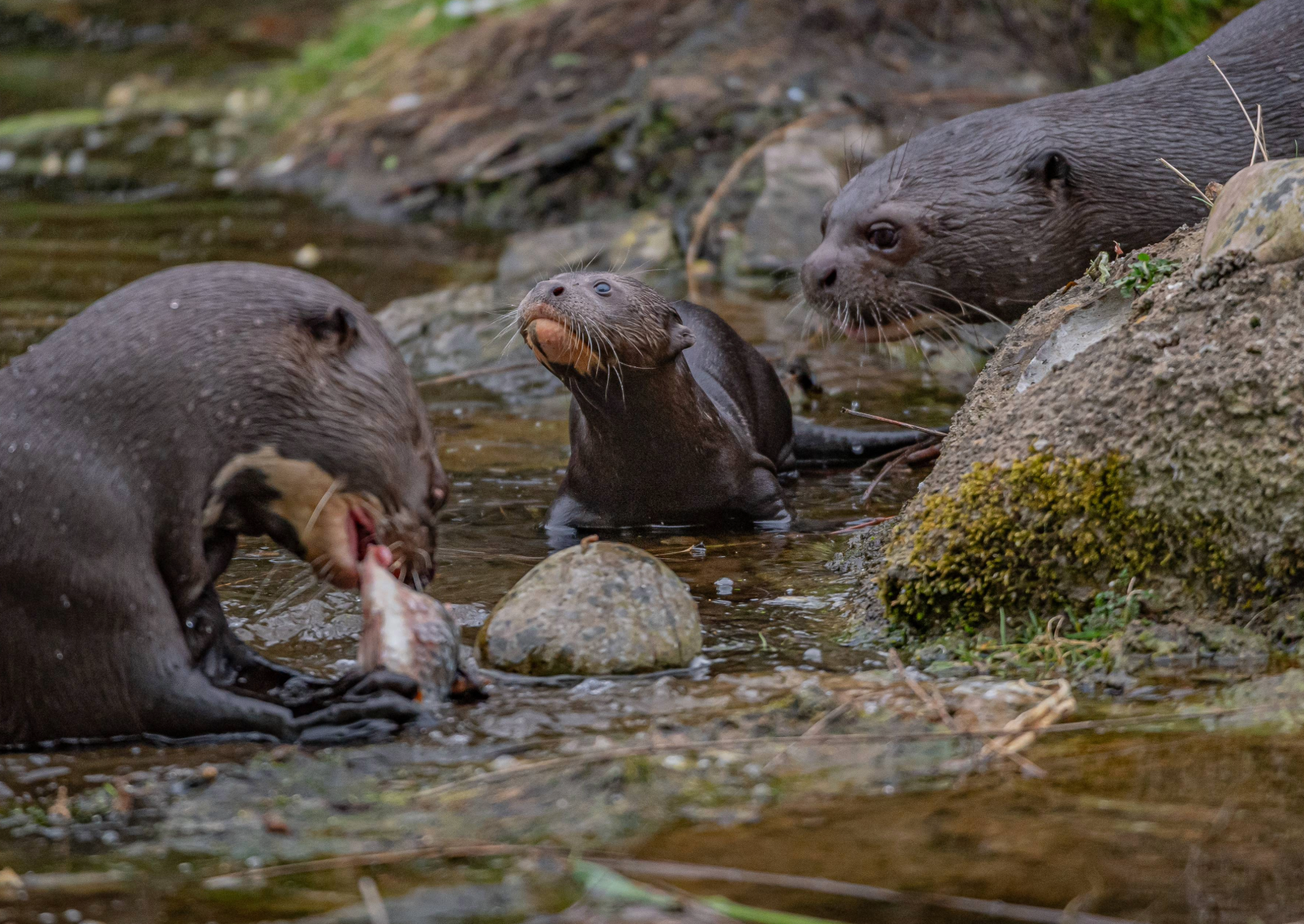
It turns out that giant otter (Pteronura brasiliensis) newborns are actually quite small, weighing just around 7.1 ounces. “[That’s] about the same as a decent-sized chocolate bar,” Frazer Walsh, a carnivore keeper at Chester Zoo outside of Liverpool, England, tells Popular Science.
The zoo has just welcomed three of their own decent-sized chocolate bars, the offspring of mother Bonita and father Manu. The three siblings haven’t received names yet.
Before the birth, the zoo’s staff cordoned off the giant otter habitat before their birth, and kept a non-invasive eye on the soon-to-be family using cameras. In fact, it was through these cameras that they discovered that the litter had arrived, but they continued giving the family privacy throughout the pups’ time as newborns.

“We like to make sure it’s as natural as possible. That means the parents are allowed to carry on their natural behaviours before and after the pups arrive and no keepers go into their holt [den],” Walsh explains.“It’s important that giant otter parents bond with their young – and with each other! They are first-time parents, so we had to wait and see how they would do.”
One of the potential hiccups ahead of the birth had to do with Manu. Giant otter fathers are supposed to supply giant otter mothers with food while she’s nursing their young in the holt—which reminds us of hornbill dads. The team was worried that Manu would forget his husbandly duties and treat the extra fish as more food for himself. Thankfully, he proved to be a great dad, and the food delivery came through.
The family wasn’t left to its own devices forever, however. A video shared by the zoo shows the adorable baby otters begrudgingly submitting to a veterinary check-up. Their visits confirmed that all three pups were healthy. Despite coming into the world as tiny little things, giant otter pups grow fast, Walsh says.
“Within a few weeks, their parents introduce them to the water. It can look a bit rough; they pick them up in their jaws and jump into the pool with the pup between their teeth, but it’s important for their young to get used to swimming,” he adds. “From there, they grow and grow.”
Also called giant river otters, these mammals can grow up to five- to six-feet-long and weigh up to 7o pounds. They are carnivorous members of the mustelid family and live along South America’s rivers. They are listed as endangered on the IUCN Red List. However, the data on giant otters is unclear, because current information uses studies that observe varying populations instead of the species throughout its full range, Walsh explains.
Giant otters are increasing in some areas, and decreasing in others. In Uruguay they are deemed extinct, and in five of the countries that the species call home, population estimates simply don’t exist in.
“Our job at Chester Zoo is to make sure that there’s an insurance population of healthy, genetically diverse giant otters in human care in case the worst happens and reintroductions are needed,” he said.
The post Earth’s largest otters have chocolate bar-sized babies appeared first on Popular Science.