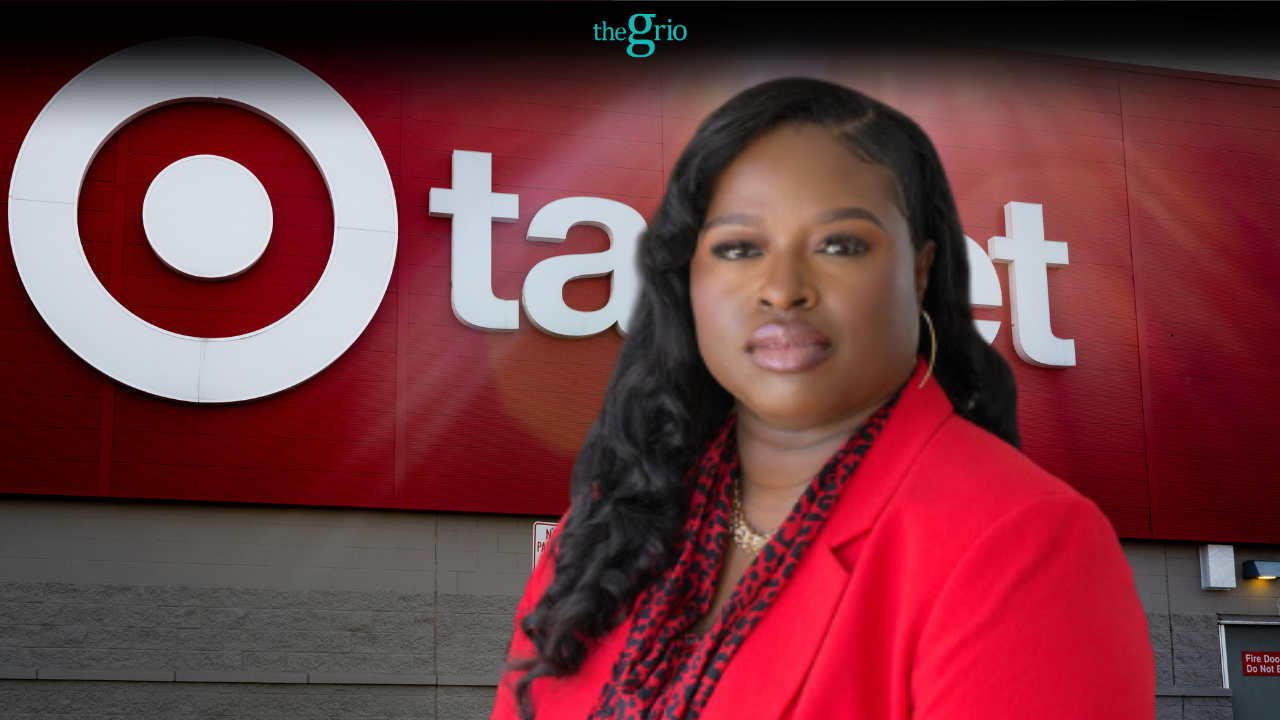
For Nekima Levy-Armstrong, the Target boycott never ended
TheGrio...

The Minneapolis-based activist and lawyer tells her side of a complicated story of local vs. nationally based organizing — and how she’s still moving forward boycotting after Pastor Jamal Bryant called off his Target fast.
When Target announced a rollback of DEI initiatives on January 24, 2025, Nekima Levy-Armstrong knew she had to do something.
“Because [Target] had such a powerful reputation as embracing diversity, the fact that they capitulated to Donald Trump so quickly within a week of him taking office meant that if we let them off the hook in our community, then every company in America was going to see that as a green light to roll back diversity, equity, and inclusion,” Levy-Armstrong tells theGrio.
Levy-Armstrong, a lawyer and longtime activist based in Minneapolis where Target is headquartered, immediately took to her Instagram and Facebook accounts the next day, on January 25th, to issue a collective call for feedback — a tactic she says was intentional and reflects the culture of collaborative organizing that defines her city.
“I know that a number of you are upset or at least bothered by Target’s decision to roll back progress. But the question is, what should we do about it? Please respond with any personal action you plan to take and thoughts on what we should do collectively to challenge/address this slap in the face,” Levy-Armstrong wrote on Instagram.
By January 30th, she joined two fellow local activists, Monique Cullars Doty and Jaylani Hussein, to publicly announce a plan of action: Target would be boycotted starting February 1, 2025, with a clear demand. “We will not spend a dime at Target, unless and until they reverse course on their recent decision to rollback diversity, equity, and inclusion initiatives,” Levy-Armstrong wrote.
The reactions were passionate outside of Target headquarters, where protesters cut up their Target red cards and encouraged others to shop elsewhere until the retail giant did a 180-degree turn back to the company they used to know.
“They’ve been embedded into the fabric of the community for a long time,” Levy-Armstrong explains. “They also contributed to a number of Black organizations. So you go to a gala or an event, you might see ‘Sponsored by Target’ as their logo or feature sponsor.”
The Minneapolis-headquartered retailer had complicated history with the Black community even before the DEI rollback. Levy-Armstrong says that during protests over the murder of George Floyd, some Target locations wouldn’t allow protesters who had been teargassed to come inside to buy milk to soothe their eyes — a detail that deepened local distrust of the brand and added weight to the eventual call to boycott.
But in an America where the letters “DEI” had been turned into a curse word, Levy-Armstrong knew that only money would talk in terms of making Target feel the consequences of their decisions — and that meant calling for an indefinite national boycott of the brand.
It’s for this reason that more than a year later, when Levy-Armstrong saw Pastor Jamal Bryant had called for an end to his extended Target “fast” during a press conference with fellow organizers in Washington, D.C., she was both appalled and hurt.
“I was really upset,” Levy-Armstrong tells theGrio. “I found out through a breaking news headline from our hometown newspaper that came through my email, and it said something like ‘national target boycott ends with no DEI concessions,’ and then I open the article and what do I see? A picture of my baby, my eight-year-old holding a sign with our national target boycott branding from the first press conference that we held outside of Target’s national headquarters.”
“I took her out of school to participate in that press conference and she held that sign with pride that we were taking a stand — then to see it used for a false narrative, trying to end a boycott that was successful. I just couldn’t believe it, in all honesty.”

In a press conference heard ’round the country, Pastor Bryant announced the end of a 400-plus day-long Target “fast,” saying that three of the four goals laid out had been met: Target following through on a $2 billion pledge to invest in Black-owned businesses, creating a talent pipeline from HBCUs to train corporate leaders, restoring their DEI programs, and making a $250 million investment in Black banks.
In reality, only two goals had been met. Target confirmed that despite a painful $12 billion profit loss and the stepping down of their CEO, they had not reversed their anti-DEI stance. The repackaging of their “Belonging” program still carried no explicit commitment to DEI or Black communities, and their former CEO, Brian Cornell, was merely replaced by their COO and moved into an executive board role.
Target had continued to feel the squeeze as store traffic dropped — but right as the Black community had crossed the historic milestone of lasting the length of the Montgomery Bus Boycott, that collective power seemed to have the wind knocked out of it with Bryant’s premature announcement.
Pastor Bryant immediately felt intense heat for calling off what he says was a separate Target “fast” meant to engage Black faith communities — one that originally started as only a 40-day plan of action and stood independent of a national Target boycott organized by his co-leaders, former state senator Nina Turner and activist Tamika Mallory, or anything organized by Levy-Armstrong. But the damage was done.
In a lengthy 20-minute apology on YouTube, Bryant pled his case, saying he was willing to get behind the Black women who started the movement.
Levy-Armstrong says not only did it not have to happen that way, but that she warned Bryant and his collaborators from the beginning that his “fast” could create confusion.
“Why would he launch a fast when there’s already a nationwide boycott underway? And the boycott is indefinite. What is the difference between a fast and a boycott?”
Complicated Beginnings & A Broken Coalition
The complicated relationship between locally based activists like Levy-Armstrong and high-profile leaders like Bryant, Mallory and Turner is nothing new to the organizing world. As far back as the civil rights movement and into recent movements like Black Lives Matter, there has been negotiating and wrestling for both authority and notoriety.
In exclusive, separately conducted interviews with Turner, Mallory and Levy-Armstrong for theGrio, each paints a picture of communication failures, with allegations that reflect a fundamental breakdown in trust — one that contributed to the fallout in the aftermath of Bryant’s Target fast “ending” announcement.
At the crux of Levy-Armstrong’s complaint is her claim that although she was initially approached collaboratively by Tamika Mallory to work on Target boycott activities and was open to conversation, she was immediately put off by media interviews that portrayed her collective as working “for” Bryant, Mallory and Turner, known collectively as The Mothership Three. She says she raised her concerns to the group and felt that her local work was allegedly “co-opted” after sharing press releases, demands and more.
Turner counters that claim with a time-stamped announcement of her organization, We Are Somebody launching, a Target boycott on January 25th, well before Levy-Armstrong had officially announced her boycott. “Legalistic,” is how Levy-Armstrong responded to the timeline presented, asking why she was invited to participate if the boycott was already established.
Turner, a high-profile former state senator and previous national co-chair for the Bernie Sanders campaign, says her track record and boycott intentions were clear, making co-optation out of the question and a communication mix-up more likely. She says it was Mallory who raised the idea of reaching out to Minneapolis organizers, given her history of respect for local organizing during movements like the Breonna Taylor protests.

Mallory describes the early days of trying to collaborate with local organizers as one that had stops and starts, as she was in the midst of a demanding book tour, and there were lapses in clear communication.
“Everybody’s kind of announcing their own things and doing their own thing, and it was disjointed. So I believe that’s where the frustration came from locally, and it wasn’t intentional harm — it was just that we didn’t have a manager, if you will, to coordinate all the people and the pieces,” Mallory tells theGrio.
Levy-Armstrong also says she raised a red flag early on, warning that Bryant’s steps toward organizing his own fast would create confusion amongst the public.
“Why would he launch a fast when there’s already a nationwide boycott underway? And the boycott is indefinite. What is the difference between a fast and a boycott?”
That murky distinction is something both Turner and Mallory spoke to as well, with Mallory calling it a “painful” lesson in communication.
“Sometimes we believe because we’ve said something a million times that everybody understands or is aware,” Mallory told theGrio. “What we found out is that there are so many people who were very confused and really did not understand the difference between a tactic [and] the boycott.”
Turner says the group of three leaders went into the press conference in different places but felt they owed the public an update after 400-plus days of protest.
“We’ve been working together for the last year,” Turner tells theGrio. “So I think also people are focusing on the wrong thing. Why wouldn’t the three of us get together and give the report?”
But Turner and Mallory both insist that despite the confusion around Bryant’s Target “fast,” they not only plan to continue boycotting — they also will maintain productive relationships with other local Target groups, including the D.C. boycott group who protested outside stores over the past year.
“Me and my organization are still boycotting,” Turner told theGrio. “We never stopped boycotting. You will not find any malice coming from me or Tamika Mallory — and for that part, Reverend Bryant — against the Minnesota organizers. Matter of fact, we tried to give them credit.”
In a viral and contentious interview on Roland Martin’s live show, Levy-Armstrong went back-and-forth speaking over the veteran journalist, challenging the integrity of all three boycott leaders with accusations that didn’t go unnoticed.
“We’ve moved beyond people who are saying… you know, respectfully, we don’t think that the way in which your campaign played out was done properly. That we can all take. We can all benefit from a very direct critique of the work, that is also coupled with support. But when it turns into slander and defamation, we’re on a different track,” Mallory told theGrio.
That viral interview led to mixed responses, empathy for Levy-Armstrong’s feelings, but also criticism of her as ego-driven in her quest for credit around the national Target boycott, with many commenters crediting Mallory, Turner and Bryant for putting the boycott on their radar.

“It mattered who started it when people tried to end it — who didn’t start it — to disrupt the success of the boycott as it was going on,” Levy-Armstrong tells theGrio in response to critics. “None of this would have happened if they hadn’t gone to Washington, D.C. and did what they did.”
“Of course you’re going to have people [like] ‘can’t we all just get along’ — but they had positioned themselves as the leaders and it looked like the leaders were walking away from unfinished business,” Levy-Armstrong tells theGrio. “So we had to step forward and tell the people what really happened and have them hear us and understand our truth, why it started here, and the passion behind it. The connection to Target, it wasn’t just random for us. This is a continuation of the movement that we’ve had going on here since 2014.”
“Social media makes it worse,” Turner tells theGrio of the fight to shape narratives around how the boycott played out. “Sometimes you need to hear somebody’s voice, and you need to be able to look in their face. It’s all in how the tool is used. In this stage of the boycott movement, if people are willing to use the tool in disruptive ways, then it can really hurt.”
“Social media allows anyone to turn their microphone on, and the sausage-making process becomes public versus something that’s worked out behind the scenes,” Mallory tells theGrio. “I personally was raised in a time that conflict took place, but there were many more knock-down, drag-out conversations behind the scenes that helped people to either come out working alongside one another or being able to go their separate ways without a constant barrage of insults and attacks.”
Moving Forward With Intention
Although Levy-Armstrong has been vocal about her concerns with representations of the Target boycott, she is adamant about moving forward and has seen renewed promises from shoppers to keep boycotting.
“I’m very proud of the Black community, of Black America for sticking together and pushing back against what happened and saying, ‘We are never returning to Target or we’re expecting Target to restore DEI,’” she tells theGrio. “That is exactly what we were hoping that our community would do and not just acquiesce.”
“Our bigger picture goal is success of the boycott and showing the power of our dollars and also the power of bringing allies to the table, which is what we also did in Minnesota,” she continues. “The white women here — they’re like, ‘we ain’t never going back to Target.’ Because we were inclusive from the beginning. The Black community isn’t alone in this. We have white allies here and around the nation who are also boycotting Target.”
Levy-Armstrong is also navigating a battle on a separate front: she faces federal charges for her participation in a non-violent protest inside a Minneapolis church, an arrest that also led to the detention of journalist Don Lemon. The White House even used her photo with AI edits, making it appear as if she were crying during her arrest when she was actually stone-faced. The activist and mother is channeling that same defiance to keep her portion of this national, decentralized boycott moving forward.
“You guys saw what happened with Operation Metro Surge and how we were 10 toes down as a state in fighting back,” Levy-Armstrong says of the anti-ICE protests that reverberated across the nation and the world. “That’s the energy of the people in my network too, regarding this boycott.”
Natasha S. Alford is SVP & Chief Content Officer at TheGrio. A recognized journalist, documentary filmmaker, and TV analyst, Alford is also the author of the award-winning book, “American Negra.” (HarperCollins, 2024) Follow her on Instagram at @natashasalford and Substack at https://substack.com/@natashasalford .