Growing Stem Cells in Space to Improve Cancer and Disease Treatments
NASA...
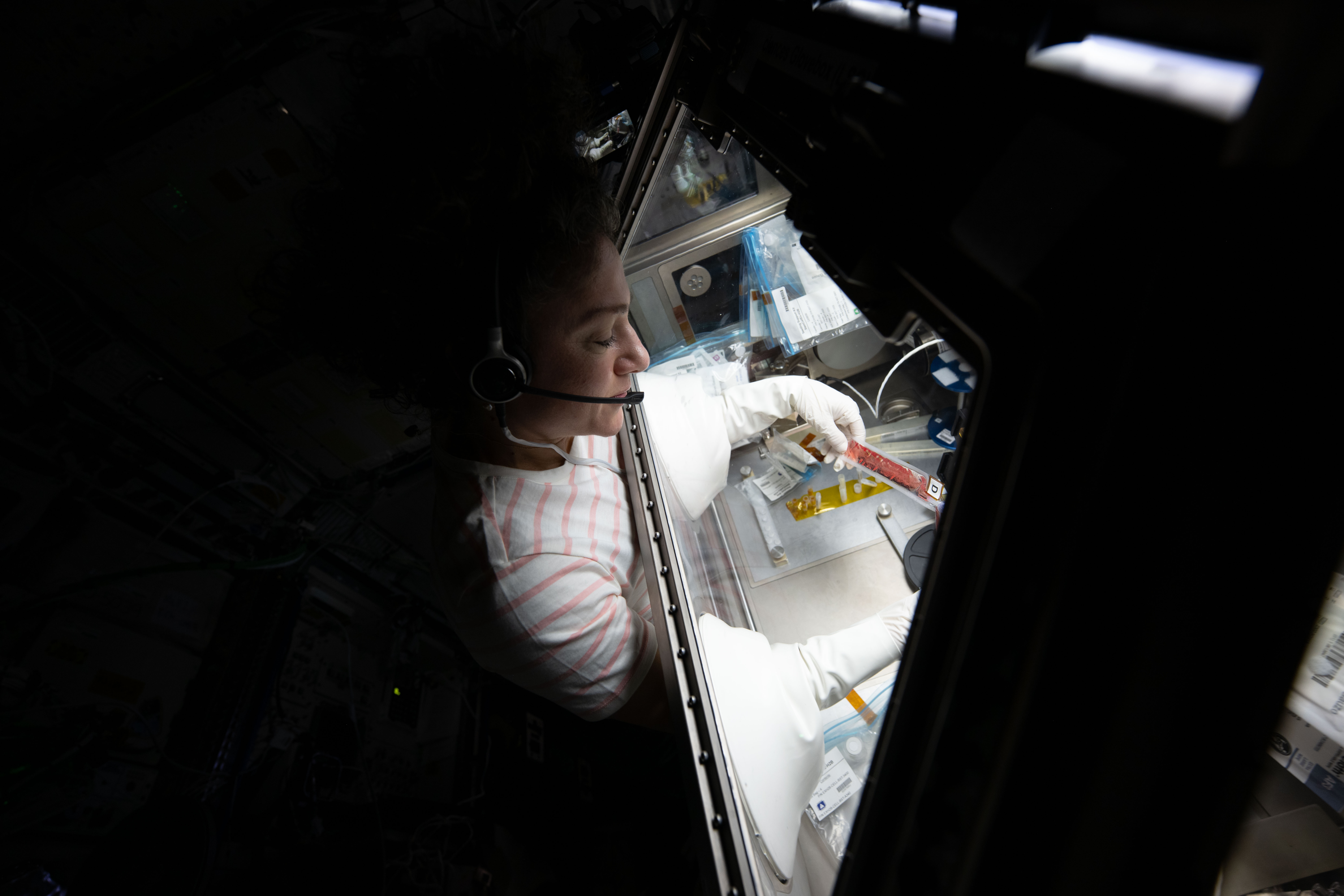
Expedition 74 astronauts aboard the International Space Station are continuing research efforts to manufacture large quantities of stem cells for therapies on Earth. Previous studies have focused on fine-tuning hardware that allows scientists to produce greater quantities of high-quality stem cells. Now, the InSPA-StemCellEX-H2 investigation is aiming to demonstrate large scale production of blood stem cells for pharmaceutical and clinical use.

The research uses stem cells derived from the human body to produce large quantities of cells for patient use through a process called “expansion”. Although stem cells can be expanded in labs on Earth, they have limitations. For example, Earth-produced cells lose their ability to form the different cells in our blood system, like red and white blood cells or platelets, which are critical for leukemia patients that receive stem cells to build up their blood system after chemotherapy.
Dr. Tobias Niederwieser, assistant research professor at BioServe Space Technologies within the University of Colorado Boulder says, “The microgravity environment in space is much more suitable for keeping the stem cells in their high-quality state during expansion.” Scientists predict that growing cells in space may lead to higher expansion potential and a lower risk of rejection when used in patients on Earth. This research could create long-term cell supplies for patients suffering from fatal blood disorders, various blood cancers, or severe immune diseases, and enable more reliable and accessible therapies. “The end result is really to benefit patients in hospitals here on Earth,” Dr. Niederwieser says.
Space station research allows scientists and commercial companies around the world to test new technologies and innovative medical solutions that have the potential to greatly benefit life on Earth.