How a Black Woman’s fight for respect changed courtrooms across America
TheGrio...

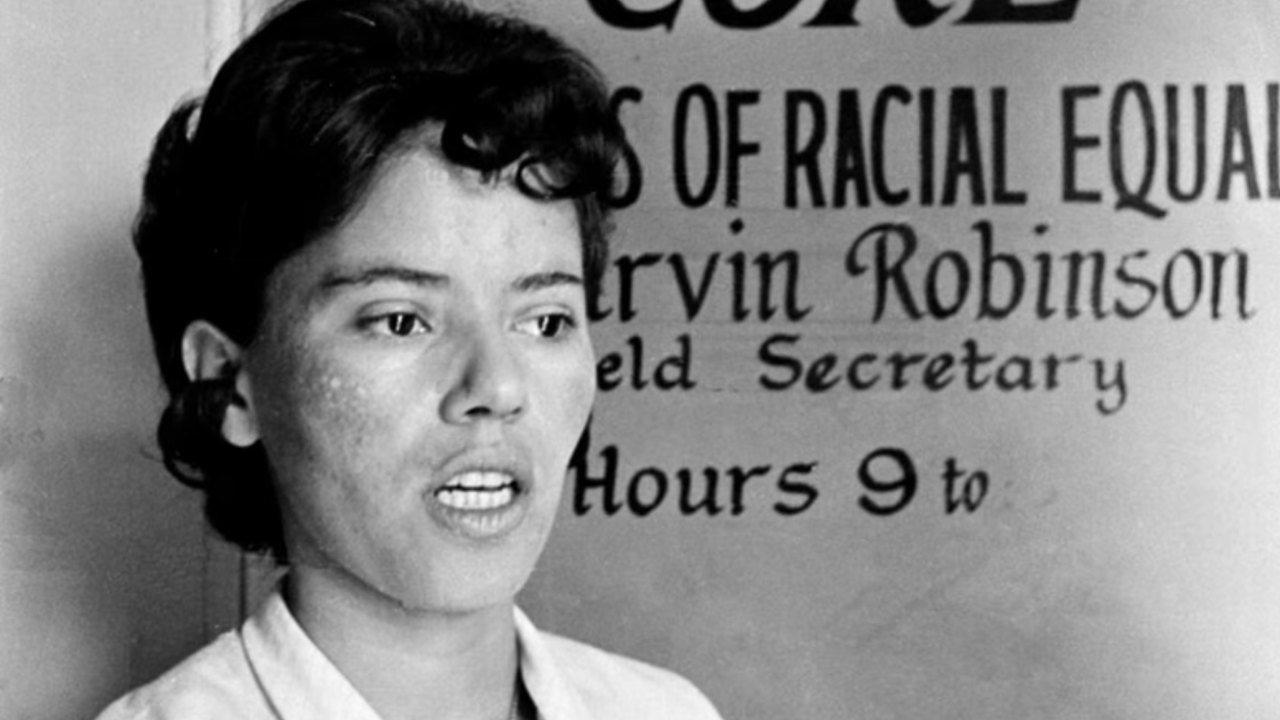
In 1963, Miss Mary Hamilton was held in contempt when officials failed to call her Miss. In 1964, the US Supreme Court ruled in her favor.
Miss. In 1963, Mary Hamilton went all the way to the Supreme Court to make sure people used this one four-letter word.
A civil rights activist and Freedom Rider, Hamilton had been doing the kind of work that doesn’t make it into enough history books for years. As one of only two female field secretaries for the Congress of Racial Equality (CORE) and the first woman sent to organize in the South, she traveled to small rural towns across the region and helped build non-violent protest movements from the ground up. At a time when it was widely believed that men were better suited for on-the-ground organizing, Hamilton’s presence quietly dismantled that assumption. Like many activists, she was arrested multiple times throughout her life. But it was a court appearance in Gadsden, Alabama, in June 1963 that would cement her legacy.
Hamilton had been called to testify at a hearing challenging the legitimacy of mass arrests made during civil rights protests in Gadsden. When Etowah County Solicitor William Rayburn addressed her simply as “Mary,” after extending the courtesy of “Miss” to every white witness before her, Hamilton refused to respond. Knowing that the switch was not incidental, the activist did not flinch. Across the South, Black men and women were routinely denied honorifics like Mr., Mrs., and Miss in public and legal settings, a deliberate act designed to remind Black communities that they occupied a lower status than their white counterparts. Instead, grown Black men and women were often referred to as “boy” and “girl.”
“My name is Miss Hamilton. Please address me correctly,” Hamilton reportedly told Rayburn, according to the court transcript. “I will not answer a question…your question until I am addressed correctly.”
Despite Hamilton’s lawyer chiming in to also correct Rayburn, he continued to address her by her first name when asking questions, and she refused to respond. Ultimately, Judge A.B. Cunningham found Hamilton in contempt of court, fined her $50, and sentenced her to five days in jail. Though she served her time in jail she refused to pay the fine.
She was released on bond to appeal the conviction. However, the Alabama Supreme Court, which consisted of an all-white panel, unanimously upheld her conviction. But this would not be the end of Hamilton’s case.
With the support of the NAACP Legal Defense and Educational Fund (LDF), her case was appealed to the U.S. Supreme Court. In their filings, LDF lawyers cited it simply: “Petitioner’s reaction to being called ‘Mary’ in a courtroom where, if white, she would be called ‘Miss Hamilton,’ was not thin-skinned sensitivity. She was responding to one of the most distinct indicia of the racial caste system. This is the refusal of whites to address Negroes with titles of respect,” as reported by The Equal Justice Initiative.
In March 1964, the Supreme Court overturned Hamilton’s contempt citation. The ruling was clear: everyone appearing in a United States courtroom deserved to be addressed with dignity, regardless of race. While many are not aware of her story today, Hamilton’s victory made national headlines, gaining features in “The New York Times” and “Jet Magazine.”
After her years with CORE and the movement, Hamilton returned to her first calling: education. She earned a Master of Arts in Teaching from Manhattanville College in 1971 and taught until her retirement in 1990. She passed away in 2002 after a battle with ovarian cancer.
However, as former LDF President and attorney Sherrilyn Ifill noted in a Washington Post essay, Hamilton’s case “was a brave stand and an important one,” and a reminder that her fight is not as distant as we might like to believe.
“I have been thinking about Hamilton over the past few days as I’ve watched President Trump attack black female journalists. Trump’s vicious and public insults of black female professionals should remind us that black women have long had to fight for respect and dignity and against demeaning and ugly stereotypes in the public space,” Ifill wrote. “As Hamilton demonstrated, this was a signature struggle of the civil rights movement; we need to keep that context in mind when Trump demeans black women he regards as his opponents.”
Miss Mary Hamilton’s legacy endures in the legal system and in every Black woman who demands the respect she has always deserved.