HRC president says attacks on civil rights give Black and LGBTQ voters shared stakes in 2026

TheGrio...

Kelley Robinson says Democrats learned from 2024’s anti-trans attacks and sees new opportunities for Black and LGBTQ voters to build political power together.
As the first queer Black woman to lead the nation’s largest LGBTQ political organization, Kelley Robinson sees a unique opportunity in this election cycle to unite Black and LGBTQ voters.
“There’s a world of opportunity there,” Robinson told theGrio during a sit-down with reporters at Human Rights Campaign headquarters on Monday.
Less than 30 days until Election Day, the HRC president and community organizer says her organization has invested $15 million in mobilizing more than 25 million LGBTQ+ voters, who make up 12% of the adult population in the United States. Those voters and Black voters have experienced the shared harms of the Trump administration’s anti-DEI and anti-trans policies.
“At the end of the day, if there’s one thing that’s true, whether you’re Black, brown, or queer, the opposition sees us all as the same, and there’s an opportunity to unite forces,” said Robinson.
Under the guise of what the Trump administration has characterized as racial and gender ideology, President Donald Trump has ordered his administration to roll back civil rights and anti-discrimination protections for Black and LGBTQ Americans. The president’s anti-DEI policies have impacted both communities in very real ways, which is why leaders in the advocacy space are standing in solidarity.
“There’s a world of opportunity there, and the coalitions and partnerships that we’ve forged already, I think, are pretty powerful,” Robinson told theGrio.
The HRC president praised organizations like the NAACP and the National Urban League for being “proactive” and “affirming” toward LGBTQ Americans. Acknowledging the political wedge that existed between the two communities in years past, Robinson said, “[That] might not have been the case, you know, 20 or 30 years ago.” She added, “We’ve evolved.”

After the United States Supreme Court upheld state bans on transgender youth athletes from competing in sports in June, the NAACP issued a condemnation of the high court’s “unconscionable” ruling. The nation’s oldest civil rights organization also spoke to the intersectionality of Black and LGBTQ Americans.
“To be Black and trans in America is to face discrimination based on your LGBTQ+ identity at every intersection — in the classroom, in the community, and now, on the playing field,” the NAACP said in a statement.
Similarly, after the Supreme Court gutted the Voting Rights Act of 1965, eliminating racial discrimination protections for Black voters, the Human Rights Campaign condemned the conservative majority, stating, “Any attempt to silence the vote of even one American hurts all 300 million of us.”
Civil rights and advocacy groups are working to mobilize tens of millions of Black and LGBTQ voters, urging them to cast their ballots for candidates who will fight to restore protections that have been lost under the second Trump administration. Those rollbacks include new federal guidelines that narrow how the Civil Rights Act of 1964 can be applied under federal law to protect Black Americans from racial discrimination and trans Americans from gender discrimination.
Kelley Robinson is also calling on Democrats to better defend LGBTQ communities, namely trans Americans, as some Black advocacy leaders have done in recent years. She especially had a message for Democratic candidates running for election this cycle, some of whom, like Black U.S. Congressman Don Davis—whose district was redrawn to advantage Republicans after the rollback of the VRA—have run anti-trans campaign ads.
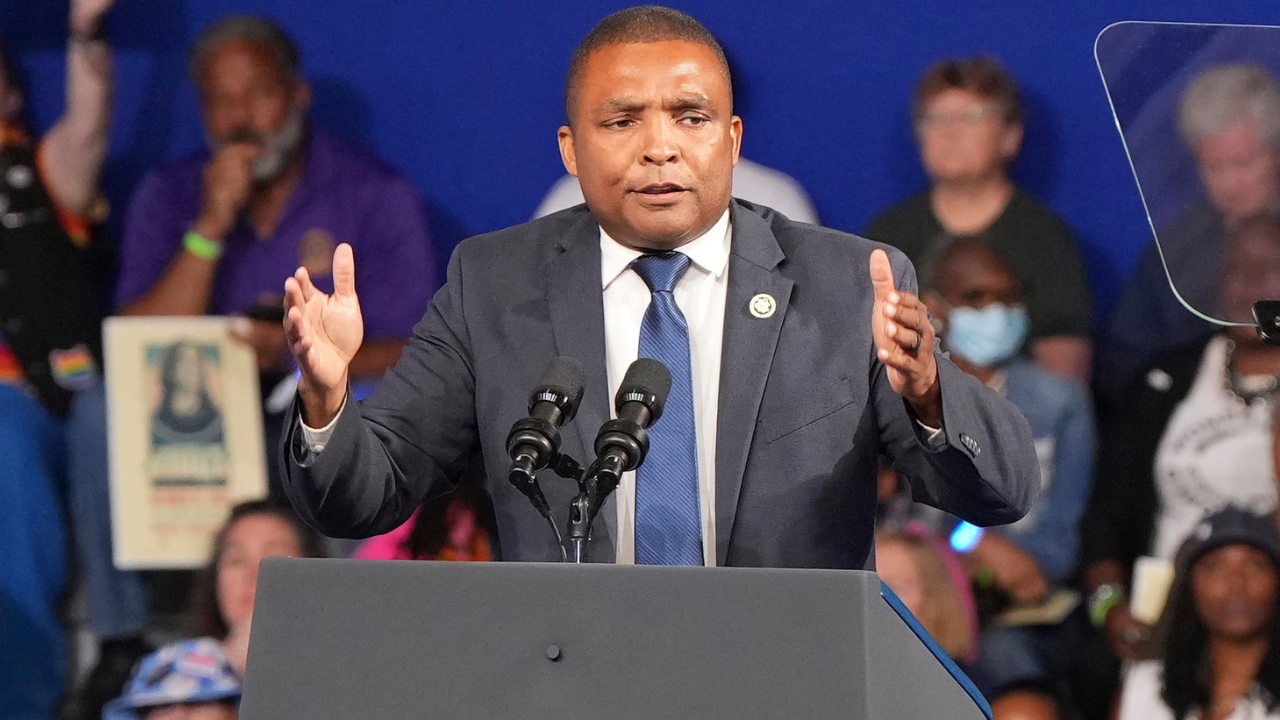
“You don’t have to sacrifice any member of our community to win in these races to have a message that resonates with voters,” Robinson told reporters.
While Democratic candidates have explained to HRC that their trans ads are intended to respond to a flood of Republican ads on the issue in order to win their races, Robinson explained, “This is not a well-intentioned or good-faith political debate that [Republicans] are trying to engage with you on. This is a scare tactic because they don’t have answers to the concerns of voters.”
Robinson said there’s a lesson to be learned in 2026 from the 2024 presidential campaign of former U.S. Vice President Kamala Harris, who, too, was flooded by more than $100 million in Republican ads about trans rights. When asked by a reporter whether she supported gender affirming care for incarcerated trans people, Harris said, “I think we should follow the law,” adding that “I’m not going to put myself in the position of a doctor.”
Harris’ answer was seen by some as a liability for her campaign. In hindsight, Robinson explained, “There is a general best practice and political response where you don’t try to repeat or respond to outlandish claims, right? And if I think about it with the best of intentions, I think that’s where the Harris campaign was coming from. These are outlandish claims. We’re not going to respond to them. Instead, we’re only going to say our proactive message.”
However, she added, “When your opposition is pouring hundreds of millions of dollars into a lie, you have to address it. That, to me, was the core failure of 2024: was the lack of direct response.”
The HRC president said that, in the 2026 midterm election cycle, Democratic candidates are displaying a “totally different” approach, which is to address attack ads on trans issues head-on by “confronting the lie, telling the truth, and then talking about the issues that folks most care about.”
Ultimately, whether it’s about trans rights or DEI, Robinson says voters are simply thinking about the everyday pocketbook issues that impact them.
“When they’re going to the polls, the first thing that they’re thinking about is who’s going to help me with affordability, who’s going to deal with the corruption that I see in politics, who’s going to deal with these skyrocketing healthcare premiums,” said Robinson. “The first thing that they’re thinking is not who’s going to make sure that trans kids aren’t playing sports.”