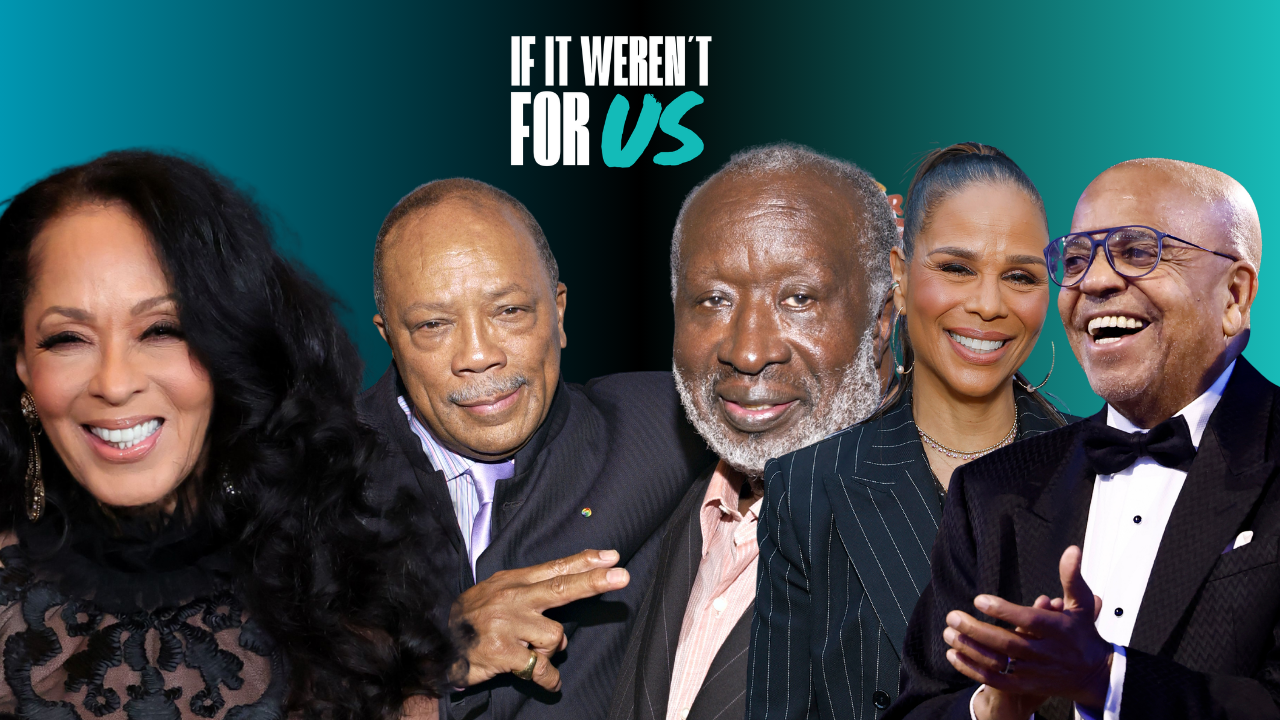
If It Weren’t For Us: The Black music, TV and film executives who shaped the world of culture
TheGrio...

From Pace to Avant to Dupri, Micheaux to Spike and Coogler, Black genius has always shaped pop culture.
The best person to tell the story is someone who believes in it.
Throughout the history of Hollywood, whether it be television, film, or music, Black creativity has found itself cutting through boardroom politics and outright racism. For every star of the silver screen like Dorothy Dandridge, Harry Belafonte, Sidney Poitier, James Earl Jones, Eddie Murphy, Richard Pryor, Denzel Washington, Michael B. Jordan, and so on, there’s been an advocate behind the scenes pushing for their talent to be elevated. For every musician who had to fight for their recordings, others established their power, like James Brown and Harry Pace.
The growth of men and women behind the people behind the lenses, the scripts, the music, and the movies we take in is not lost on anyone truly paying attention. There are even some names that time may attempt to wash over, but their impact won’t be forgotten.
The Originators
Before names like Spike and Coogler entered the zeitgeist as mononyms, there was Oscar Micheaux.
Widely considered the first notable African-American director of the first half of the 20th century, Micheaux rose from farm life in Illinois to produce more than 44 films, including 1919’s “The Homesteader,” based on his novel “The Conquest.” George Johnson, head of the Lincoln Motion Picture Company, one of the first Black movie studios in the world, wanted to produce Micheaux’s film, but the two could not agree on terms. Ultimately, Micheaux struck out on his own, founding the Micheaux Film & Book Company and producing and directing “The Homesteader,” which achieved commercial and critical success.
In the 1980s, Anita Addison rose from her origins as a journalist and researcher for Time Magazine to direct short films and television projects, including 1993’s “There Are No Children Here,” featuring Oprah Winfrey and Maya Angelou. Addison’s unique rise placed her at the head of dramatic development at Lorimar, Warner Bros. Television, and CBS Television, one of the few Black women to hold those positions in Hollywood. Before her death in 2004 from breast cancer, Addison said of her journey in a 1997 interview for Emmy, “I have given blind script commitments to writers who I know wouldn’t have gotten a chance if someone of color wasn’t in this office.”

In those spaces, TV royalty was found. Addison, though primarily focused on drama, set a standard that others emulated. For the modern champions of showrunning and television like Issa Rae, Quinta Brunson, and Shonda Rhimes, there’s Yvette Lee Bowser, who crafted an eternal piece of Black television with “Living Single” and, more recently, “UnPrisoned,” starring Kerry Washington and Delroy Lindo. Ralph Farquhar, known for crafting a South Central-based television universe with “Moesha” and “The Parkers,” took his talents to animation to back “The Proud Family: Louder and Prouder.”
As Farquhar helms a solo production deal with Disney, Debra Martin Chase has a few bona fides to her name. At Disney, she became the first Black woman to secure a solo production deal, leading to films such as “The Princess Diaries” and “The Cheetah Girls.” Chase is also one of the few Black women to helm a $100 million box office smash with 1996’s “Courage Under Fire,” starring Denzel Washington and Meg Ryan. Her collaboration with the two-time Academy Award winner didn’t end there; she served as one of the heads of his production company, Mundy Lane Entertainment, and developed the classic film “The Preacher’s Wife,” starring Whitney Houston and Washington.
Chase and Houston formed a formidable team, first producing the iconic “Cinderella” starring Brandy and then the worldwide smash of “The Princess Diaries” under BrownHouse Productions. The two’s final collaboration would be the 2012 film “Sparkle,” an adaptation of the 1976 play. Still, Chase had more tricks up her sleeve as she found herself as an executive producer of “The Equalizer” television series for CBS, starring Queen Latifah.
Now Chase’s mode of operation has shifted to Broadway, with musicals such as “The Outsiders.” A recent feature in the New York Times spotlighted the Tony Award-winning musical as one of the few new Broadway additions that is a financial success.
The Legends
Clarence Avant, thanks to a recent Netflix documentary, became known to a generation of aspiring filmmakers and creatives. “The Black Godfather,” alongside Quincy Jones, is perhaps responsible for how Black culture looked, felt and sounded from television to music and film.
From Avant helping negotiate Don Cornelius’ syndication deal for “Soul Train” to the variety of television shows that sprouted in the 1970s and 1980s, the names and faces well-known to Black Americans became outright global superstars. Murphy, for his credit, used his fame to deliberately make comedies and films centered on Black success, such as 1992’s “Boomerang.” In the process, it elevated and inspired others.
In recent years, artists like Will Packer and Ryan Coogler have shed light on Black relationships on film, with Coogler finding a throughline between superhero films like “Black Panther” and horror films like “Sinners.”
Much how Russell Simmons became a touchpoint when he founded Def Jam Records in the ’80s, his entrepreneurship led to a flourish of Black-led labels such as Andre Harrell’s Uptown Records, J. Prince’s “Rap-A-Lot Records,” Jermaine Dupri’s So So Def imprint and so on, leading to a litany of Black-started labels curated to lean in on the sounds, style and impact of Black America.
Label-wise, it all begins with Harry Pace.
The founder of Black Swan Records established the label in 1921 and was the first to secure wide distribution, a leverage point for Black creatives to gain greater freedom. Pace’s work with “The Father of Blues” W.C. Handy helped shape his perspective as Black Swan became home for several releases, including works by Broadway star Ethel Waters.
Despite it being sold to Paramount in 1924, it became the precursor to the likes of Vee Jay Records, Berry Gordy’s Motown, The Isley Brothers’ T-Neck Records and Philadelphia International Records, the backbone of Philly soul from Kenneth Gamble, Leon Huff and Thom Bell.
The culture, at large, runs on the style and substance of Black creativity. If not for names like Bowser, Pace, and Avant, we’d have to rely on facsimiles. There are plenty of copies, but the true originators? That’s rooted in Blackness, especially when it comes to spearheading ideas and creativity across television, movies, and music.