NASA Develops Sensor to Improve Firefighter Safety
NASA...
5 min read
Preparations for Next Moonwalk Simulations Underway (and Underwater)
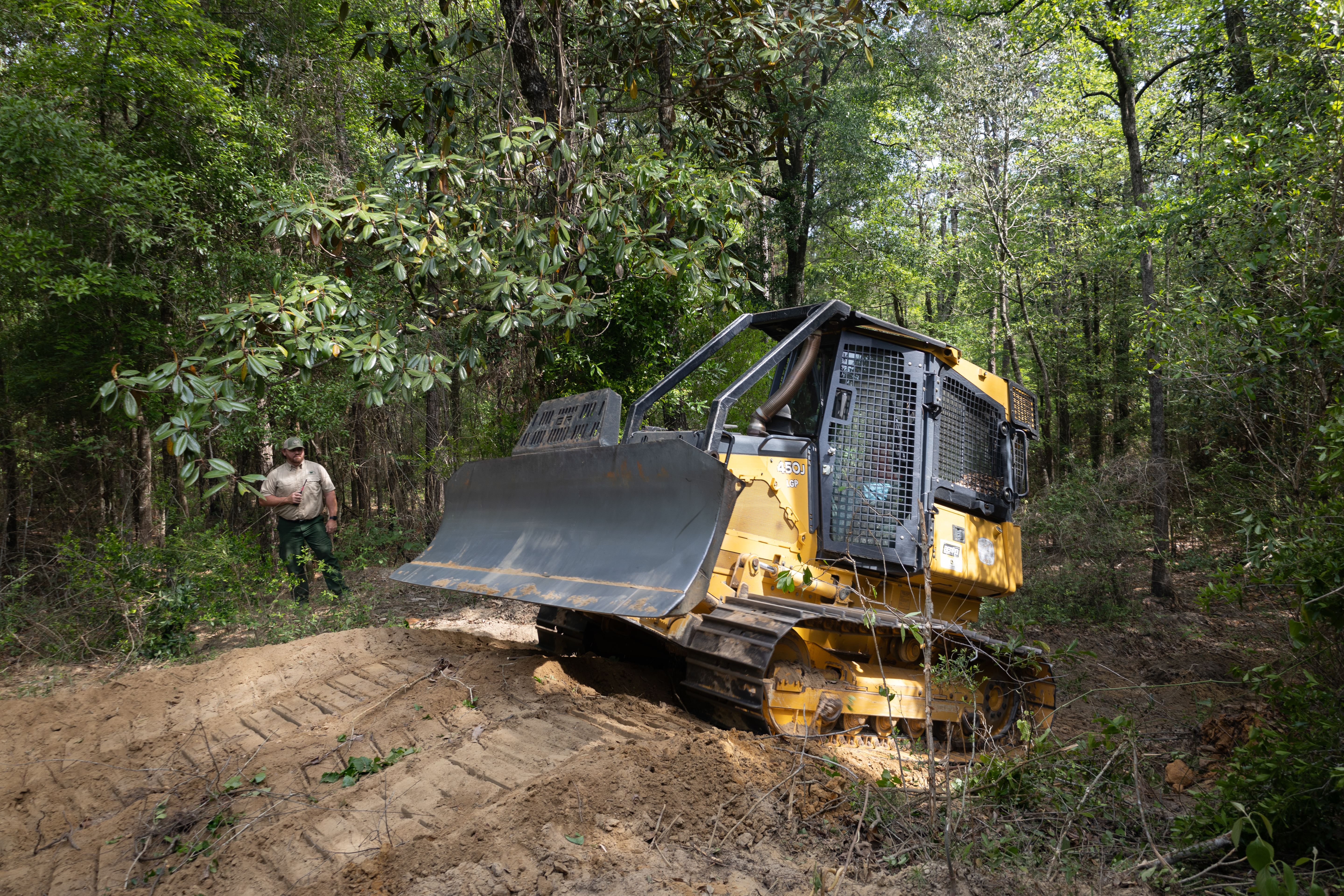
With peak wildfire season approaching, scientists with NASA’s FireSense project have created low-cost thermal sensors to install on fire bulldozers that will alert firefighters when heat from a nearby fire reaches a dangerous level. The sensors also provide researchers with important data on what happens beneath the canopy during a fire.
In April, researchers and firefighters gathered in southern Alabama to discuss challenges and advances in firefighting, and to demonstrate the new technology. The event was part of a collaboration between NASA and the Alabama Forestry Commission (AFC). The goal: to make firefighting safer and gather critical data on fire behavior.
“As we try to develop technologies that allow us to understand and respond to wildfires with our partners, ground observations are vital to provide context for what we are seeing from space,” said Ian Brosnan, program manager for wildland fires at NASA’s Ames Research Center in California’s Silicon Valley.
Dozers on the fire line
Firefighters nationwide use bulldozers, colloquially referred to as fire dozers, on the front line of a fire to clear vegetation and to create fire breaks, which slow or stop a wildfire’s spread. This often puts dozers and their operators within feet of the flames.
The AFC is switching its fleet to a model of bulldozer that has an enclosed cab called an “envirocab.” While envirocabs are safer for operators than open cabs, the enclosure makes it more difficult to gauge when radiant heat from the fire has reached a dangerous temperature.
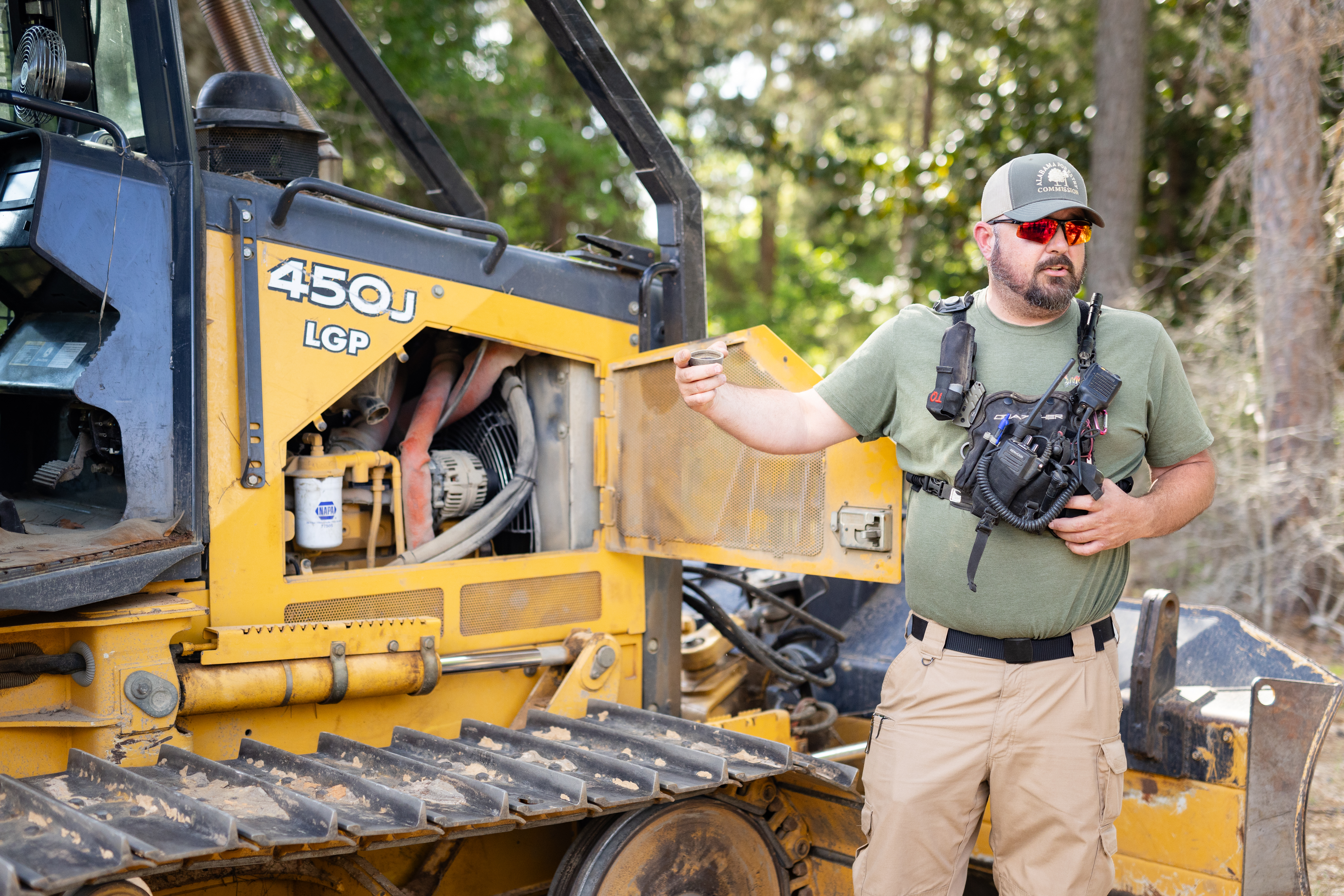
“It’s not so much about what’s going to burn the tractor up as what’s going to shut the tractor down,” said Ethan Barrett, AFC fire analyst. The electrical wiring can short or even melt from high heat, stranding the operator in a dangerous environment.
That’s where NASA comes in. According to Brosnan, developing thermal sensors for the AFC was an opportunity to create technology that has immediate impact on firefighter safety, while also providing scientists with valuable information about what happens on the ground during a fire.
It’s not so much about what’s going to burn the tractor up as what’s going to shut the tractor down.

Ethan barrett
AFC Fire Analyst
How sensors work
The AFC’s requirements for a sensor were simple: it needed to be low-cost and easy to operate.
“We used commercial, off-the-shelf components to make this,” said Jennifer Fowler, science integration manager for the wildland fires program at NASA’s Langley Research Center in Hampton, Virginia. “The thermocouple that sits in the window to measure temperature, for example, is the same one used in an oven or a kiln.”
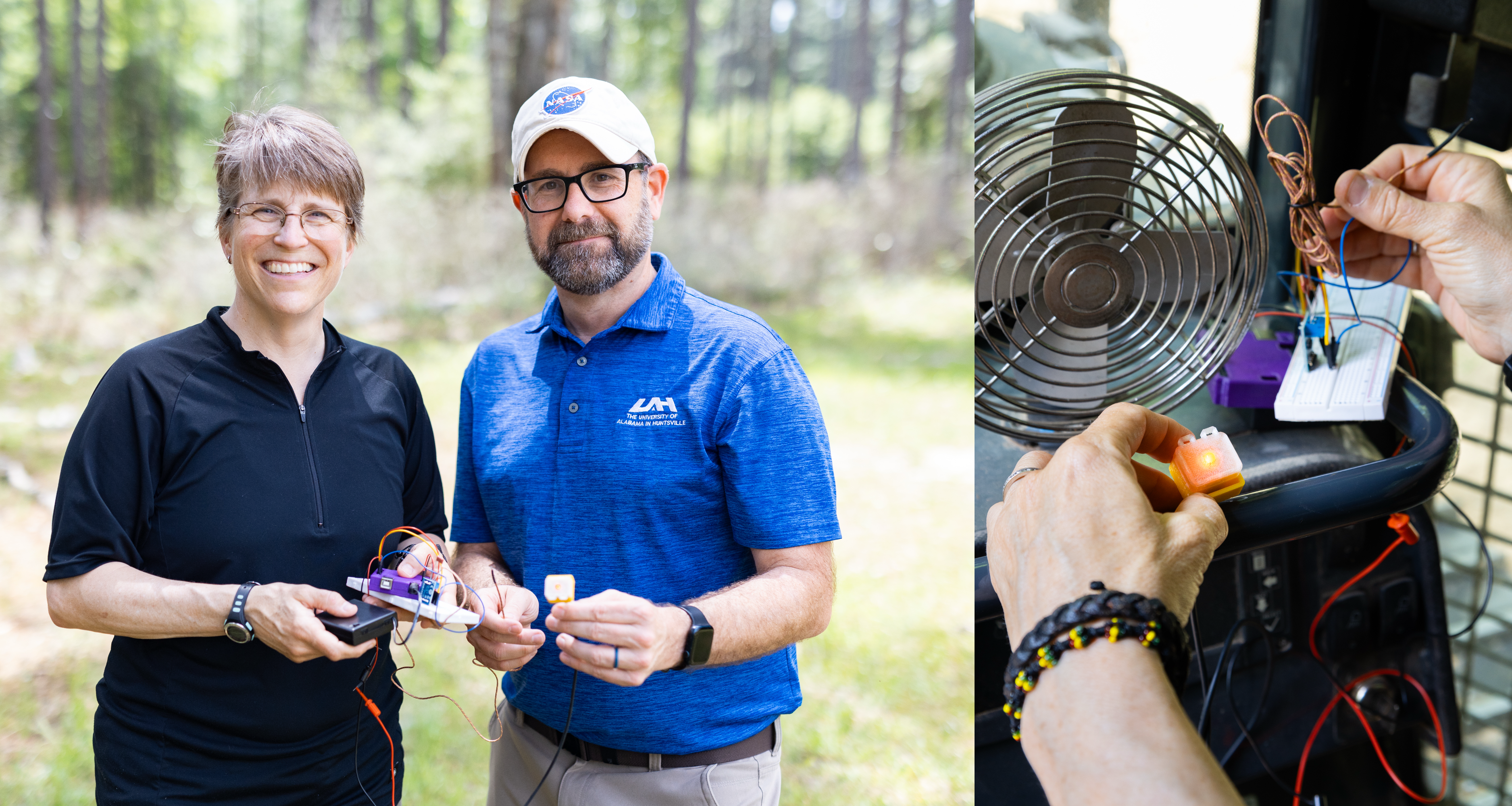
That thermocouple is wired to a simple LED light attached to the dashboard that’s directly in the operator’s line of sight. When the thermocouple senses an unsafe temperature, the LED starts blinking. The whole system is powered by AA batteries.
“While installing the second sensor, we realized we needed an extra piece, so we just ran out to the local hardware store to grab it,” said Ryan Wade, research scientist with the University of Alabama, Huntsville and NASA FireSense. “NASA’s expertise in this case comes not in the novelty of the instrument itself, but in figuring out how to solve the problem quickly and integrate that technology into their existing system.”
Fowler installed the first of these sensors in September 2025, and Wade installed the second in March 2026.
“Since their installation, we have run them on wildfires and prescribed burns and they’ve been effective,” Barrett said. “They work exactly as intended, and the operators have said it leads to better situational awareness. Based on the success of this pilot, we are looking at outfitting all the dozers in our fleet.”
Driving fire science forward
Co-developing these thermal sensors is the latest milestone in a relationship the two agencies have been building for more than a year. NASA scientists led training classes on weather and soil moisture with the AFC last spring and worked with AFC ground crews to test airborne instruments on active wildfires.
Moving forward, NASA FireSense and the AFC are planning to integrate the Fire Thermal InfraRed Spectrometer, or FireTIRS, which will measure temperature, spread rate, flame length, fire convection, and gas emissions.
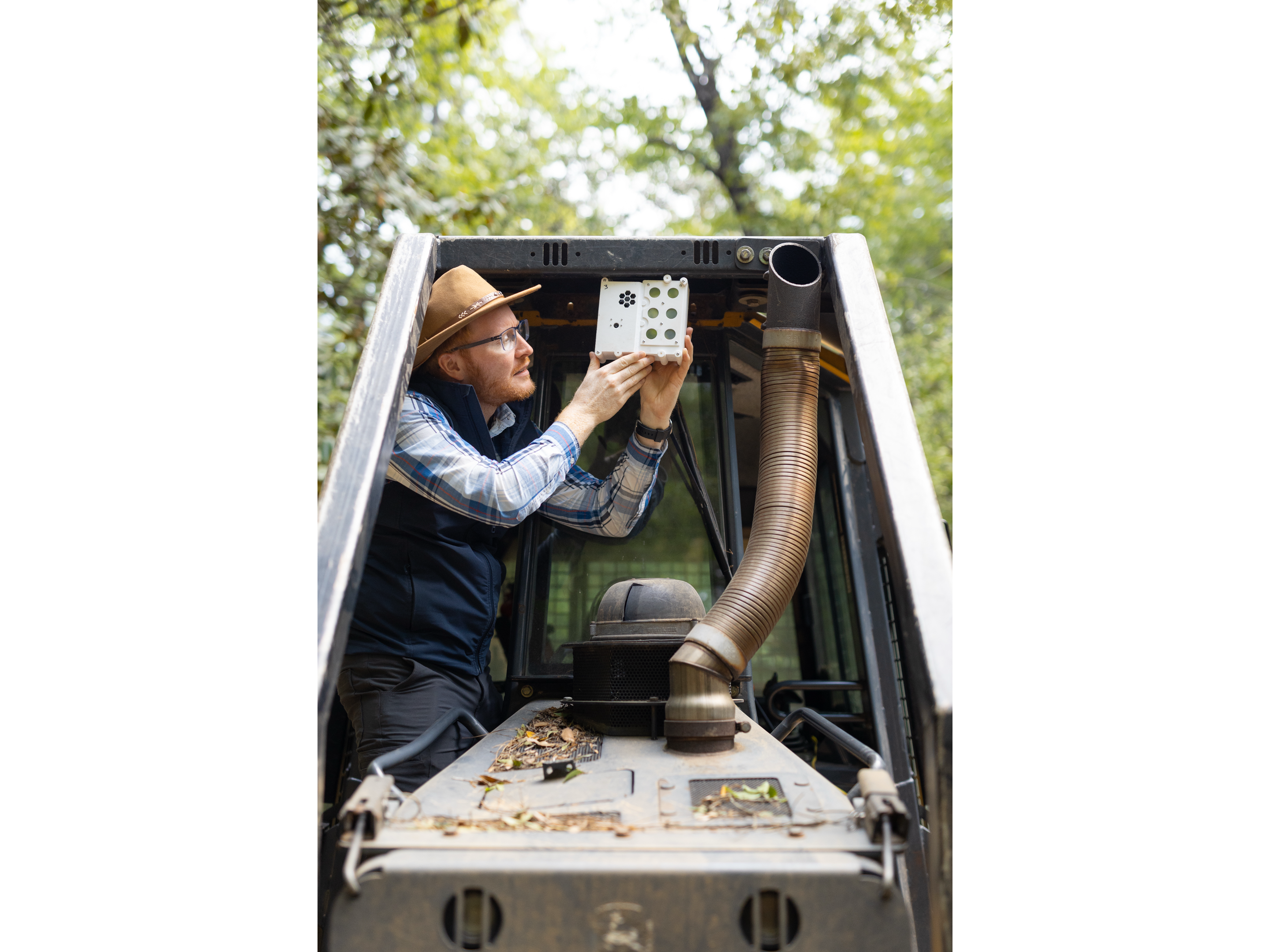
Fowler is also evaluating anemometers and compact cameras for the dozers. Anemometers provide data on wind speed and direction, while compact cameras provide data on burn severity, rate of spread, and the type, volume, and consumption of fuels.
The data this suite of instruments can gather would fill an important gap in creating a well-rounded understanding of fire.
“This is the dataset that will get us to the next generation of fire models,” Fowler said. “It gives us the detailed understanding we need to create tools that can give firefighters more advanced notice of what a fire will do. On a wildfire, that extra time is everything.”
To view more photos from the FireSense campaign visit: nasa.gov/firesense
About the Author

Milan Loiacono
Milan Loiacono is a science communication specialist for the Earth Science Division at NASA Ames Research Center.
