NASA’s Perseverance Rover Provides Sweeping View of Broom Point
NASA...
NASA’s Perseverance Rover Provides Sweeping View of Broom Point
NASA/JPL-Caltech/ASU/MSSS
Description
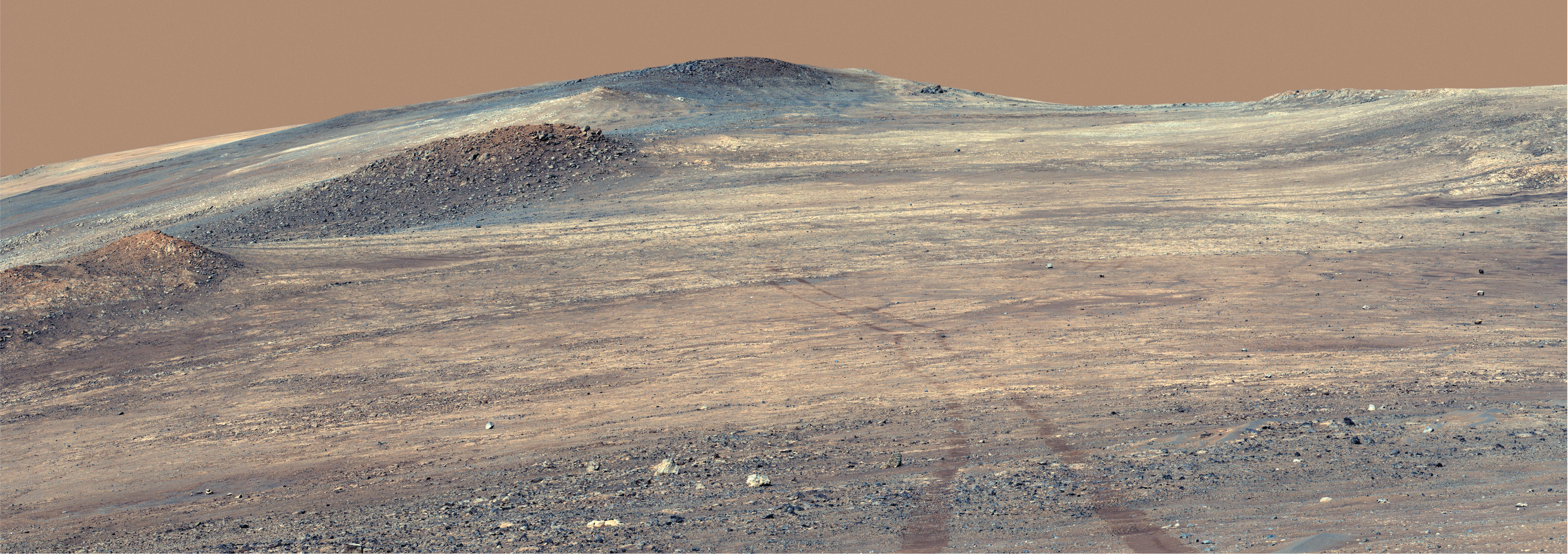
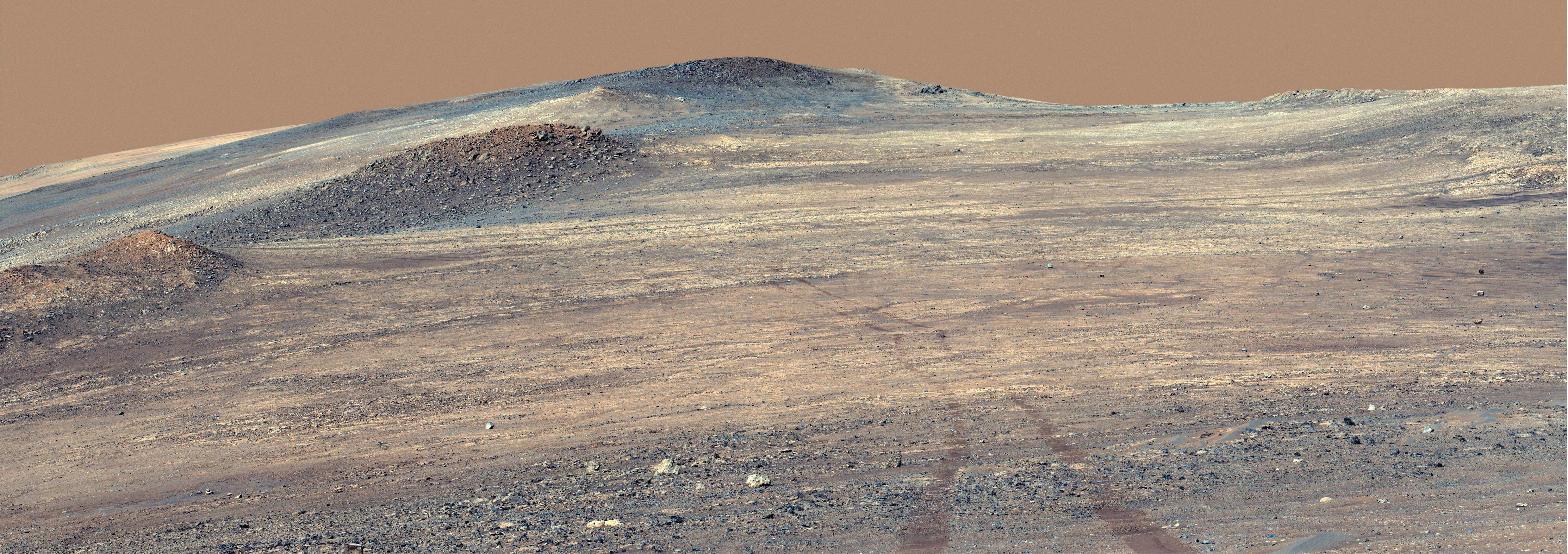
This view looking back up at the outside lip of the 490-foot-tall (150-meter-tall) rim of Jezero Crater was taken by the Mastcam-Z instrument aboard NASA’s Perseverance on May 15, 2025, the 1,505th day, or sol, of the rover’s mission to Mars.
The bright-colored rocks exposed across the slope, running from middle left to middle right of the image, belong to a formation the science team calls the “Broom Point member,” a 245-foot-thick (75-meter-thick) stack of ancient rock. This sequence of layered bedrock is likely more than 3.9 billion years old, making it among the oldest terrain ever examined by a Mars rover. Evidence uncovered by Perseverance indicates this thick section of rock was built by repeated asteroid strikes, with layers tilting at nearly vertical angles exceeding 80 degrees due to the subsequent colossal impacts that created the Isidis Basin and Jezero Crater.
The rover’s tracks are visible in the image, showing Perseverance’s descent of the steep crater rim slope.

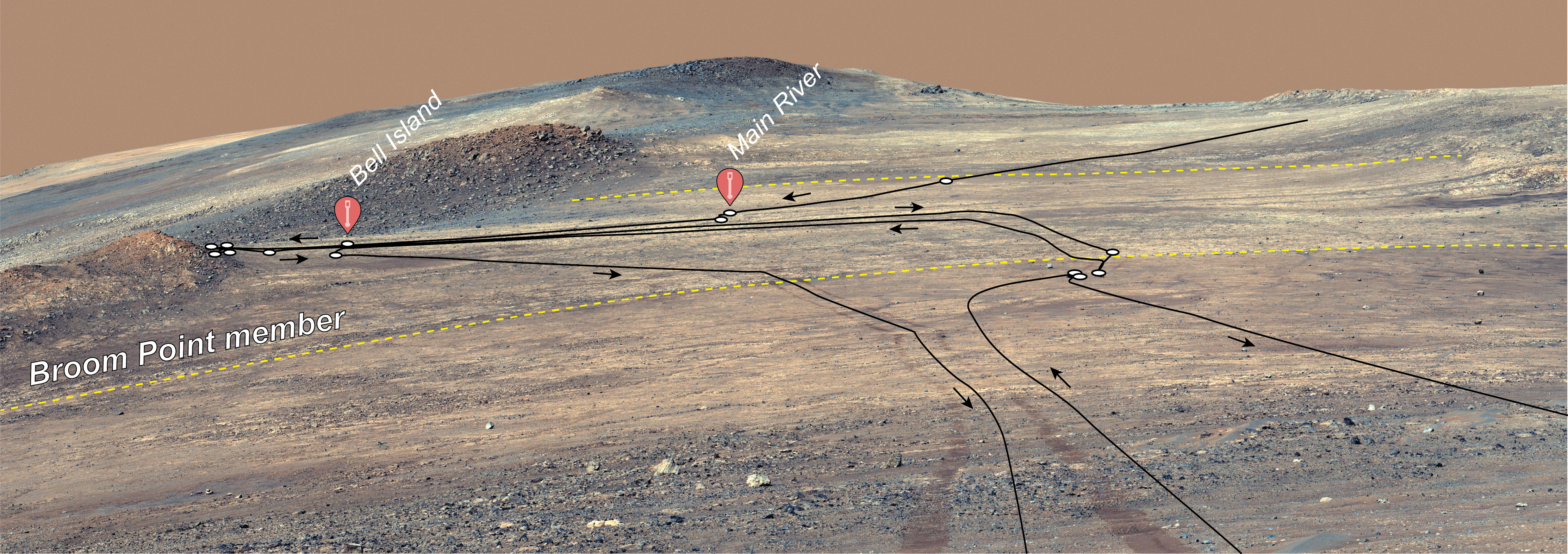
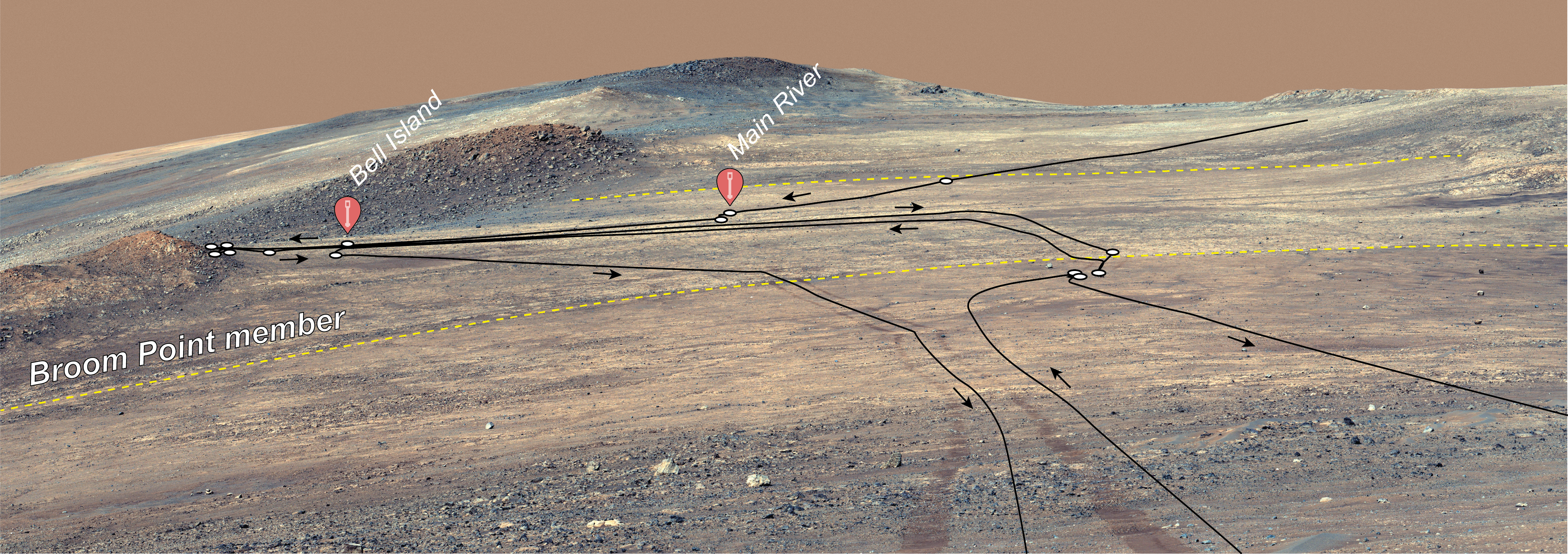
Figure A includes annotations:
- Dashed yellow lines indicate upper and lower boundaries of the Broom Point member
- Black lines indicate rover traverses
- White circles indicate locations rover stopped for science collection
- Red icons indicate locations of cored samples collected by Perseverance: “Bell Island” on April 22, 2025 (Sol 1,483) and “Main River” on March 10, 2025 (Sol 1,441)
NASA’s Jet Propulsion Laboratory, which is managed for the agency by Caltech in Pasadena, California, built and manages operations of the Perseverance rover. Arizona State University leads the operations of the Mastcam-Z instrument, working in collaboration with Malin Space Science Systems in San Diego, on the design, fabrication, testing, and operation of the cameras, and in collaboration with the Niels Bohr Institute of the University of Copenhagen on the design, fabrication, and testing of the calibration targets.
For more about Perseverance: science.nasa.gov/mission/mars-2020-perseverance/