Paul Schrader couldn’t find ‘good Black people,’ so he built fake ones instead

TheGrio...

OPINION: The acclaimed writer and director came under controversy for his AI-driven pivot for his new movie. That there was zero Black consent highlights a much larger issue.
Editor’s note: The following article is an op-ed, and the views expressed are the author’s own. Read more opinions on theGrio.
I keep coming back to four words. Not because they were shocking, but because they weren’t: “No good Black people.”
Paul Schrader said that like it was a logistics problem, like the actors were the ones being unreasonable, like refusing to play a criminal with no redemption written anywhere in the script was some kind of inconvenience he had to route around instead of a note he should have taken.
Sit with what actually happened here. A veteran filmmaker wrote three Black characters into a single story: a corrupt cop, a drug dealer, and a sexual predator, and gave every one of them the exact same ending, trying to destroy each other. No brother in that script gets to be complicated. No brother gets to be loved by someone in the audience the way flawed white characters in his other films have been loved for decades. Just three men built entirely out of what already scares people about Black men, set loose on each other for two hours. And when the actors sent that script to read it and said no, he didn’t ask himself what he’d written that made three separate human beings, independently, arrive at the same refusal. He decided the problem was that they existed at all, and found a version of the technology that doesn’t get to say no back.
That’s the part that actually sits heavily with me. Not the script, scripts get written and rejected every day in this industry. It’s the reflex. The refusal wasn’t received as information. It was received as an obstacle to be automated around. And once you understand that reflex, the AI stops being the headline. The headline is what the AI let him avoid: a conversation with a real Black actor who might have looked him in the eye and told him exactly why that script was a problem.
Then it got messier, because when the backlash landed, the story started to shift. Boots Riley, a filmmaker who has spent his career telling stories about power with a precision most directors never touch, looked at Schrader’s walked-back version of events and called it a lie, plainly, publicly, by name. I don’t need to adjudicate every detail of that dispute to understand what it tells us. It tells us that even the corrected version of this story couldn’t survive contact with someone who actually knows how these decisions get made behind closed doors.
Here’s what I want people to actually carry out of this, because it’s bigger than one film and bigger than one aging director chasing relevance. For as long as I’ve been alive, the leverage Black actors have had in this industry has been thin. It has never been equal to what white actors carry into a negotiation. But it has existed in exactly one place: the ability to read a role and refuse it, to say this confirms something ugly, and I won’t be the one who gives it a face.
That refusal has quietly killed bad scripts and forced better rewrites for decades, even when nobody outside the industry ever heard about it.
What Schrader showed us, whether you believe his first explanation or his revised one, is what happens the moment that leverage stops mattering. If a director doesn’t need your face to tell a story about people who look like you, he no longer needs your permission either. He can generate the performance and skip the person, and the only thing lost in that transaction, as far as he’s concerned, is an inconvenience.
Notice what kind of story got chosen to test that theory.
Not a story about a corrupt white officer. Not a story about a white man selling drugs to his own neighborhood. A story where every single Black character is a threat to somebody, deployed the exact week real Black men refused to lend their faces to it.
I don’t need to speculate about what’s in Paul Schrader’s heart to know what this moment revealed. I only need to read what he wrote, listen to what he said out loud when real people told him no, and watch what he reached for the second that refusal became inconvenient.
A story about three Black brothers and no single path to redemption among them isn’t a character study. It’s a diagnosis of the writer, not the men he invented.
When the response to Black consent was to build something that doesn’t require consent at all, that’s not a technology story. That’s a man telling you, without a hint of shame, exactly what he thought that consent was worth in the first place.
We didn’t have to dig for this. We didn’t have to connect anything that wasn’t already sitting in his own words. He told us himself, twice, on the record, and the only thing left to decide is whether we’re going to let that sentence pass as an offhand comment about casting, or call it what it actually is.
About the Author:
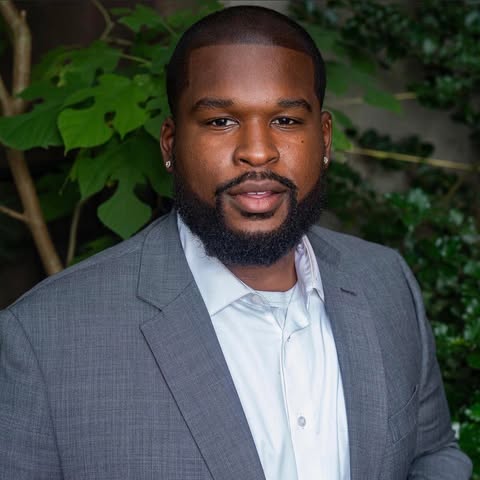
Jonathan Conyers is the author of the acclaimed memoir “I Wasn’t Supposed to Be Here.” He is also a respiratory therapist, writer, and producer, and the owner and investor in several successful business ventures. Through his storytelling and work, Conyers continues to amplify underrepresented voices and create impact across industries.