Selena: 31 years after the Tejano singer’s death, her music still resonates with Black fans
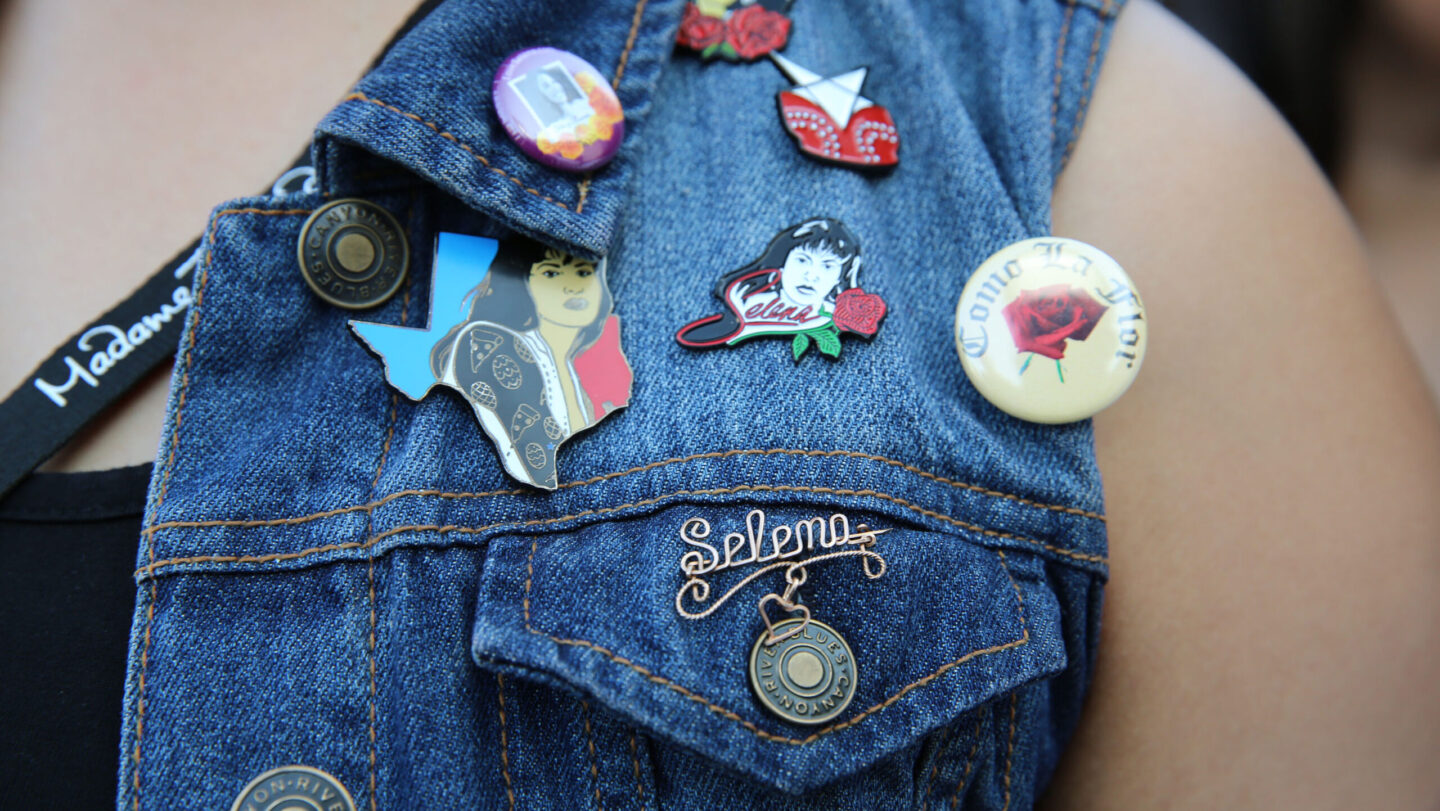
TheGrio...

“I think she is a legend and I admire her,” Beyoncé said in a 2007 interview, reflecting on the moment she met Selena Quintanilla in 1993.
It was 1993, and Houston’s Galleria was buzzing as the most popular and largest mall in Texas. During a shopping trip with her mother, Tina, a shy 12-year-old girl from the Third Ward, Beyoncé Knowles had unexpectedly met Selena Quintanilla, better known to the world simply as Selena.
Selena was at the height of her career, transitioning from a regional favorite to a national star. At the same time, Beyoncé was still years away from fame, but managed a quick “hello,” trading smiles with the Tejano singer. The brief encounter stayed with her.
“But I didn’t say much to Selena because I wasn’t a celebrity, and I just saw her and said ‘hello’ and kept it moving. Definitely, growing up in Texas, I heard her on the radio,” Beyoncé said in a 2007 interview with MTV’s tr3s. “I think she is a legend and I admire her. And she was so talented. So I’m very happy that [I met her], even though she didn’t know who I was. I’m still excited that I got that opportunity.”
For young Beyoncé, Selena was more than a singer; she was a cultural blueprint. Nearly 22, the Mexican-American artist unknowingly passed the torch to another Texas native, who, like her, would become an international star.
On March 31, 1995, Selena was tragically killed at 23 in her hometown of Corpus Christi, Texas, by Yolanda Saldivar, her former fan club president and boutique manager, according to WOAI. Fans worldwide mourned the artist and trendsetter’s devastating loss.
In the years since her passing, Selena’s legacy has remained undeniable. Before her death, she was working on her first English-language album, “Dreaming of You.” Months later, the project and its lead single, “I Could Fall in Love,” were released posthumously.
On the 25th anniversary of her death, Daniel Hernandez, a Los Angeles Times staff writer, revisited the album and questioned its label as a “crossover” project.
“I know this album is referred to as the crossover, but listening to it again makes me ask: ‘crossover’ for who? Selena still leaned on mariachi and cumbia sounds, so in a sense, this ‘crossover album’ is really for the legions of English-speaking American listeners who were poised to become her next wave of biggest fans,” he wrote in a 2020 article.
Despite her life being cut short, Selena’s influence has transcended both cultural and racial lines, earning her a devoted nationwide fanbase, particularly within the Black community.
Many Black fans, whether lifelong listeners or those who discovered her posthumously, have shared how the beloved Tejano singer had shaped their musical experiences. From listening to “Bidi Bidi Bom Bom” and “Como la flor” — even without knowing every word — to embracing the iconic phrase, “Anything for Selenas,” it’s clear that Selena’s Black fanbase does not play about her, respectfully. Across social media platforms, online forums and media outlets, Black fans continue to celebrate her legacy.
In a 2025 TikTok post, user @ladylanier329 said the “Selena effect on Black People Should Be Studied,” calling her the Latino culture’s Aaliyah.
“We picked up on Selena, how we picked up on Aaliyah,” the user said. “We loved her. We felt her spirit. We felt her personality. We felt her music. And that is why I feel like the Selena effect on Black people is the way it is.”
A recent Threads post highlighted the bond between a specific group of Black women who grew up during Selena’s rise.
“There’s a whole lot of Texan elder millennial Black women who love Selena, and remember the day she died. We really were singing word for word and didn’t know a lick of Spanish 🥰🥺🙏🏾😂,” one user said in the post.
Another user shared a video of Selena early in her career, covering Janet Jackson’s 1986 single, “When I Think of You,” highlighting the singer’s appreciation for Black music and her ability to make it her own.
“Selena did her thing with this Janet Jackson song. I love how she did it her way. I over love the raspiness in her voice 😮💨. And her dance moves were 🤌🏽,” the person wrote.
Throughout her career, Selena has paid homage to legendary Black artists such as Janet Jackson, Michael Jackson, Whitney Houston and Donna Summer.
In her final television concert at the Houston Astrodome on Feb. 26, 1995, Selena performed a “Disco Medley.” The medley included several songs from Summer, such as “I Will Survive,” “Funkytown,” “Last Dance,” “The Hustle” and “On the Radio,” showcasing those influences.
More than three decades after her death, Selena’s connection to Black audiences still resonates far beyond language. For many, it wasn’t about learning or understanding the lyrics, but about the feeling — her voice, dance moves, and energy created a shared cultural experience.
In February, Selena’s iconic album, Amor Prohibido, was inducted into the 2026 Grammy Hall of Fame, according to Kens5. The album was released in 1994, providing fans with several hits like “Bidi Bidi Bom Bom,” “Como la flor,” “No Me Queda Mas,” and others. As her fourth studio album, the project received the special honor more than 25 years after its release and remains a cultural and historical masterpiece.
On Tuesday, fans remembered Selena on the 31st anniversary of her passing. This month, they will also celebrate what would have been her 55th birthday on April 16, which is considered “Selena Day” in Texas and other parts of the country. Each year is a reminder that her legacy remains.