The essential e-bike accessories—and the upgrades that make every ride better
Popular Science...
So you finally chose your electric bike. Now, it’s time to accessorize it. This is where things go from “I have an e-bike” to “this thing is dialed.” First, the must-haves: a helmet that can take a hit, a lock to deter would-be thieves, and a floor pump to keep your ride smooth and fast. Not the flashy stuff, but the gear you’ll be very glad you didn’t skip.
Then comes the real fun. Accessorizing your e-bike is part practicality, part personality. You’ve got smart upgrades that make commuting easier, plus extras that are just plain enjoyable. The kind of stuff that makes you want to take the long way home.
The more you ride, the more your setup evolves. You’ll start noticing the little things: where you want more comfort, more utility, or just a bit more flair. Whether you’re commuting, cruising, hauling, or stretching rides into full-on outdoor adventures, the right mix of essentials, practical add-ons, and fun extras can completely transform the experience.
- Best high-speed helmet: Smith Dispatch MIPS Helmet
- Best helmet for e-bike commuters: Trek Charge WaveCel Commuter Helmet
- Best U-lock: Litelok X1 U-Lock
- Best wearable lock: Hiplok Gold Wearable Chain Lock
- Best folding bike lock: Seatlock Foldylock Elite
- Best secondary lock for carrying on rides: Ottolock Hexband Cinch Lock
- Best floor pump: Topeak Joe Blow Sport III High-Pressure Floor Pump
- Best digital floor pump: Fix Mechanic Eflator Digital Tire Pump
- Best multitool: Crankbrothers M-17 Multitool
- Best phone mounting system: Peak Design Mobile Case and Out Front Bike Mount
- Best upgrade for rider comfort: Redshift Sports Shockstop Endurance Suspension Seatpost
- Best water bottle cage: Portland Design Works Water Bottle Cage
- Best add-on illumination: Redshift Sports Arclight Pro Flat Pedals
- Best safety + performance pairing: Garmin Edge 1050 Cycling Computer and Varia RearVue 820 Radar and Tail Light
- Best stem bag: Pocampo Willis Stem Bag
- Best trunk bag: Pocampo Vernon Bike Trunk Bag
- Best rear basket: Basil Rear Milkbottle Bike Basket
- Best pannier for random errands: Specialized Coolcave Pannier
- Best budget accessory: Topeak Cargo Net
- Best strap system: MODL Infinity Tool
- Best car rack for e-bikes: Saris SuperClamp G4 2-Bike Hitch Rack
- Best heavy-duty car rack: Thule Vero Hitch Rack
- Best splurge performance sunglasses: Smith Seeker
- Best budget sunglasses: Goodr Mick and Keith’s Midnight Ramble
- Best rain jacket: Outdoor Research Freewheel MTB Stretch Rain Jacket: Women’s – Men’s
- Best cold-weather face cover: BlackStrap Treble Hood Balaclava
- Best summer neck gaiter: Buff CoolNet UV Half Neck Gaiter
- Best forgiving shorts: Outdoor Research Freewheel MTB Ride Shorts: Women’s – Men’s
- Best anti-chafing cream: Chamois Butt’r
How we chose these e-bike accessories
I’ve spent years as a dedicated e-bike commuter—hauling groceries, takeout, a trail-a-bike with a semi-cooperative kid, and often my dog. Along the way, I’ve tested plenty of baskets, racks, bags, and other gear to figure out what’s useful and for how long.
I started simple with a backpack—until warmer weather made that a sweaty mistake. Switching to a rack and panniers was a game-changer, and since then, I’ve been refining my setup for daily rides, changing with the seasons, and weekend trips. These picks are the accessories that have consistently earned their place.
Higher speeds mean your helmet matters more
Chances are your e-bike can move a lot faster than you ever could on pedal power alone—and that changes the equation for your helmet. Higher speeds mean higher-impact crashes, so it’s worth upgrading to a helmet designed for e-bikes. They tend to cover more of the head and may feature safety certifications that go beyond those of standard bike helmets.
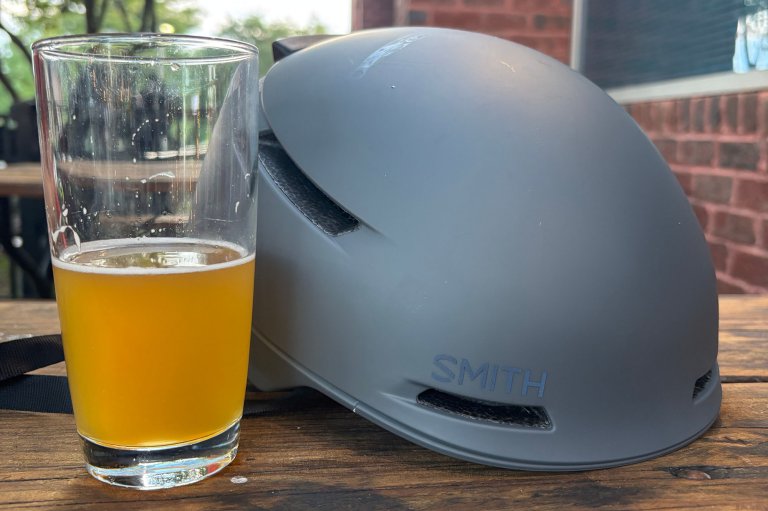
Best high-speed helmet: Smith Dispatch MIPS Helmet
You might know Smith from ski helmets and goggles, but the company also applies its protection know-how to e-bikes with the Dispatch MIPS. With a price tag of $195, this model pairs two types of brain protection: MIPS, which disperses rotational impact, and KOROYD, a lightweight material that absorbs hits—and it’s my daily go-to. It’s certified for higher-speed riding in the U.S., Netherlands, Europe, Australia, and New Zealand.
The VaporFit dial makes it easy to fine-tune the fit, while AirEvac vents help keep compatible Smith eyewear fog-free. A removable, rechargeable rear light adds extra visibility, and it comes in matte black, white, and slate, in sizes S, M, and L.
Best helmet for e-bike commuters: Trek Charge WaveCel Commuter Helmet
The Trek Charge WaveCel Commuter Helmet meets U.S. and Dutch safety standards for bike helmets. It’s styled for riders who don’t want to look like they’re cosplaying the Tour de France, but the real draw is the WaveCel tech—a lightweight, crushable structure designed to absorb both direct and rotational impacts.
Fit is easy to dial in with a BOA system, and the Fidlock magnetic buckle makes clipping in feel weirdly satisfying. I’ve scuffed up the Radioactive Yellow shell a bit (I’m not gentle with gear), but it’s holding up just fine—and there is a more low-key black/blue option if that’s your vibe. At around $175, it’s not cheap, but it’s built for the kind of speeds your e-bike can hit.
Locks that match your e-bike
Bike locks are a bummer to buy because no one can promise your bike will still be there when you get back. The goal isn’t perfection: It’s making your e-bike the most annoying one to steal. That usually means using a serious lock (or two), locking it up properly, and matching your setup to where—and how long—you’re leaving it.
In the wild, that can look very different. On New York City streets, you’ll see e-bikes wrapped in chains that look like they could anchor a cruise ship, sometimes with the battery pulled for good measure. In a secure bike room in a building, the setup might be a folding lock. Most lock brands rate their gear by security level (diamond being the top), and, unsurprisingly, the tougher (and heavier) the lock, the more you’ll pay. It’s still less than buying a whole new e-bike.
Best U-lock: Litelok X1 U-Lock
The Litelok X1 U-Lock has a near cult following despite its $200 price—and for good reason. It’s made from a Barronium alloy designed to resist angle grinders (a favorite tool for bike thieves), and it’s earned top-tier ratings from Sold Secure (Diamond) and the Dutch ART Foundation, where it’s considered tough enough for motorcycles.
It’s not subtle at 3.7 pounds, but that heft is the point. The rubberized outer coating helps protect your frame, and reflective strips add a bit of visibility. However, U-Locks work best on e-bikes with a traditional triangle shape or thinner frames, so you can fit a wheel, frame, and the immovable object you’re locking to. You get two keys, a pouch, and a three-year warranty.
Best wearable lock: Hiplok Gold Wearable Chain Lock
If you’re running baskets or bags, carrying a heavy lock is no big deal. Go minimalist, though, and it gets trickier. The Hiplok Gold Wearable Chain Lock ($150) solves that by letting you wear it literally like a belt.
It weighs just over 2 pounds, but fits waists from 30 to 44 inches and sits surprisingly comfortably once you get used to it. (And no, you’re not locked into it: There’s a buckle for wearing that’s separate from the 12mm shackle for securing your bike.) The 33-inch chain is wrapped in a water-resistant sleeve, available in black or high-vis. It’s a little awkward at the beginning of the ride, but then it slowly fades into the background. However, this is better for short trips or a string of stops, not an all-day ride.
Hiplok makes a ton of locks we recommend. We’ve got an entire hook of $30 Z Lok Combo cable locks we keep in the closet for when we want to toss something in a bag for a quick run into a cafe. Whatever level of security you need for bike, scooter, or motorcycle, chances are Hiplok has a solution.
Best folding bike lock: Seatlock Foldylock Elite
Folding locks are a smart match for e-bikes, which often have thicker, less traditional frame shapes. They give you enough length (about 43 inches here) to secure both the frame and a wheel, but generally, look for longer lengths to fit beefier e-bikes.
The Seatylock Foldylock Elite ($145) hits that balance well. It’s made from hardened steel with drill-resistant rivets, weighs just over 4 pounds, and carries a Sold Secure Gold and ART3 rating—solid protection against common theft tools. It also includes a rattle-free mount, three keys, and a three-year warranty. More lock than you need? There’s a standard, Silver-rated Seatylock Foldylock available for only $95.
Best secondary lock for carrying on rides: Ottolock Hexband Cinch Lock
The Ottolock Hexband Cinch Lock is made for quick stops like coffee runs, bathroom breaks, and “I’ll just be a minute” moments. It works like a reinforced zip tie, using six layers of stainless steel wrapped in a fiber coating that won’t scratch your frame.
At about 0.4 pounds, it coils down small and fits easily in a bag. It comes in 18-, 30-, and 60-inch lengths and uses a keyless combo—convenient, though a bit fiddly to set or unlock, especially with cold hands.
Starting around $69, it’s best as a secondary lock. I use it to secure a wheel to the frame while a beefier lock handles the rack.
The small tools that save your ride
E-bikes are still bikes, which means a little e-bike maintenance goes a long way. Think basic upkeep, like cleaning and lubricating the chain to keep everything running smoothly. Even if you leave the heavy lifting to your local shop, it’s worth having a few tools on hand beyond what came in the box.
Best floor pump: Topeak Joe Blow Sport III High-Pressure Floor Pump
The Topeak JoeBlow is a classic, reliable floor pump that usually runs under $65. It has a large, easy-to-read gauge and a TwinHead DX that works with Presta, Schrader, and Dunlop valves without adapters, plus extra needles for balls and other inflatables.
I’ve used an earlier model for over a decade, and it still works like day one (just with a slightly yellowed handle). Filling a tire from flat is a workout, but quick top-offs are easy—and that’s what you’ll use it for most.
Best digital floor pump: Fix Mechanic Eflator Digital Tire Pump
The Eflator Digital Floor Pump takes the effort out of inflating your tires: set your target pressure, hit a button, and it shuts off automatically. It supports multiple units, works with Presta and Schrader valves, and can push past 100 PSI.
It runs on a 2000 mAh battery, charges via USB-C (cord included, no wall adapter), and includes a built-in flashlight and nylon carry bag. It’s loud (around 76 dB), but for quick, no-effort top-offs—or inflating balls and other gear—it’s a super handy tool to have around.
Best multitool: Crankbrothers M-17 Multitool
If you ride regularly, things will loosen up: racks shift, headlights droop, bolts back out. A multitool turns those problems into quick pit stops.
The Crankbrothers M-17 Multitool ($33) is compact and lightweight, while boasting a full range of hex wrenches (2 to 8mm), Phillips and flathead screwdrivers, a Torx T25 for disc brakes, and a chain breaker. It also includes spoke wrenches and 8 and 10mm open wrenches, covering most on-the-road fixes without overloading your kit.
They also make some snazzy pedals.
The upgrades you’ll notice every mile
You probably already like most of your e-bike: the way it handles, how the motor kicks in, and the gearing. But things like handlebars, saddles, seatposts, and pedals are easy to swap—and upgrading them can completely change how your bike feels. You’re not changing the heart of the ride, just dialing in the details that make it more comfortable and more useful.
Best phone mounting system: Peak Design Mobile Case and Out Front Bike Mount
E-bikes already crowd your handlebars with big displays and motor controls, but most don’t handle navigation. If you don’t have your route memorized, you’ll need a place to put your phone so it doesn’t fly off at a bump. Peak Design’s system actually holds. The Everyday Case (around $50) combines MagSafe with a physical SlimLink lock that clicks securely into the Out Front Bike Mount ($70). In testing, it stayed put over bumps, bridges, and rough patches without a wobble.
Peak Design offers a broader ecosystem of mounts and accessories (bike, car, even wallets). It supports newer iPhones, Pixels, and Samsung Galaxy models, though options are slimmer for older phones.
Best upgrade for rider comfort: Redshift Sports Shockstop Endurance Suspension Seatpost
The first instinct when a bum is sore is usually to upgrade the saddle. Not a bad idea, but a suspension seatpost will do more. Many e-bike brands sell compatible suspension posts (not to be confused with dropper posts, which are more for descents and dismounts), or you can go with something like the Redshift ShockStop Endurance, which adds up to 35mm of travel to smooth out bumps and reduce fatigue without killing pedal efficiency.
It uses a dual-spring system with adjustable stiffness, so you can tune it to your weight and riding style, and comes in common diameters like 27.2, 30.9, and 31.6mm (with shims for some setups). If you’re unsure, Redshift’s support is responsive, but the more unusual your frame (especially carbon or non-standard shapes), the less likely it is to fit.
At around $225, it’s not cheap, but it’s a noticeable upgrade—especially on rigid frames.
Best water bottle cage: Portland Design Works Water Bottle Cage
Why be basic when you can choose cute? Portland Design Works offers a range of animal-themed water bottle cages, including cats, dogs, sparrows, owls, and rattlesnakes. Each design is about $28 and comes in multiple colorways, and fits standard bike bottles (think the plastic squishy kind with a 3-inch diameter, not a massive insulated beast).
Best add-on illumination: Redshift Sports Arclight Pro Flat Pedals
Most e-bikes come with built-in lights, but “technically visible” isn’t the same as actually seen, especially in traffic or at busy intersections. Plenty of brands promise “360-degree visibility,” which usually translates to a thin reflector strip that’s easy to miss.
Redshift’s Arclight Pro Flat Pedals take a smarter (and way more noticeable) approach. These grippy, mountain-bike-style pedals house rechargeable LEDs that light up the center of your bike—right where drivers are already looking. A built-in sensor keeps the forward-facing light white and the rear red, so even when you’re stopped or coasting, it’s obvious which direction you’re headed.
Best safety + performance pairing: Garmin Edge 1050 Cycling Computer and Varia RearVue 820 Radar and Tail Light
You don’t have eyes in the back of your head, but you may have a driver heading toward your back. One way to stay alert is to install a combo of a seatpost-mounted Garmin radar tail light and a compatible cycling computer that tracks vehicle lane changes and threat levels and displays them in your bike cockpit, so you don’t have to repeatedly check over your shoulder (which can cause its own dangers).
It’s a pricey combo at the flagship level, running $299 for the Varia RearVue 820 and $699 for the Edge 1050, though there are step-down options. It’s worth considering, however, for regular urban commuters navigating rush-hour traffic. And if you’re into stats, the Edge 1050 lets you map a wide range of metrics, receive road hazard warnings, and ring an electronic bell so you can alert pedestrians and other riders who don’t have their own radar setup to the fact that you’re coming up on their left.
Turn your e-bike into a daily driver
Many e-bikes come with built-in accessories like lights, fenders, and racks—and when they don’t, brands often offer their own add-ons designed to fit tricky frame shapes and crowded handlebars. That’s especially helpful for things like front baskets, which need to work around lights, wiring, and displays. If you’re new to e-bike ownership, our guide to preparing for your first e-bike is a good place to start.
Compatibility matters. Not all accessories fit every bike, and details like frame size, rack design, and brake type can limit your options. When in doubt, check mounting points—or bring your bike to a local shop to avoid trial and error. From there, it’s worth mapping out how you’ll carry stuff on your bike—groceries, work gear, or whatever else the day demands.
Best stem bag: Pocampo Willis Stem Bag
Even though I just said handlebar bags can be tricky, stem bags often work. The Pocampo Willis Stem Bag ($50) is a particularly good one because it fits even my massive, insulated 40-ounce water bottles, plus a small pocket to slide my phone or multitool, and a stealthy zippered pocket at the bottom. It’s more convenient to get a mid-ride sip than to reach my water bottle cage. The flexibility comes from three long hook-and-loop straps that you can slide through different mounting points to make the bag hang to the left, right, or whatever fits your handlebar/screen/stem combination. Willis comes in two colorful patterns: Tropical and Bubbly.
Best trunk bag: Pocampo Vernon Bike Trunk Bag
Trunk bags hit that sweet spot: not too big, not too small. The 15L Pocampo Vernon Trunk Bag ($99) nails it with a roll-top design you can compress when it’s lightly packed or expand when you’ve overdone it.
I especially like the external U-lock pocket at the base—easy to grab without digging—and the four long hook-and-loop straps that keep it secure on the rack. It’s designed to fit most rectangular racks, which matters. Trunk bags aren’t always universal; some only work with specific mounting systems.
Best rear basket: Basil Rear Milkbottle Bike Basket
Storage can’t get simpler: The Basil Rear Milkbottle Bike Basket ($50) just slides onto the rear rack. It’s easy to take off and on, weighs less than 3 pounds, and holds whatever you want as long as it’s not so small it falls through the grid. I used to carry this into a grocery store to make sure I wouldn’t over-buy, but recently, my 8-pound mini Aussie mix has laid claim to it as her bike seat.
Best pannier for random errands: Specialized Coolcave Pannier
Sometimes you just need a big ol’ box—and that’s the Specialized Coolcave ($90). It’s a rigid plastic pannier (about 19L capacity, 22-pound limit) that skips zippers and straps—just toss your stuff in and go.
It’s sturdy, made with 50% recycled plastic, and comes with a cargo net to keep things from bouncing out. The quick-release KlickFix mount makes it easy to pop on and off most racks (just double-check fit on bulkier e-bike setups).
The tradeoffs: it’s heavier than soft panniers, the open top leaves gear exposed, and a second handle would help when hauling it off-bike. Still, for groceries, backpacks, or random cargo, it’s hard to beat.
Best budget accessory: Topeak Cargo Net
At under $10, the Topeak Cargo Net is one of the cheapest, most useful bike accessories you can get. Most people use them to keep a load in a basket, but I’ve used it to keep a soccer ball attached to my rear rack and have since left it there for just-in-case moments.
Best strap system: MODL Infinity Tool
These are the kind of things you don’t think you need until you really, really do. The MODL Infinity Tool ($35) is a flexible silicone strap system that handles up to 70 pounds and reconfigures on the fly. Link them together, loop them through racks, or twist them into whatever shape the moment calls for. I keep a set on my bike for taming wide pant legs, lashing down a jacket, or keeping a box from sliding off the rear rack.
Take your ride further
E-bikes are heavy—even the light ones. That extra weight changes the game when it comes to car racks. In most cases, it means skipping trunk-mounted options and going straight to a hitch rack that can handle the weight.
Best car rack for e-bikes: Saris SuperClamp G4 2-Bike Hitch Rack
Sometimes you want to take your e-bike on a road trip—or just mix up your usual rides—and that’s where a proper hitch rack comes in. The Saris SuperClamp G4 ($800) is a relatively slim, 45-pound rack that can carry two e-bikes up to 60 pounds each. That rules out some heavier models, but covers bikes with wheelbases up to 52 inches, 20- to 29-inch wheels, and tires up to 3 inches. Sorry, no fat tires.
Securing the bikes isn’t fussy. Press a button to stretch the spring-loaded arms over the front wheel (even with a fender) and a simple locking loop around the rear wheel. That’s it. While loaded, you can tilt the bikes away from the rear of the car to access the trunk.
It took two people to install: one to lift the rack up slightly while the other really cranked on the anti-wobble system. It took a couple of tries, but once we locked it in, it was in. Bonus: The rack works with both 1.25- and 2-inch hitches thanks to the included adapter.
Overall, this lightweight model strikes a nice balance between solid capacity and not overwhelming the back of a car. You can still open the hatch with it upright, though loading groceries might mean squeezing between the bumper and rack. Compared to bulkier options, it’s one you won’t mind leaving on year-round.
Best heavy-duty car rack: Thule Vero Hitch Rack
Need to carry bigger, heavier e-bikes? The Thule Vero is built for it, with an 80-pound-per-bike capacity, support for fat tires up to 5 inches, and wheelbases up to 53 inches—enough for cargo bikes and other beasts.
Its telescoping arms pivot 180 degrees, so you can attach to the frame, seatpost, or rear wheel—whichever suits your bike’s shape best. Locking loops secure each wheel, keeping everything stable. There’s also an option to add a loading ramp, which makes dealing with heavy bikes a lot less of a deadlift.
It tilts down for trunk access and folds up when not in use, keeping things relatively tidy. The tradeoff: it’s a hefty 56-pound rack and requires a 2-inch hitch, but that’s the kind of muscle you want holding up your bikes.
Gear for the rider, not the bike
E-bike riders tend to dress like they’re going somewhere other than a bike path—because they usually are. But once rides get longer (or the weather gets weird), a few smart add-ons can make a big difference. You don’t need a full cycling kit, but things like a low-profile chamois or a balaclava can keep you comfortable no matter what the ride throws at you. And remember, when it comes to gloves or jackets, you want wind resistance to cut the cold and breathability to prevent overheating.
Best splurge performance sunglasses: Smith Seeker
Cyclists love giant, windshield-sized sunglasses for good reason. At e-bike speeds, dust is a real problem, and a stray gnat can hurt. I’m not going full wraparound, but the Smith Seeker hits a nice middle ground.
At $237, these are performance-focused shades with lightweight bio-based frames, grippy nose pads, and arms that stay put, and ChromaPop lenses in tint, polarized, or photochromic options. I went with the photochromic to handle everything from early mornings to shifting light on tree-lined streets without swapping pairs.
They don’t fully wrap, but slim side shields add protection without killing your peripheral vision. Nice extras: autolock hinges, a subtle slot for a paracord leash, and a soft roll-top case with a built-in lens cleaner. Smith designed the Seeker for a variety of outdoor activities, so it’s as good on a hike as it is on the bike.
Best budget sunglasses: Goodr Mick and Keith’s Midnight Ramble
Affordable sunglasses are easy to find, but many skip polarization, a nice feature that cuts glare from pavement, water, and car hoods on sunny days. Goodr’s entire mission was to create cheap sunglasses that didn’t bounce all over the place on a run, and it has since expanded its line to include more sports. Mick and Keith’s Midnight Run is a part of the company’s OG line, an everyday frame with bright blue polarized lenses. But the soft-touch plastic and grippy-enough nose pad keep them from sliding down again and again on a ride. The lenses may not have the clarity or color-balancing features of other performance brands, but at $30 a pair, that’s more than OK.
Best rain jacket: Outdoor Research Freewheel MTB Stretch Rain Jacket: Women’s — Men’s
Rain happens, but a good jacket makes it manageable when the weather turns. The Outdoor Research Freewheel MTB Stretch Rain Jacket ($239) is the kind you keep on hand, especially since it packs into its own back pocket.
It’s lightweight, waterproof, and breathable, with enough stretch to move comfortably on the bike. The fit is bike-friendly, with a hood that goes over a helmet, adjustable cuffs, and a hem that helps seal out wind and drizzle.
Best part: it doesn’t feel like crinkly plastic rain gear. It’s something you can wear through cool, wet rides in the fall and into winter without feeling like you’re wrapped in a trash bag.
Best cold-weather face cover: BlackStrap Treble Hood Balaclava Prints
It took me a while to come around to wearing a balaclava, but now I don’t mess around with cold ears or a frozen face when the temps or even just the wind turn frigid. The BlackStrap Treble Hood Balaclava ($38) is lightweight, breathable, and stretchy enough to fit comfortably under a helmet without feeling bulky. It manages temperature well, wicks moisture, and stays comfortable all ride long, whether it’s biting cold or just icy and windy. It also comes in enough colors and patterns that you can find an alternative to looking like a bandit.
Best summer neck gaiter: Buff CoolNet UV Half Neck Gaiter
Riding in summer might not seem like the time to add a layer, but a neck gaiter like the Buff CoolNet UV Half Neck Gaiter ($19) is surprisingly useful. It can cover your nose and mouth when dust or bugs kick up—and helps prevent a sunburned neck.
It’s a weirdly versatile loop, too: wear it as a headband post-helmet or wrap it around your wrist to wipe sweat on the go.
Best forgiving shorts: Outdoor Research Freewheel MTB Ride Shorts: Women’s – Men’s

If you’re ready to upgrade from everyday clothes without going full spandex, look to mountain bike gear. The Outdoor Research Freewheel MTB Shorts strike that balance: They’re breathable, stretchy, and built for movement without looking overly “cyclist.”
In both their men’s and women’s versions, the shorts feature a comfortable cut with a higher back waistband, plenty of ventilation, and deep zippered pockets. The fabric has enough stretch to layer over a chamois [see below] if you want, and it holds up well over long rides. They do lean a bit “board short,” stylistically, but on the bike, they just work.
Best anti-chafing cream: Chamois Butt’r
Strategically padded bike shorts—known as a chamois—are standard gear for traditional cyclists, but they’re more optional for e-bike riders. The best clue? Your saddle. Wide, cushy saddles usually signal that the bike is designed for comfort without extra padding. These are common on bikes with upright riding positions. On the other hand, bikes with more aggressive postures tend to come with thinner, firmer saddles—and those are built with the expectation that you’ll be wearing a chamois for added comfort. And that’s when you want to think about anti-chafing cream like Chamois Butt’r. During long rides, this skin lubricant helps reduce chafing and irritation, especially if your chamois has many seams. Chamois Butt’r feels like a thick lotion and comes in four variants: Original, Coconut, Her (for women), and Eurostyle, which contains menthol for a cooling sensation. So if you’re about to test your battery’s limits or are going on a long excursion, butter up. We’re not being cheeky.
FAQs
The right bike accessories depend on what you’re using your bike for. The essentials include a bike helmet, a good lock, and a pump to keep your tires at the appropriate pressure. If you regularly ride electric commuter bikes, you’ll need to know how to carry stuff on your bike. Your bike gear may focus on mitigating weather, like fenders to prevent road spray and lights for evening rides. If you opted for one of our best budget electric bikes, you may want to spend some of your savings on small comfort upgrades like a cushier saddle or ergonomic handle grips.
A high-quality helmet and lock are two items you need to have from the moment you get your e-bike. Helmets protect a rare commodity—your brain—and locks protect the investment in your bike. Focus on getting as high-quality safety and security items as your budget allows. Other accessories—tools, toys, and upgrades—don’t need to be purchased at once. It’s easy to overinvest in bike gear you don’t need simply because you haven’t really figured out how and when you’ll ride.
Another common mistake is assuming all accessories are compatible with every bike. Always check to see if your bike model has the required mounting points and space requirements. Frame size and shape play a part in this; smaller or step-thru frames typically have fewer mounts, for example. Differences in brake types can affect whether a rack will work, and different racks play better with different baskets and panniers. For the best fit—and most fun—take your bike to your local bike shop to get a better idea of what accessories will work with less trial and error.
Bike bag names tend to line up with where you attach them. Saddlebags or seatbags tend to hang beneath the saddle. Handlebar bags attach to handlebars, and yes, frame bags hang within the bike frame. Panniers, on the other hand, can be attached to racks on the front or rear of a bike and generally are some of the larger bags bikes carry. Trunk bags attach to the top of rear racks, directly behind the rider.
The Snell Foundation, a not-for-profit organization focusing on helmet safety standards, recommends replacing helmets every five years. However, helmets aren’t a dairy product: They don’t suddenly “go bad.” Daily riders, though, might want to shorten that timeline to two to three because temperature swings, sweat, and even the sun’s UV rays can all degrade the helmet’s protective materials over time. Other events trigger replacement, like crashes, visible damage, or if somehow the helmet no longer fits or has become uncomfortable.
Final thoughts on the best electric bike accessories
- Best high-speed helmet: Smith Dispatch MIPS Helmet
- Best helmet for e-bike commuters: Trek Charge WaveCel Commuter Helmet
- Best U-lock: Litelok X1 U-Lock
- Best wearable lock: Hiplok Gold Wearable Chain Lock
- Best folding bike lock: Seatlock Foldylock Elite
- Best secondary lock for carrying on rides: Ottolock Hexband Cinch Lock
- Best floor pump: Topeak Joe Blow Sport III High-Pressure Floor Pump
- Best digital floor pump: Fix Mechanic Eflator Digital Tire Pump
- Best multitool: Crankbrothers M-17 Multitool
- Best phone mounting system: Peak Design Mobile Case and Out Front Bike Mount
- Best upgrade for rider comfort: Redshift Sports Shockstop Endurance Suspension Seatpost
- Best water bottle cage: Portland Design Works Water Bottle Cage
- Best add-on illumination: Redshift Sports Arclight Pro Flat Pedals
- Best safety + performance pairing: Garmin Edge 1050 Cycling Computer and Varia RearVue 820 Radar and Tail Light
- Best stem bag: Pocampo Willis Stem Bag
- Best trunk bag: Pocampo Vernon Bike Trunk Bag
- Best rear basket: Basil Rear Milkbottle Bike Basket
- Best pannier for random errands: Specialized Coolcave Pannier
- Best budget accessory: Topeak Cargo Net
- Best strap system: MODL Infinity Tool
- Best car rack for e-bikes: Saris SuperClamp G4 2-Bike Hitch Rack
- Best heavy-duty car rack: Thule Vero Hitch Rack
- Best splurge performance sunglasses: Smith Seeker
- Best budget sunglasses: Goodr Mick and Keith’s Midnight Ramble
- Best rain jacket: Outdoor Research Freewheel MTB Stretch Rain Jacket: Women’s – Men’s
- Best cold-weather face cover: BlackStrap Treble Hood Balaclava
- Best summer neck gaiter: Buff CoolNet UV Half Neck Gaiter
- Best forgiving shorts: Outdoor Research Freewheel MTB Ride Shorts: Women’s – Men’s
- Best anti-chafing cream: Chamois Butt’r
Finding the right accessories for your e-bike is all about balancing function, safety, and fit. While some e-bikes come equipped with helpful features like racks and lights, others may require additional investments to meet your needs. Focus on essentials first—like helmets, locks, and pumps—then expand into comfort and convenience upgrades as you get to know your bike. Keep maintenance basics in mind, and always double-check compatibility when selecting from our best electric bike accessories. With careful planning, your e-bike setup will be ready to tackle any adventure.
The post The essential e-bike accessories—and the upgrades that make every ride better appeared first on Popular Science.