The slow kind of lynching: When the media becomes the mob

TheGrio...

OPINION: Jason Arday’s family says misinformation and public scrutiny contributed to his final days as debates continue over the treatment of Black academics.
Editor’s note: The following article is an op-ed, and the views expressed are the author’s own. Read more opinions on theGrio.
You do not get to mourn him now.
Not after the headlines. Not after the pile on. Not after you spent three weeks deciding a man’s whole life was a crime scene before anyone proved a single thing. You do not get to call this a tragedy when you built the machine that did it, fed it, and stood back to watch it work.
I want you to understand what it actually costs a Black man to become the youngest professor in the history of a place like Cambridge. It is not talent alone. It is surviving every room that assumed you did not belong in it before you opened your mouth. It is answering for your existence in spaces that were never designed to hold you, twice as good, twice as clean, twice as careful, because you already know one slip will be treated as proof of everything they suspected about you from the start. Jason Arday paid that cost for years. He paid it in silence, in grace, in choosing to see the best in people who were already sharpening their knives behind his back.
And still it was not enough. Because the moment was never really about his thesis or his honorary appointments. It was about a Black man holding a kind of power and prestige some people have quietly decided is not ours to hold, not really, not permanently. The moment he sat down in that chair, he became a problem waiting to be solved. You do not rise that far, that fast, that visibly Black, without becoming a target. His own colleague said Arday believed he was being targeted by a racist playbook used to take down Black academics, the same one he pointed to in the case of Claudine Gray. He was not being dramatic. He was diagnosing his own death in advance, out loud, to someone who heard him and still could not save him.
Think about what it does to a person to watch his name turn into a headline every single day for three weeks straight, to wake up and see strangers debating his worth as a human being like it is sport, to know that every word he writes in his own defense will be twisted into further proof of guilt because that is what the story now demands of him. That is not scrutiny. That is a slow public execution dressed up as journalism, and everyone who filed a story they knew was thin was holding the rope right alongside the ones who tied the knot.
He resigned. Nine days later he was gone. His family did not call it an accident of fate. They called it a campaign of misinformation that was too much for a gentle man who always wanted to see the best in everyone. Sit with that sentence until it actually lands. A gentle man. Hunted anyway, by people who will now write his obituary with the same hands that wrote his destruction, and call it objectivity while they do it.
Here is the part that should keep you up at night. A white professor at that same university was found by his own university’s tribunal to have plagiarized a student’s work, and was allowed to keep his job with almost no one writing about it, an accusation Jason was never even found to have merited. Guilt earned him silence. An accusation against a Black man earned, by one count, two hundred and forty nine stories in twenty two days. That is not a coincidence and you know it is not a coincidence. That is the math of who gets protected and who gets sacrificed, and it has always been the math, going back further than any of us have been alive to witness it start.
We keep doing this to ourselves and to them. We build our own up as proof that something has changed, our first, our youngest, our brightest, and then we watch the same old machinery come for them the moment they get too visible, too respected, too much theirs to be comfortable. Every editor who ran a story they knew would not survive daylight. Every columnist who piled on because outrage travels faster than truth ever will. Every institution that opened an investigation to protect its own name while it fed a man to the wolves waiting outside its gates, you did this. Not fate. Not a coincidence. Not an unfortunate string of events. You.
He deserved to keep teaching. He deserved to grow old and tired and proud of everything he built with his own two hands. Instead you got exactly what you were chasing the whole time, and now you want to stand at the funeral like you were not the ones digging the grave since the very first story ran.
Say his name while you sit with that.
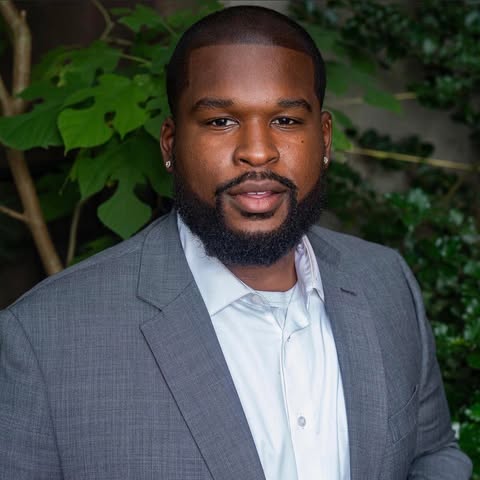
Jonathan Conyers is the author of the acclaimed memoir “I Wasn’t Supposed to Be Here.” He is also a respiratory therapist, writer, and producer, as well as the owner and investor of several successful business ventures. Through his storytelling and work, Conyers continues to amplify underrepresented voices and create impact across industries.