Trump says birthright citizenship was only for the ‘babies of slaves.’ Why a Supreme Court case testing that theory matters for Black Americans
TheGrio...

Legal experts note that while the Trump administration is seemingly targeting only immigrant communities with its move to end birthright citizenship, the effort is inextricably tied to the same white nationalist, anti-Black positions used in the 1860s.
Since returning to the White House for his second term, President Donald Trump has repeatedly expressed his desire to do away with birthright citizenship, the first clause in the 14th Amendment that grants United States citizenship to individuals born on U.S. soil.
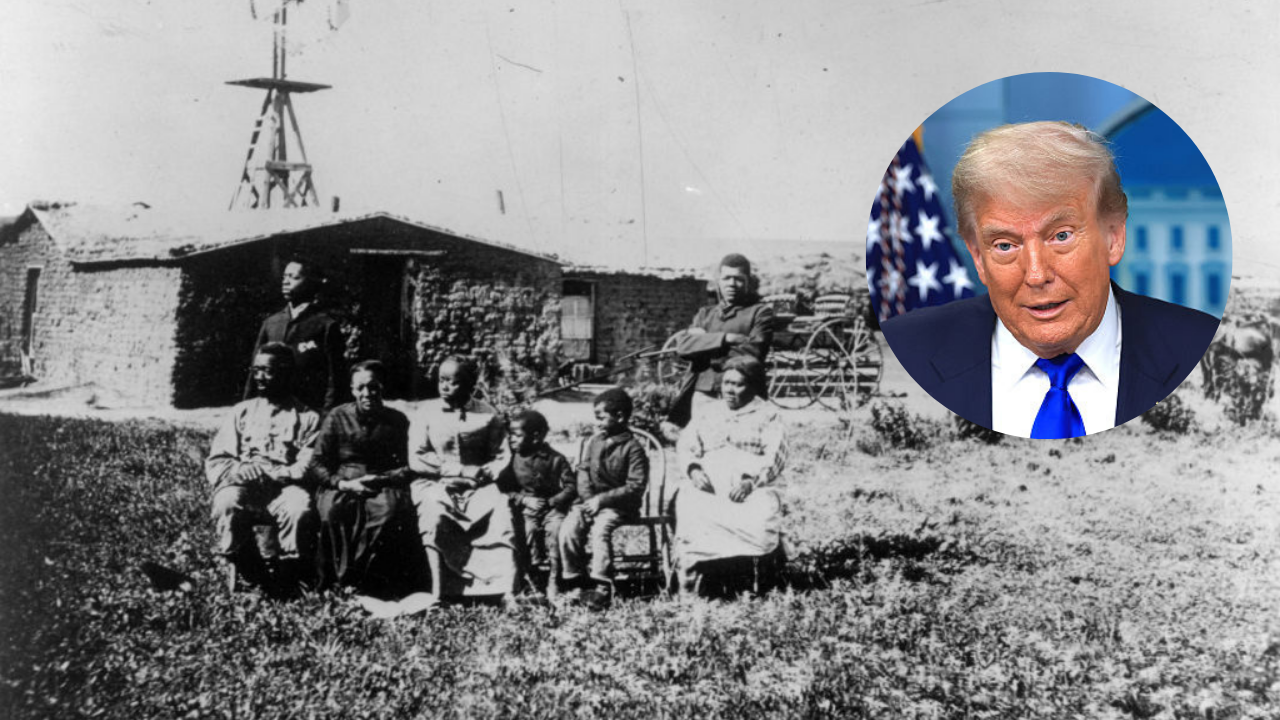
“That was meant for the babies of slaves. It wasn’t meant for people trying to scam the system and come into the country on a vacation,” President Trump said in June 2025.
This Wednesday, the U.S. Supreme Court will hear oral arguments in Trump v. Barbara, a historic case challenging President Trump’s executive order seeking to end birthright citizenship. The outcome of the case, for obvious reasons, is weighty and will have a significant impact on who is considered a citizen and who is not. It is particularly consequential as the Trump administration also targets immigrants with its immigration enforcement and efforts to pass the SAVE America Act–which would require all voters to prove their citizenship–under the false assertion that swaths of non-U.S. citizens are voting in federal elections.
The 14th Amendment was added to the Constitution in 1868 after the Civil War, reversing the Supreme Court’s infamous 1857 decision in Dred Scott v. Sandford, which denied Black Americans citizenship.
The amendment states, “All persons born or naturalized in the United States, and subject to the jurisdiction thereof, are citizens of the United States and of the State wherein they reside.”
The 14th Amendment was further strengthened by a Supreme Court ruling in the United States v. Wong Kim Ark in 1898, which determined that the children of Chinese immigrants born in the U.S. were citizens. Trump’s Department of Justice argues that the more than 125-year-old legal precedent and even longer interpretation of birthright citizenship has been misinterpreted. The Trump administration argues that the “subject to the jurisdiction” part of the first clause does not apply to certain individuals in certain cases, namely when the child’s mother and father are not legal citizens.
What Black Americans should know about the birthright citizenship case
Legal and policy experts note that while the Trump administration is seemingly targeting only immigrant communities with its move to end birthright citizenship, the effort is inextricably tied to the same white nationalist, anti-Black, and anti-immigrant positions that were used in the 1860s to argue against Congress ratifying the Constitution to include the 14th Amendment.
In a Supreme Court amicus brief filed in the Trump v. Barbara case, the Chinese American Legal Defense Alliance lays out the anti-Chinese and anti-Black legal theories of the 1880s that underpinned the case against birthright citizenship — the same theory the Trump administration and conservatives are using today.
“These views were themselves seeped in a certain racism,” the amicus brief says of the movement led by several racist scholars, who worried that granting birthright citizenship to Blacks and the Chinese, and by extension, the right to vote, would be a “danger to the republic.”
“I deny that a single citizen was ever made by one of the States out of the negro race. I deny that a single citizen was ever made by one of the States out of the Mongolian race. I controvert that a single citizen was ever made by one of the States out of the Chinese race, out of the Hindoos, or out of any other race of people but the Caucasian race of Europe,” said Senator Garrett Davis as Congress debated the Civil Rights Act of 1866, a precursor to the 14th Amendment.
Racists of that time even worried that granting citizenship would make them eligible to run for president.
“I think that what Black people need to wake up to is that all of these little attacks on DEI on birthright, what they are all meant to do is to allow government institutions to question who, other than white people, belongs in this society with full citizenship rights,” Dr. Alvin Tillery, a professor of political science at Northwestern University, told theGrio.
Tillery, who is also the director of the Center for the Study of Diversity and Democracy, warned that the “next logical extension” of Trump’s theory on birthright citizenship is that “the framers of the Constitution never really meant for Black people to be citizens.” He continued, “If we can overturn the 14th Amendment, birthright citizenship, doesn’t that also apply to the Blacks? That’s where they will be headed. And so we need to join those efforts vigorously to protect birthright citizenship as Black people.”
Rob Randhava, senior counsel at The Leadership Conference on Civil and Human Rights, told theGrio that a ruling to overturn birthright citizenship would create a “permanent underclass in American society.”
“It creates stateless people effectively and you create basically a legal caste system in society that I think sets an extremely dangerous precedent. If they can do it here, what does that say about their ability to amend other parts of the Constitution?” he cautioned.
Meeta Anand, senior director of Census & Data Equity at The Leadership Conference, similarly told theGrio that the 14th Amendment is “being subverted to be used in a way it was never intended to be used.”
“It was also about [the] need to take the necessary steps to ensure equality. So if you remove that ahistorical context, you then have this perversion that we’re seeing in Supreme Court cases. In a sane world, there’s no way that attempts to repeal birthright citizenship would gain any traction,” said Anand. “I think we should worry about what this means in a greater sense that we’re relitigating the meaning of the 14th Amendment.”