Walmart and H&M are trying to turn carbon dioxide into clothes
Popular Science...
It might not seem like it when you nonchalantly click a Buy Now button while online shopping, but that new t-shirt is part of a complex global web of commerce taking a toll on the environment. Consulting giant McKinsey estimates that the fashion industry alone accounts for as much as 4 percent of total global climate emissions. Those ballooning emissions are driven by increased appetites for ever more new clothes. An industry report from 2021 found that the amount of clothes produced annually more than doubled between 2000 and 2015. This worrying trend has led to a boom in scientists and start-ups trying to engineer their way out of the problem with all manner of less environmentally taxing threads.
One of those companies, San Francisco-based Rubi, thinks it can make a dent in the issue by sucking up some of that harmful carbon dioxide (CO2) and using it to create carbon neutral textiles that can then be made into clothes. The carbon transformation process mimics what happens in trees, but inside a bioreactor and at a rapid pace. The result should be fiber that is practically identical to the real thing, but without the need for any more felled trees. It’s a process akin to lab-grown meat, but for plant fibers. So far, at least 15 major brands, including H&M and Walmart, have reportedly piloted the tech, though it may still take some time before bioreactor-bred blue jeans are commonly seen hanging off store shelves.
Need to transform carbon dioxide quickly? Call in the enzymes.
Rubi’s conversion process fundamentally relies on using a variety of enzymes (what CEO and cofounder Neeka Mashouf calls a “cascade” of enzymes) to chemically transform captured carbon dioxide into cellulose. In nature, this cellulosic production system takes place when trees slowly sink carbon from the atmosphere and convert it into the cellulose found in their trunks and branches. For centuries, clothing makers have turned that cellulose into a pulp and then used it to weave textiles or spin into yarn. Viscose, rayon, lyocell, and Tencel (a brand name form of lyocell) are all examples of widely used textiles derived from cellulose.
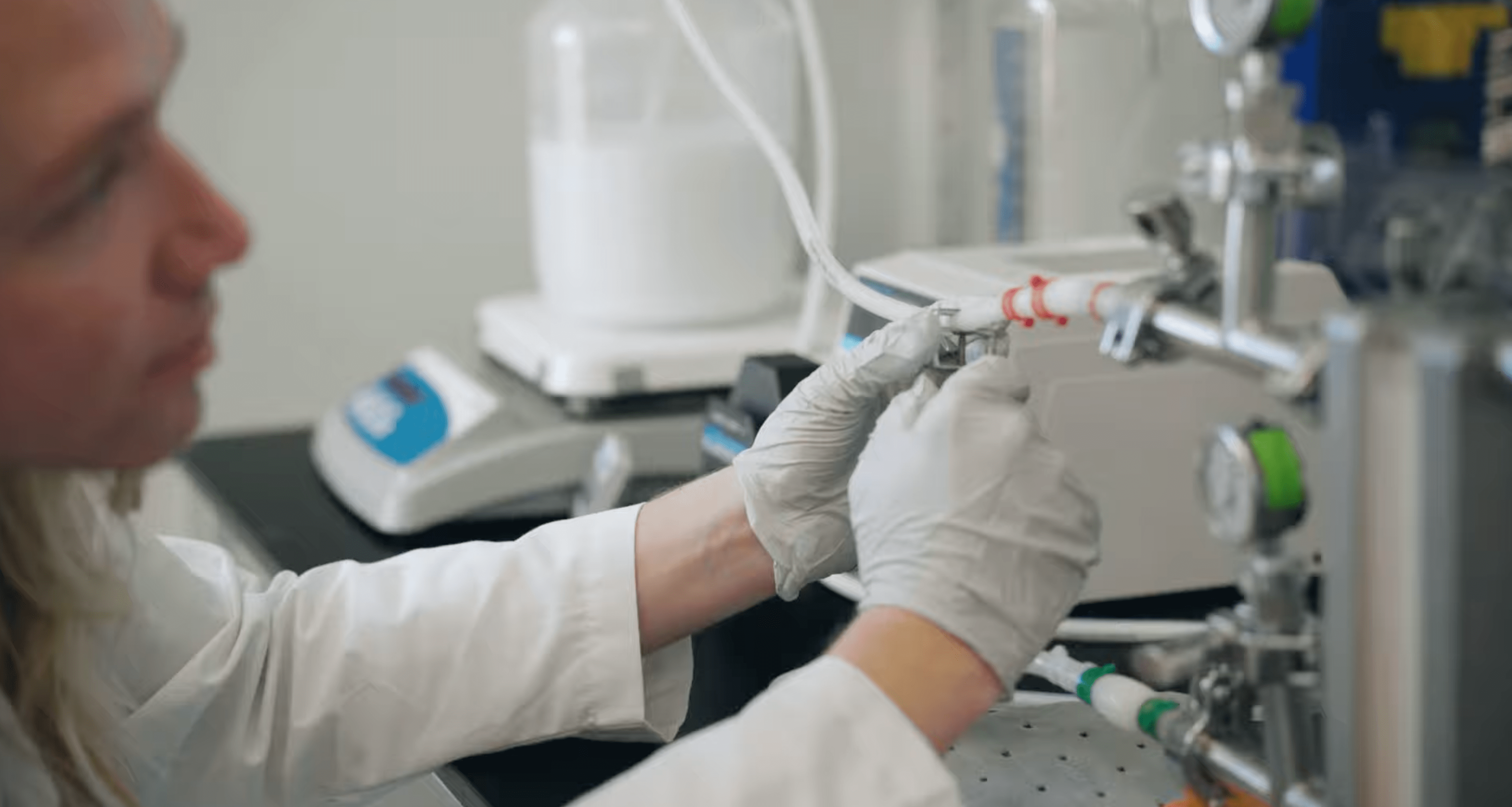
Rubi takes the tree out of the equation and uses shipping container-sized bioreactors filled with enzymes to expedite the process instead. In an interview posted on YouTube, Rubi Laboratories Senior Scientist Trevor Boram referred to the enzymes used as “biological catalysts of the cell” that rapidly speed up chemical reactions. This already happens in nature. Humans are just slamming a foot on the accelerator.
“I think humans taking these enzymes to the next level is very fascinating,” Boram said.

Carbon dioxide derived clothes aren’t commercially available yet, but that may soon change. In 2023, Rubi entered into a pilot agreement with Walmart which said it would test the use of its carbon capture technology to explore how it could properly be used at a larger scale in the rational giant’s supply chain. Since then, 14 other comapiens including H&M have also explored the technology. Ideally, these types of partnerships should be win-win. Rubi gets to suck up the carbon dioxide and generate pulp while big brands get to a clear path towards meeting their environmental sustainability goals.
Why tech-based solutions to sustainability are still a risky bet
However all of that hypothetical harmony ultimately depends on Rubi’s ability to replicate its process reliably at scale. That’s often easier said than done. Several companies have already tried and failed to find tech-driven solutions to make textiles less environmentally taxing. Perhaps most notable was Swedish textiles recycling company Renewcell, which aimed to take old clothes and transform them into new cotton fiber. Renewcell received generous funding and opened its first factory in 2022, with partnerships from major fashion brands. And yet, just two years later, scaling issues forced it to file for bankruptcy.
“Can it work reproducibly at scale, meeting quality specs of the customer as they actually need them, meeting their timelines and deliverables?” Bolts Threads (another company applying bioengineering to fashion) CEO Dan Widmaier said in an interview with The Washington Post. “Can it be financed to that scale? Those are the things that break all these.”
Related Stories
Of course, there’s also another far less high-tech or glamorous solution to textile waste: simply buy less clothing. While it might feel fun for a brief moment to swap out wardrobes every season, that mindset is partially to blame for incentivizing fast-fashion brands to prioritize quantity over quality and to accept mass waste in the name of keeping prices low.
At the same time, it’s also likely that the ship full of clothing has already left the port. Efforts to meaningfully rein in textile waste and drive down emissions to safe levels, particularly as demand for clothing surges in more regions, will likely require a mix of frugal consumer behavior and innovative tech solutions like carbon capture. And nothing quite says “statement piece” like a top derived from carbon dioxide.
The post Walmart and H&M are trying to turn carbon dioxide into clothes appeared first on Popular Science.