What’s a brain freeze and why do they happen?
Popular Science...
It’s nearly ice cream season again, and with it, its accompanying nuisance—the brain freeze. You know the feeling: the sudden pain that erupts in your upper face and forehead when you guzzle that arctic treat a little too quickly.
The cause of brain freeze fascinates neurologists and Slurpee lovers alike, and the science behind it is especially captivating.
What is a brain freeze?
The abrupt cooling of the roof of your mouth is what triggers a brain freeze, also called an ice cream headache (or sphenopalatine ganglioneuralgia, if you’re a scientist). The onslaught of cold causes nearby blood vessels to constrict and then expand, a protective reflex as your brain tries to maintain its ideal temperature of 98.6 degrees Fahrenheit.
Related 'Ask Us Anything' Stories
“Your body always wants to keep your brain nice and warm,” Dr. Kristofer Rau, assistant professor at the Virginia Tech Carilion School of Medicine, tells Popular Science.
In response to cold, blood vessels in the roof of your mouth get smaller. Your brain responds to their shrinking by getting your heart to pump faster, pushing blood up into your head to quickly warm the area with more blood flow, causing the vessels to expand again.
“That fluctuation between constriction and expansion is picked up by your sensory neurons that are wrapped around all those blood vessels in the roof of your mouth,” says Rau. “That signal is detected as pain, and that pain sensation is sent on up to your brain.”
Why do they hurt?
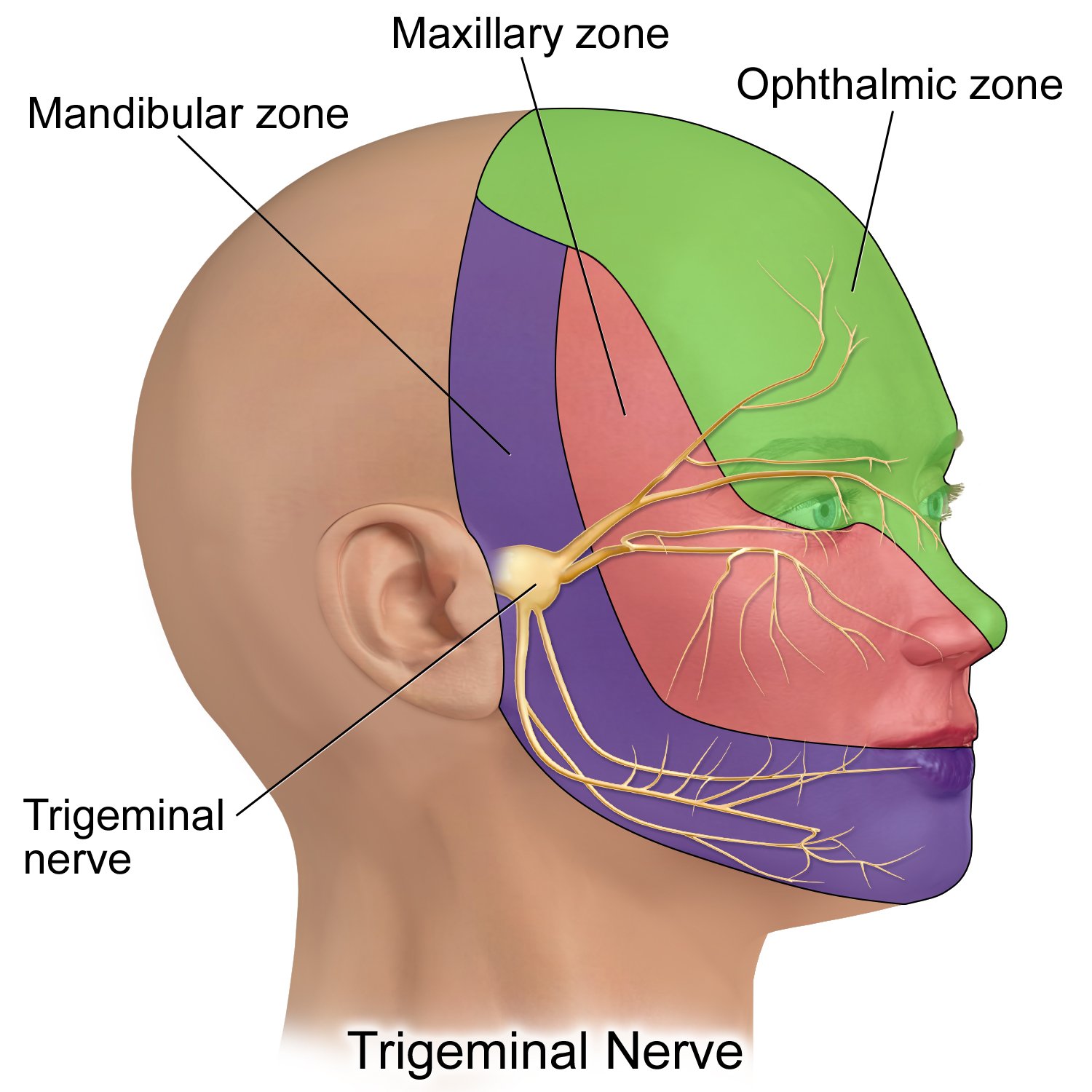
This pain sensation Rau is referring to, what many of us call a brain freeze, is the work of the trigeminal nerve. The trigeminal nerve spreads in tree-like branches throughout your face and head, with one of its major branches extending up into the forehead area.


If you think about it, it’s weird that brain freeze pain isn’t focused on the roof of your mouth. There’s a funny reason why the pain flares in your upper face and forehead, a bit of a distance from the area responsible for the cold.
“The brain doesn’t always do a terrific job—particularly in the head—of localizing where specific pains happen to be,” says Rau.
The branches of the trigeminal nerve converge in one single cluster. Because of this, “[the brain] gets a little bit confused and attributes that convergence in the pain up in the top of your head,” says Rau. In other words, wires get crossed and the brain sends pain signals a little north of the action. Hence the headache. This phenomenon is called referred pain.
The trigeminal nerve is also responsible for migraine headaches, which is why a brain freeze can feel a lot like a 30-second migraine.
According to experts, people who experience migraines are more susceptible to brain freezes due to a shared sensitivity of the trigeminal nerve. This may sound wildly unfair, but there’s some good news. Headache doctors say that people can sometimes short-circuit a migraine by intentionally giving themselves a brain freeze.
Keeping (unwanted) brain freezes away
While the sensation is shocking and a little painful, brain freezes won’t cause any actual harm. According to Rau, brain freezes only last 30 to 60 seconds. Think of them as your brain’s way of pumping the breaks on your lightning-fast slurpee chug in order to keep your most essential organ a safe temperature.
You can avoid brain freezes altogether by refusing all cold beverages and ice cream this summer. But a more fun route is to simply consume cold treats slower. Eating extremely cold things slower and in smaller bites allows your mouth to warm up the cold item as you eat it, circumventing that freezing assault against the roof of your mouth.
And, if you still find yourself in the middle of a brain freeze, there are ways to stop it. Rau says the trick is to simply warm up the roof of the mouth, the area that initiated the reflexive response in the first place.
“You could drink something that’s warm,” he says, “or you can just press your tongue to the roof of your mouth.”
In Ask Us Anything, Popular Science answers your most outlandish, mind-burning questions, from the everyday things you’ve always wondered to the bizarre things you never thought to ask. Have something you’ve always wanted to know? Ask us.
The post What’s a brain freeze and why do they happen? appeared first on Popular Science.