Will Dabo Swinney turning whistleblower be the beginning of a revolt against college football absurdity?
NCAAF College Football News, Photos, Stats, Scores, Schedule & Videos...
The way Dabo Swinney views his career at Clemson and his place in the world have long been defined by the traumatic upbringing he overcame. In Dabo’s version of his own life story, it was very much the difficulty of it all — sleeping in his family’s car, coming to terms with an alcoholic father, walking on at Alabama — that forged a national championship coach who now makes $11 million a year.
There have been times over the last five years or so where that defining ethos has worked against him. He’s been too loyal to underperformers in his organization, too stubborn to adapt to changing times. After guiding Clemson to four national championship games over a five-year span, it now looks like a run-of-the-mill ACC program on a downward trajectory. After going 7-6 last season, there’s even speculation about how long of a leash Swinney has before the school is forced to make a drastic decision about the best coach in school history.
But on Friday, it drove Swinney to arguably the most interesting place of his career. He became a whistleblower.
In a profession where coaches have forever operated by the code of Omerta, Swinney going public with accusations of tampering by Ole Miss is potentially one of the defining moments of college football’s offseason.
Was this simply one lone voice railing against a system that no longer works for his program, or is it the beginning of a quiet revolt against absurdities that nearly all coaches feel but are reluctant to push back against with the specificity that Swinney brought to the table.
“If you tamper with my players, I’m going to turn you in,” Swinney told reporters, continuing, “if there are no consequences for tampering, then we have no rules and we have no governance.”
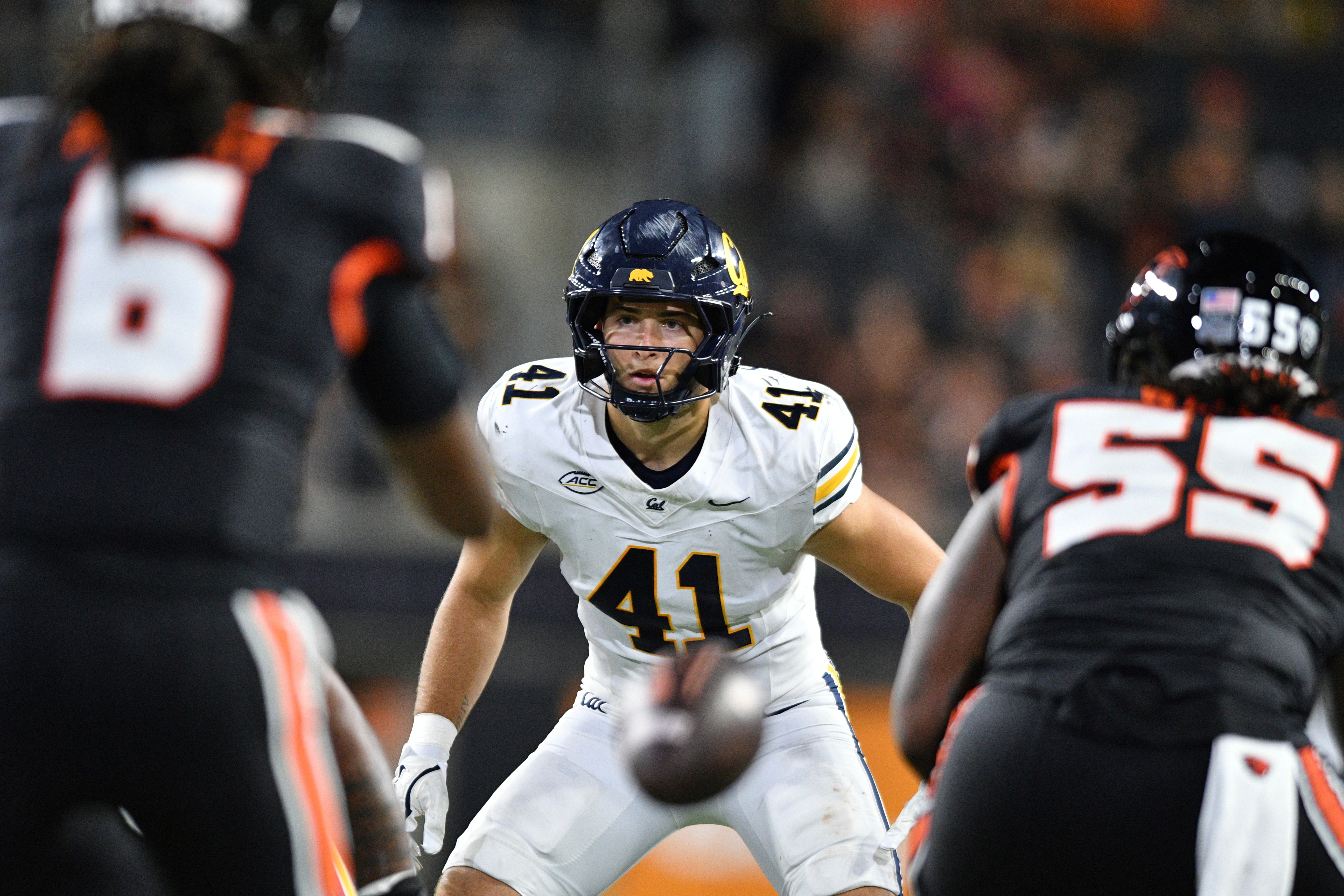
The rant included specific claims against Ole Miss regarding linebacker Luke Ferrelli, who transferred from Cal and enrolled at Clemson before re-entering the portal and landing in Mississippi. Among the accusations made by Swinney: Ole Miss head coach Pete Golding allegedly texted Ferrelli, "I know you’re signed. What’s the buyout?” while he was in class at Clemson and that Ferrelli’s agent said he would turn over to Clemson incriminating text messages from Ole Miss if Clemson agreed to add one year and $1 million to Ferrelli’s contract.
Clemson declined. Ferrelli will play at Ole Miss in 2026.

“You either step up and you be an example to young coaches in this profession and be people of integrity or just shut your mouth and don't complain again,” Swinney said. “That's what I would say to all the coaches out there because I know this has happened, and we're never going to get this under control until we start having some consequences.”
In one sense, you’d like to take Swinney by the scruff of his neck, shake him a few times and say: “Earth to Dabo! Integrity? You’re a college football coach! This is not a business where integrity works well or is even expected in the first place. Also, you make $11 million. Deal with it.”
But even in a business as absurd as college sports, there is a threshold where the behavior gets so out of control and the circumstances so dire that people realize complaining about the NCAA is a waste of time and instead start pointing fingers at each other.
In other words, in the absence of any regulatory body to police tampering and other recruiting sins, is it possible that Swinney going nuclear on Golding might be the most effective deterrent the NCAA could possibly have?
It’s not like anything else has worked.
Even though everything has changed in college sports, the fundamental problem is the same now as it was five, 10, 20 years ago.
Everyone from coaches to athletic directors to university presidents talks about wanting rules and enforcement in the way they do business but in the very next breath will explore gray areas and legal challenges to gain a competitive advantage.
Just look at what SEC commissioner Greg Sankey said last summer after the House vs. NCAA settlement and the establishment of the College Sports Commission to enforce it.
“I’ve asked at every level,” Sankey said. “Our university presidents and chancellors, our athletic directors, our head coaches: If you want an unregulated, open system, just raise your hand and let me know. And universally, the answer is, ‘No. We want oversight. We want guardrails. We want structures.”
But words are cheap. Linebackers are expensive. And it’s not just Ole Miss allegedly doing this stuff. Heck, the Rebels had to endure their own portal shenanigans in the wake of Lane Kiffin’s departure to LSU. Tennessee, backed by an attorney general eager to get a piece of the NCAA, has been a habitual line-stepper in the NIL era. Someone is going to have to explain how Kentucky’s supposed $22 million basketball roster fits within the bounds of the $20.5 million revenue share cap for all sports.
The regulations that are supposed to be governing this business simply are not working.
On one hand, fans only care to a point. Just look at the boffo ratings for the College Football Playoff and the national title game. This is still a compelling product and maybe even better than it was before. Indiana just won the national title for goodness sakes.
On the other hand, if it’s true that the Ole Miss head coach was continuing to recruit a transfer who enrolled at Clemson and that an agent tried to shake down Swinney for $1 million to ward off the threat, nobody could credibly argue that’s how a professional sports league should operate.
Oh, and these NIL agents? Many of them are laughably unprofessional and out of their depth, which is what you get when there are no real standards or certification processes. No matter what you think of Swinney — and many of us have had our critiques the last few years — this is not a “failure to adapt” issue. It’s a refusal to enable corruption issue.
Fixing all this is not solely up to Swinney. He is a cog in a very large and out-of-control machine. But if a future Hall of Famer with two national titles doesn’t have the courage to stand up and call out peers for their role in the full-scale system breakdown, who will?
In a career and lifetime of defying the odds, Swinney will now try to do it one more time. If NCAA rules and potential punishments don’t get other coaches to act right, wouldn’t it be something if pure, old-fashioned shame did the trick?
More at NCAAF College Football News, Photos, Stats, Scores, Schedule & Videos