Woman builds EpiPen cannon, because why not?
Popular Science...
The PVC pipe potato gun is a staple of many science-oriented (and frequently unsupervised) childhoods. There are plenty of variations to that starchy shooter, but the basic elements are invariably the same: load a potato inside the pipe barrel, fill the rear chamber with either combustible gas or compressed air, then fire away.
In theory, you can launch any similarly sized object using the contraption.Why not swap the potato for something that can save lives? That’s what YouTuber Emily the Engineer pondered during a recent video entry.
“The only thing that modern medicine has lacked in is a more efficient way to distribute this medicine. Do you see where we’re going with this now?” she asks her viewers.
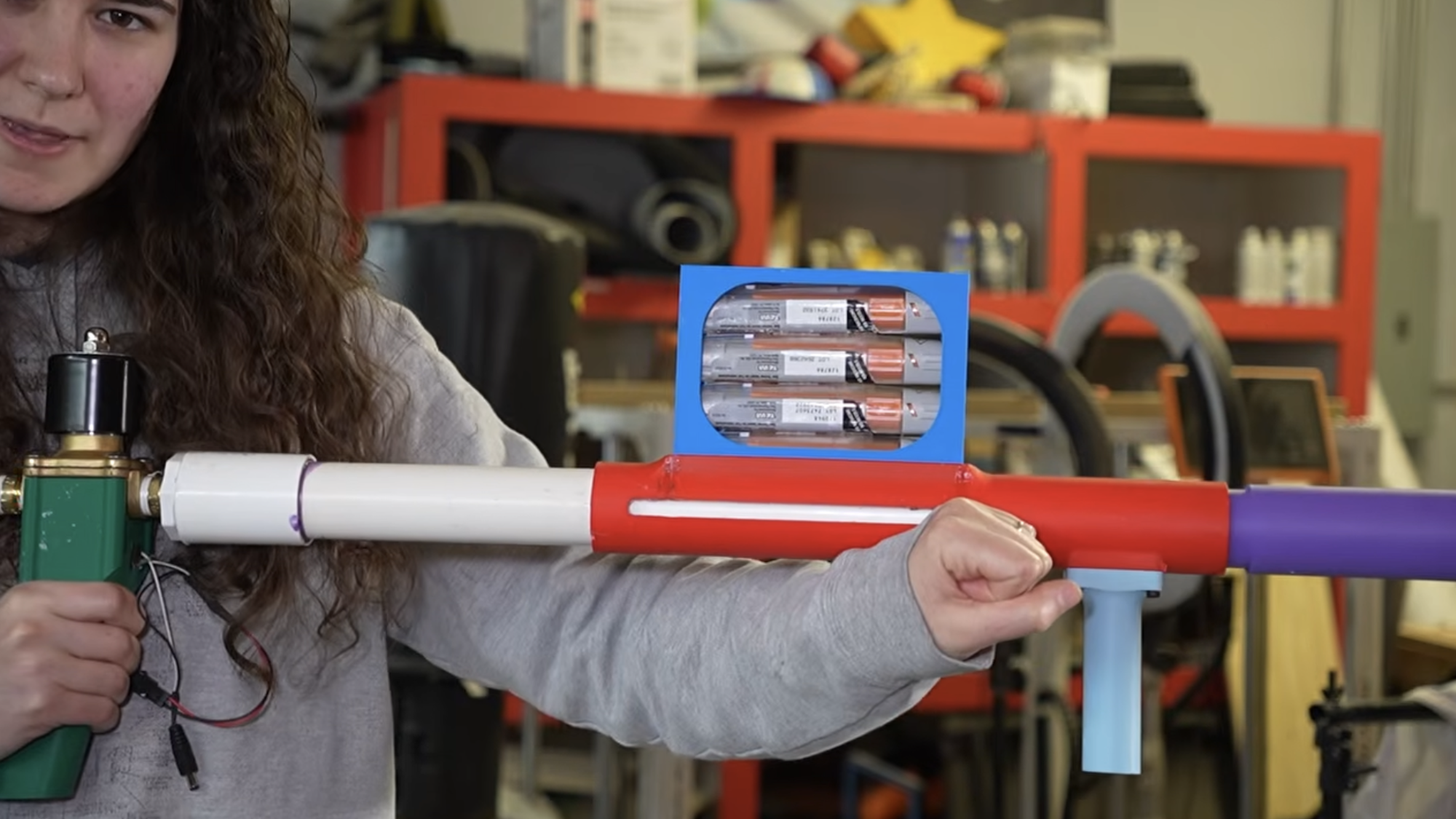
Her final result is the EpiPen Launcher, a custom-built device that lives up to its name. Also known as an epinephrine autoinjector, the EpiPen is a relatively recent invention that’s saved countless lives. The simple but effective tool was approved by the FDA in 1987, and injects a fixed dose of epinephrine (aka adrenaline) to people suffering from allergen-induced anaphylaxis. Medication is delivered either through a spring-loaded or carbon dioxide-driven needle that activates when pushed against skin.
Emily the Engineer’s EpiPen Launcher aims to deliver the vital medicine from afar—but is it safe, practical, or even particularly effective? The answers vary, but it’s certainly fun to watch Emily and her pals figure out how to build a “pew pew that shoots,” as they call it.
This is no mere single-shot gun, either. Knowing accuracy may be an issue during a distant (admittedly ludicrous) allergic reaction scenario, the team constructed a 3D-printed bolt-action attachment that holds a magazine of up to four EpiPens. To ensure each unit receives the right amount of continuous pressurized air, Emily even rigged an air compressor inside a backpack that hooks into the launcher.
After numerous trial and error runs using tester EpiPens, the team finally delivered (at least some) epinephrine into a slab of ballistic gel from across a garage. Outside, the launcher also hurled a pen around 105 feet, although it looked pretty unlikely that it retained enough velocity to push the injector needle into someone’s skin. Sure, the EpiPen Launcher will never become a staple of emergency medicine—but you can never be too prepared, right?
The post Woman builds EpiPen cannon, because why not? appeared first on Popular Science.