Yellowstone’s ravens may memorize wolf hunting hotspots—to feast
Popular Science...
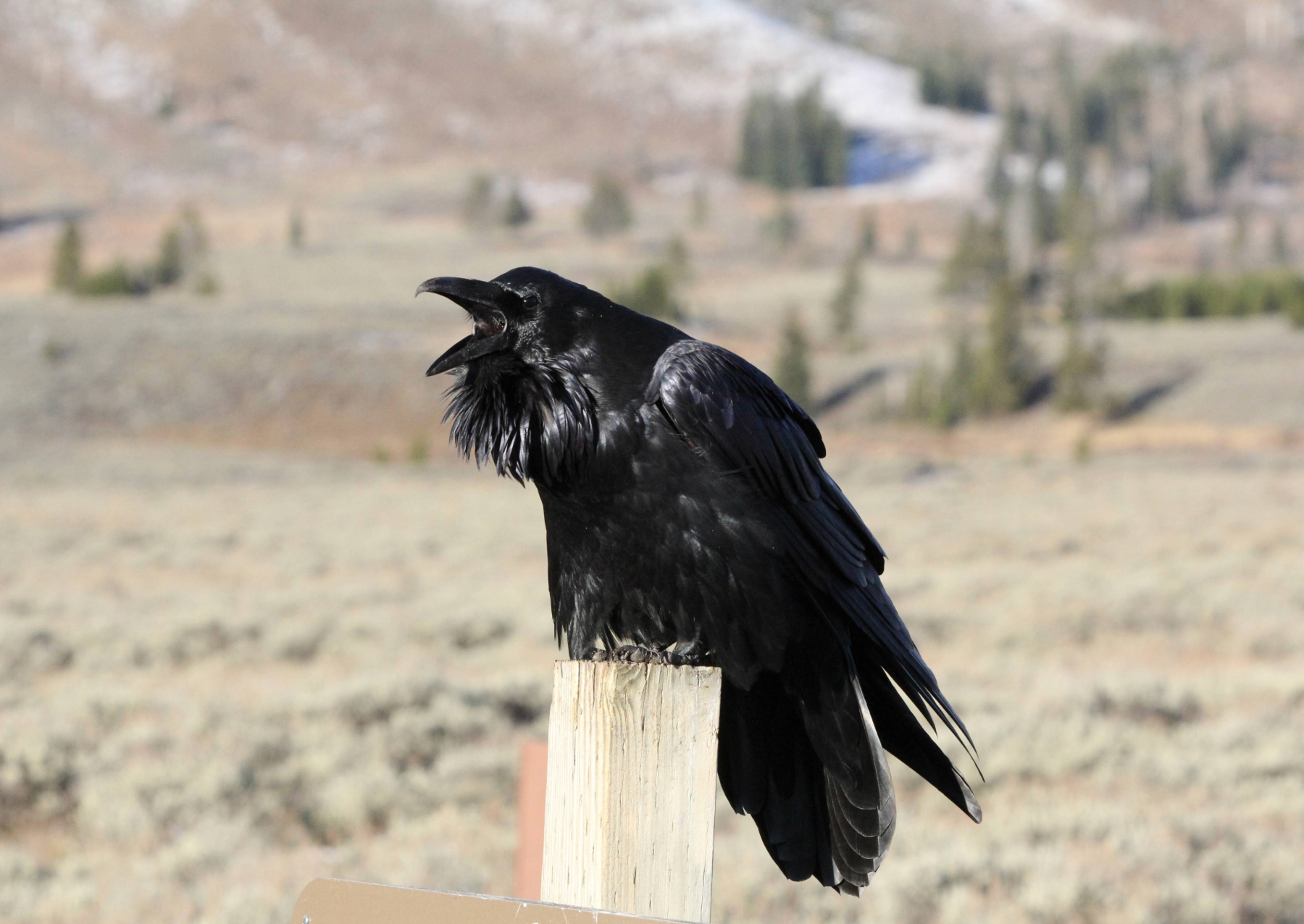
When wolves are on the hunt, a kill rarely goes unnoticed for long. In the elk- and deer-rich areas of northern Yellowstone National Park, ravens are often among the first scavengers to arrive on the scene, swooping down to feast on scraps left behind by the howling canines.
Field biologists have long assumed that the birds simply follow wolves as they track and take down their prey. However, a study published today in the journal Science provides evidence that ravens may be remembering hunting hotspots and scavenging for food, rather than chasing wolves.
“Ravens are known for their remarkable intelligence,” Matthias-Claudio Loretto, a study co-author and wildlife ecologist at Austria’s University of Veterinary Medicine, Vienna, tells Popular Science. “They have excellent spatial memory and are very good at learning from experience. Our study suggests they use those abilities when scavenging. In other words, they’re not just opportunists—they’re planning where to search.”
The study tracked about 70 common ravens (Corvus corax) and 20 gray wolves (Canis lupus) over two-and-a-half years in Yellowstone., Wolves here were once hunted to near-eradication but have rebounded, thanks to renewed conservation efforts over the past 30 years. Researchers outfitted the ravens with small GPS backpacks over their wings, and the wolves wore collars equipped with tracking devices.
Over time, the scientists observed ravens routinely appearing at kill sites, concentrated in northern Yellowstone where wolf kills are clustered. Wolf packs on the hunt encircled their prey—typically elk—clamping at the jugular when their target grew weary from the chase. The canines ripped through tough hides, devouring high-fat tissue and leaving carcasses with soft meat on the bone—a perfect meal for ravens who seemed to follow the kill.
Nearly half the carcasses were visited by at least one raven within seven days of the initial kill. Some ravens traveled over 93 miles (150 kilometers) to reach sites where wolves had successfully drawn blood, likely drawing from their spatial memory of scavenging hotspots.
Loretto says their findings reveal how closely different species pay attention to each other.

“We often think about predator–prey relationships, but there are many other, more subtle interactions happening in nature,” he explains. “Ravens are not wolves’ prey, but they clearly watch what wolves are doing and take advantage of their hunting success.”
Loretto added that their research raises interesting questions about how animals perceive their environment. Other studies show that blue whales track phytoplankton blooms and chimpanzees revisit fruit-bearing trees in a similar manner.
“In many ways, animals don’t just navigate landscapes—they navigate communities of other species,” he said.
In future research, the researchers hope to further understand more about when and how ravens learn about the regional concentration of wolf kills. They’re curious if young ravens can uncover these patterns early in life, or if developing the skill takes years of experience.
The post Yellowstone’s ravens may memorize wolf hunting hotspots—to feast appeared first on Popular Science.