Boom Year for Desert Blooms

NASA...


August 19, 2025
August 30, 2026
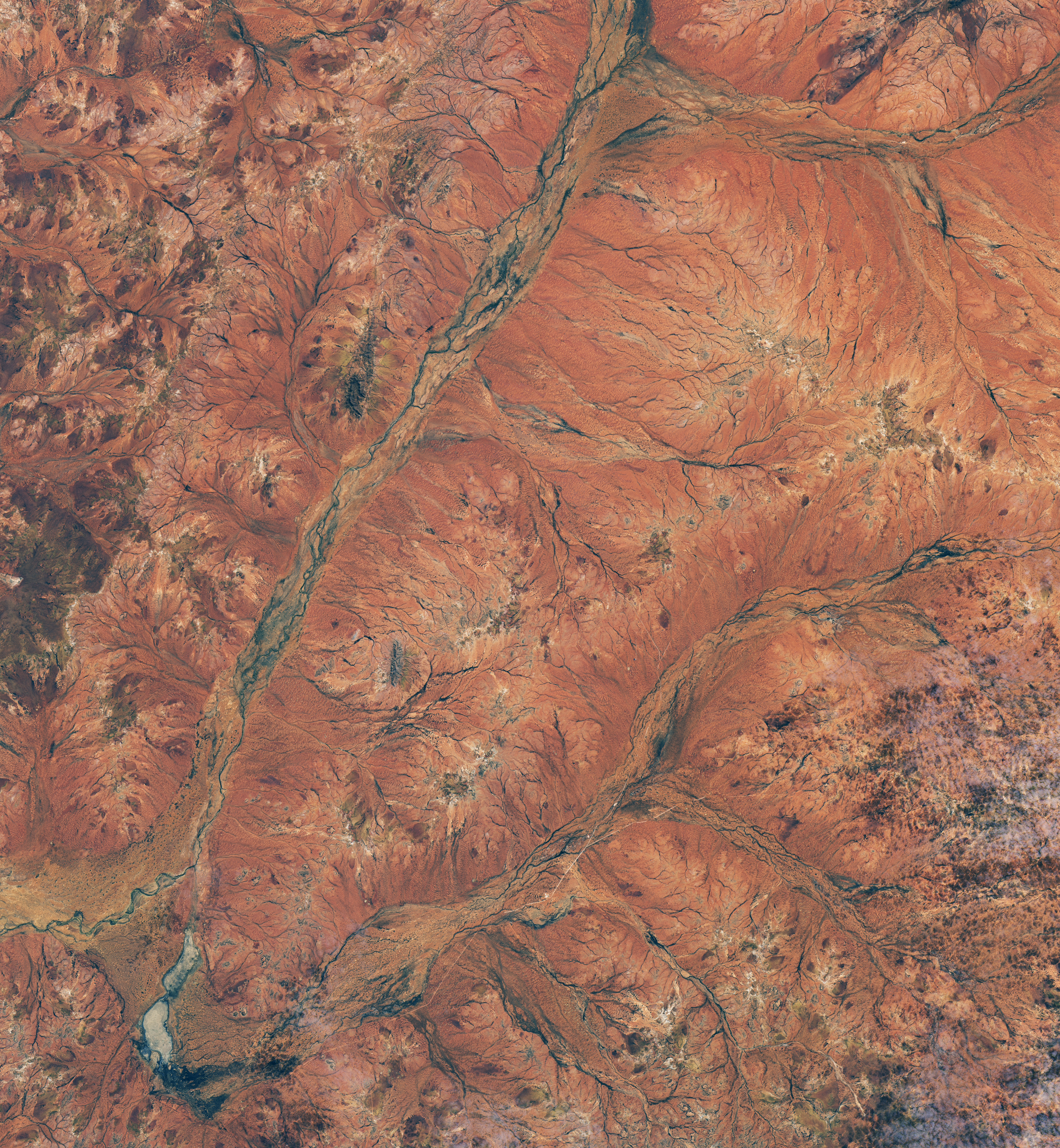
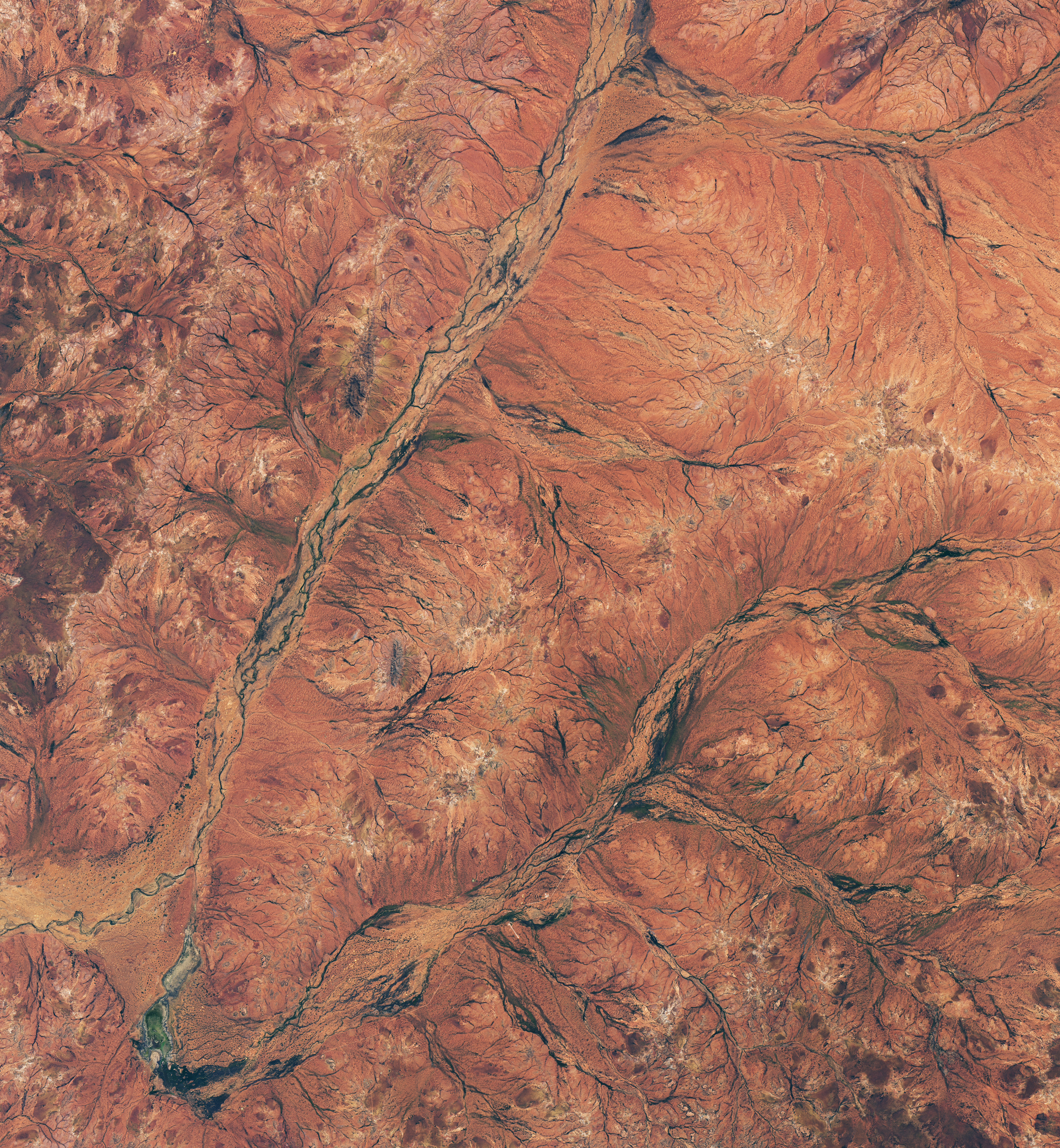
Arid shrublands in Western Australia were bursting with life in late austral winter 2026, when a profusion of wildflowers brought vivid colors to the rusty ochre landscape. After several wetter-than-normal months earlier in the year, dormant seeds in the soil awoke to produce carpets of blooms. Local experts think the display could be the best the area has seen in nearly two decades.
The images above, captured with the OLI (Operational Land Imager) on the NASA-USGS Landsat 8 satellite, compare the more verdant landscape of late August 2026 (right) with a similar time in 2025 (left), when it was drier. This area is located about 600 kilometers (370 miles) north of Perth in the Murchison region, one of Western Australia’s main areas for grazing sheep and cattle. The local vegetation includes grasses, saltbush, and the slow-growing evergreen mulga tree.

Every so often, a variety of wildflowers makes an appearance, too. In 2026, rainfall totals were above average in June and very much above average in August due to several cold fronts moving through the area, according to Australia’s Bureau of Meteorology. The rains helped rouse a diverse mix of flowers to bloom across the outback, including on a radio astronomy site managed by the Commonwealth Scientific and Industrial Research Organisation (CSIRO), Australia’s national science agency. The flower show included some threatened species, which the observatory has helped monitor on its formerly pastoral land.
Though the spectacle underfoot might have momentarily stolen the show, Inyarrimanha Ilgari Bundara, the CSIRO Murchison Radio-astronomy Observatory, is primarily focused on what’s overhead and the exploration of deep space. At the Murchison site, CSIRO operates several antenna arrays that observe and catalog objects in the southern sky. The remote facility is situated within a “radio quiet” zone, where terrestrial communications and electronic devices are controlled to limit electromagnetic interference with the instruments.

Other telescopes in CSIRO’s purview in Australia have played crucial roles in NASA missions from the agency’s early years to today. The Murriyang radio telescope in Parkes, New South Wales, tracked Mariner 2—the first successful planetary science mission—in 1962 and was an important receiving station for the Apollo 11 mission to the Moon in 1969. CSIRO also manages and operates the Canberra Deep Space Communication Complex, one of three facilities in NASA’s global Deep Space Network that supports interplanetary spacecraft missions and collects radar and radio astronomy observations. Both supported the Artemis II mission in April 2026.
NASA Earth Observatory images by Lauren Dauphin, using Landsat data from the U.S. Geological Survey. Photos © CSIRO Australia, September 16, 2026. Story by Lindsey Doermann.


References & Resources
- Australian Bureau of Meteorology (2026) Australian climate history – Climate summaries. Accessed September 22, 2026.
- Australian Department of the Environment, Water, Heritage and the Arts (2008, August) Murchison bioregion (WA). Accessed September 22, 2026.
- CSIRO (2026, September 16) World-leading radio telescopes give space for stunning wildflowers. Accessed September 22, 2026.
- CSIRO (2024, June 24) NASA and CSIRO: partners in space. Accessed September 22, 2026.
- CSIRO, Inyarrimanha Ilgari Bundara, our Murchison Radio-astronomy Observatory. Accessed September 22, 2026.
- The Guardian (2026, September 13) Blankets of colour: Western Australia’s wildflower season bursts into life – in pictures. Accessed September 22, 2026.
You may also be interested in:
Stay up-to-date with the latest content from NASA as we explore the universe and discover more about our home planet.
Tidal and seasonal shifts leave their mark on this crescent-shaped, productive bay in Western Australia’s Kimberley region.

The tilt in Earth’s axis of rotation makes the apparent position of continents shift with the seasons in imagery from…
An astronaut on the International Space Station was surprised to photograph a shower of light streaking through the darkness while…